
90 mins
100 Years of Dance
Why might people dance, and how have dance trends changed in America since the 1920s?
Essential Question
Why might people dance, and how have dance trends changed in America since the 1920s?
Objectives
Know (knowledge):
- The connection between music and dance
- Ways to analyze and describe different dance types
- American dance trends of the 1920s, 1950s, 1960s, 1970s, and 1980s
- Scientific theories of why people enjoy dancing
Mastery Objective:
- Students will be able to debate scientific theories of dance, and whether popular dance in America has changed, by reading articles and analyzing historical footage.
Background
Imagine the scene: You are at an event with a friends. “The music isn’t bad,” you think, tapping your foot and swaying along with the beat. But then, as the opening refrain of a song you love comes through the speakers, you head excitedly toward the dance floor. Forgetting for a moment what anyone else might think, you lose yourself to the music, moving to the beat with style and grace. For some reason, it feels natural. And quite good.
This is no accident. Music and dance are, in some ways, hardwired into our biological systems. As Columbia University neurologist John Krakauer suggests in a recent Scientific American article, dance is pleasurable because, “people speculate that music was created through rhythmic movement—think: tapping your foot.” That is to say, on some level music was created because of dance. Krakauer continues, “some reward-related areas in the brain are connected with motor areas … [and] mounting evidence suggests that we are sensitive and attuned to the movements of others' bodies, because similar brain regions are activated when certain movements are both made and observed.” In other words, when we move in rhythm and when we share that experience with others, there may be a tangible payoff: happiness.
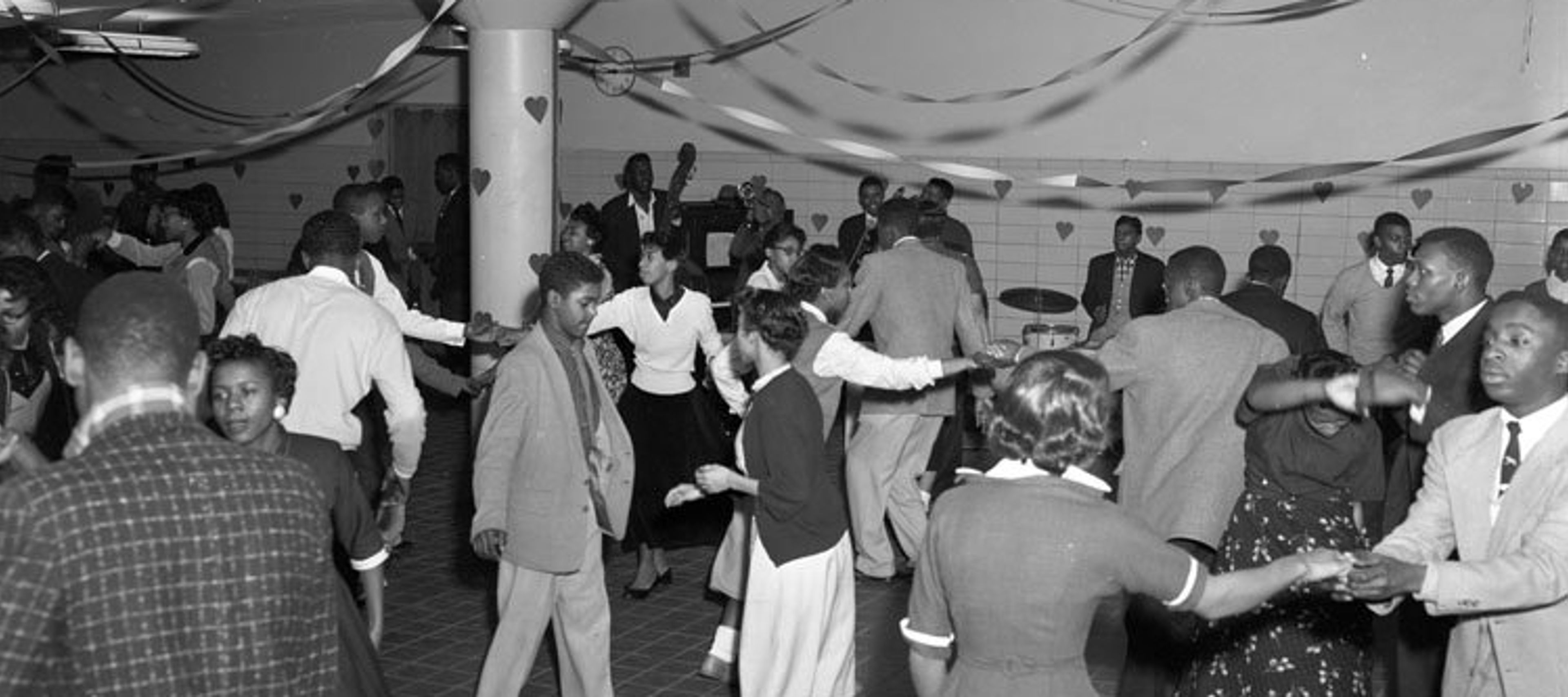
People have been dancing for millennia, but the proliferation of recorded media during the 20th century led to what today we might call the “viral” spread of specific dance trends. For instance, 1920s “Jazz Age” dance trends such as the Charleston and Jitterbug are at once both collections of bodily movements and powerful symbols of the evolving modern culture and personal freedoms of the moment. During the Swing Era of the 1930s and 1940s dance trends such as the Lindy Hop demonstrated Caucasian-American’s ongoing assimilation of African-American culture. In the 1950s and early 1960s both Cuban-originated dance trends such as the Mambo and decidedly North American dance trends such as Chubby Checker’s “The Twist” were popular, and, on TV, dance shows like American Bandstand and Hullabaloo launched countless new songs and dance trends directed toward a massive, postwar teenage audience. Cue Disco, break dancing, slam dancing, the Macarena, the Dutty Wine, Dame tu Cosita, flossing, and several hundred others. In the era of YouTube and social media, new dance trends seem to spring forth in a heartbeat, inspired by anything from a celebrity Tweet to a video game.
Yet, while one who danced the Charleston during the Jazz Age might be baffled by the concept of a dancing Player547 in Fortnite, would she recognize the moves nonetheless? Overall, how much has the practice of dancing--the way we move our bodies in time--changed throughout the decades, if at all?
In this lesson, students investigate these questions by analyzing videos of dance trends the decades. With the help of a worksheet, student groups watch footage of the Charleston and Lindy Hop, the Mambo, “Love-in” dancing, Disco, and Break Dancing. Based on their informed observation of these styles, they then debate whether dance has “evolved” in American culture, or remained mostly the same.