
90 mins
Aguinaldos: Venezuelan Songs for the Holiday Season
What are Aguinaldos, and how do children in Venezuela celebrate the winter holiday season known as La Navidad?
Essential Question
What are Aguinaldos, and how do children in Venezuela celebrate the winter holiday season known as La Navidad?
Objectives
Know (knowledge):
- How to sing the lyrics of “Fuego al Cañón” in Spanish
- How musical traditions contribute to cultural celebrations and create community in Venezuela
- That children actively participate in performing music of the winter holiday season
- How cultural identity is reaffirmed through food and music
Mastery Objective:
- Students will be able to perform a traditional Venezuelan Aguinaldo song by learning the Spanish lyrics, melodies, and rhythms of the song.
Background
In this lesson students will learn how to sing a traditional Aguinaldo in Spanish and familiarize themselves with the ways in which children celebrate the winter holiday season, or La Navidad, in Venezuela.
Aguinaldos are songs that celebrate La Navidad in all parts of Venezuela. They evolved from the European Christmas carol that was used by the Spanish to evangelize African and Indigenous people during colonial times in Venezuela. Originally, Aguinaldos were sung at Mass and during special misas navideñas (Christmas masses). Eventually, they also became a celebratory, secular tradition, evolving musically over time with the introduction of African and Indigenous cultural contributions.
In Venezuela, La Navidad is celebrated for up to three months of the year. Beginning in the middle of November with the construction of nativity scenes in houses of community members and public places, La Navidad extends into the following year, ending on January 6th with the arrival and visit of the Three Wise Men. During these three months of festivities, the community celebrates by singing Aguinaldos (secular and religious), Parrandas (secular) and Villancicos (secular and religious). Aguinaldos are sung specifically in front of public nativity scenes, during religious processions, in people’s homes, and at misas de gallo (5 am church services).
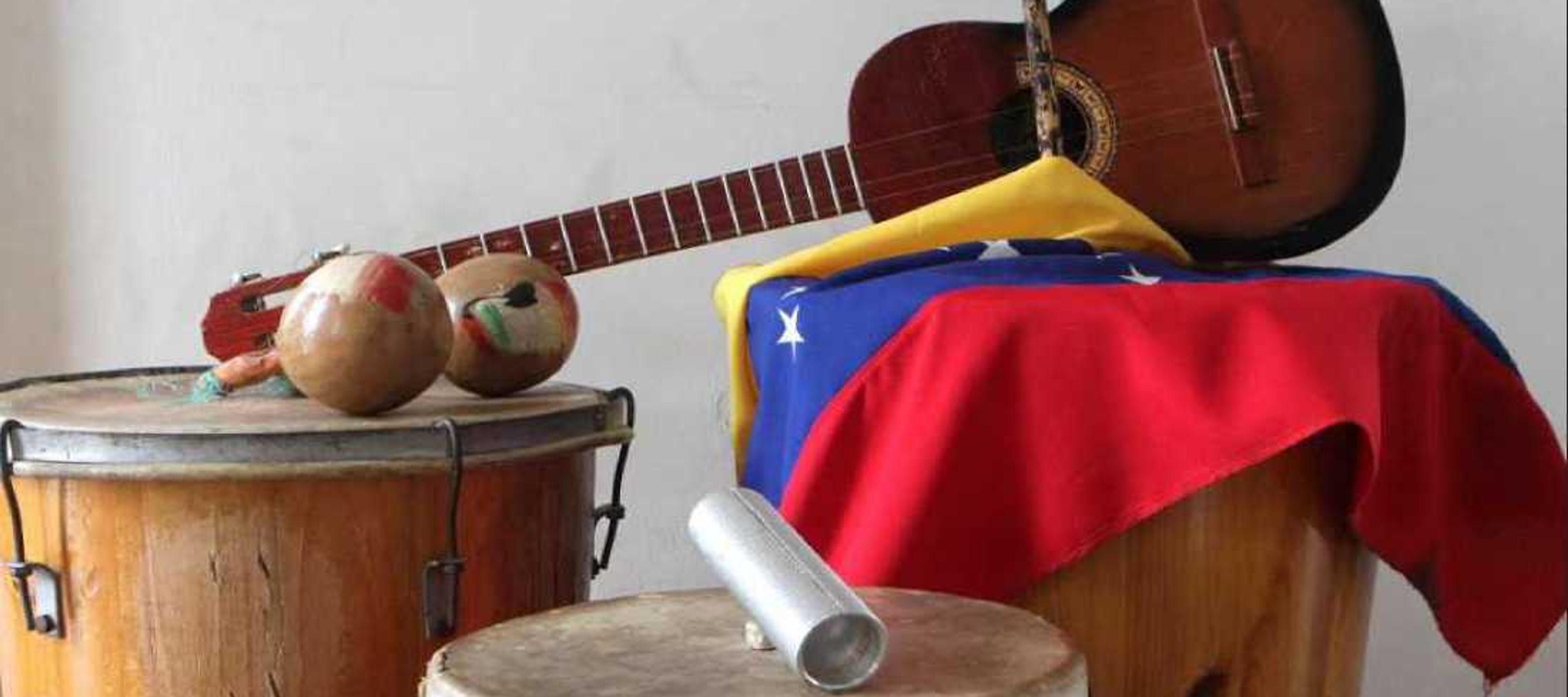
During a special Aguinaldo mass, held every night during La Navidad, hymns that would be sung during a normal mass are reinterpreted in the style of the Aguinaldo. Aguinaldo style is defined by the inclusion of instruments excluded from mass the rest of the year, such as the cuatro (a 4-stringed lute), furro and tambora (types of drums), and maracas (a shaken percussion instrument).
Another aspect of Aguinaldo style is the change in meter (or time signature) — hymns that would normally be sung in 4/4 time are now played in 6/8 and 2/4 and accompanied by the addition of polyrhythms played on drums. Creole rhythms, such as Merengue and Guasa, heavily influence the Aguinaldo style and can vary in style regionally. Aguinaldos possess musical characteristics of diverse, local, Venezuelan culture, reaffirming cultural identity through song. They are composed in both major or minor keys, with verses sung in unison or led by a soloist. The choruses, or estribillos, are sung by all, sometimes in unison and sometimes with harmony. Some Aguinaldos are non-religious and are sung as accompaniment to less sacred activities. Additionally, there are Aguinaldos that are composed for and sung only during La Navidad.
It is common for children to learn Aguinaldos in primary and secondary schools in preparation for performing them in public spaces. When groups of young Aguinaldo singers travel to multiple locations to perform, they are called Las Paraduras and activities often involve singing while making collections of food and clothing for the community. In turn, they present these gifts to members of the community during the Misas de Aguinaldos (Aguinaldo Masses). In fact, the word “Aguinaldo'' also refers to a gift that is asked for and then given during the time of La Navidad. Each community can also organize their own Aguinaldo groups, composed of both children and adults, with the intention of visiting each home in their neighborhood. Each home receives the singers and gives thanks by cooking traditional foods, served only during La Navidad, such as ensalada de gallina (chicken salad), hallacas (a Venezuelan tamale), and pan de jamón, a savory pastry or bread with ham and raisins inside. Sacred Aguinaldo themes include the birth of Jesus Christ (December 25th) and El Abrazo (The Embrace) celebrated on New Year’s Eve when members of the community embrace each other. Secular themes include celebrating the culinary traditions and decorations in houses in the community during La Navidad.
During the 1940s and 50s, it was common for schools and colleges to organize Aguinaldos and Christmas Carols groups in preparation for La Navidad and the celebration of family and community. Los Tucusitos, one of the most famous children's choirs in Venezuela, formed in 1959 and continues performing to this day. With 30 albums of music and 50 years of live performances, its members span twelve generations of children. To this day, Los Tucusitos remains one of the only children groups with a strong media presence and involvement in local communities. Other groups, such as Los Navideñitos, promote music for the December holidays in December as well, popularizing Aguinaldos that today remain a part of the collective imagination. In 2011, Aguinaldos was pronounced Patrimonio Nacional — or, Heritage of Venezuelan National Folklore.
Connected Themes
Artist(s)
Genre(s)
Monthly Theme