
90 mins
"Alright" and the History of Black Protest Songs
How have Black artists throughout the 20th century used music to speak about racial injustice in America?
Essential Question
How have Black artists throughout the 20th century used music to speak about racial injustice in America?
Objectives
Know (knowledge):
- Kendrick Lamar’s “Alright,” and it’s incorporation into Black Lives Matter protests
- Billie Holiday’s “Strange Fruit”
- Nina Simone’s “Mississippi Goddam”
- Aretha Franklin’s “Respect”
- James Brown’s “Say it Loud - I’m Black and I’m Proud”
- Marvin Gaye’s “What’s Goin’ On”
- Public Enemy’s “Fight the Power”
- N.W.A’s “Straight Outta Compton”
- The historic role of music in protest movements
Mastery Objective:
- Students will be able to draw thematic and topical connections between Kendrick Lamar’s “Alright” and songs in the past that became incorporated into protest movements.
Background
In this lesson, students compare Kendrick Lamar’s “Alright” with black protest songs of the past in order to identify common themes and ideas that artists have used to illustrate black experience in the United States. In so doing, they come to understand that using music to address racial injustice has been a long tradition within the Black community.
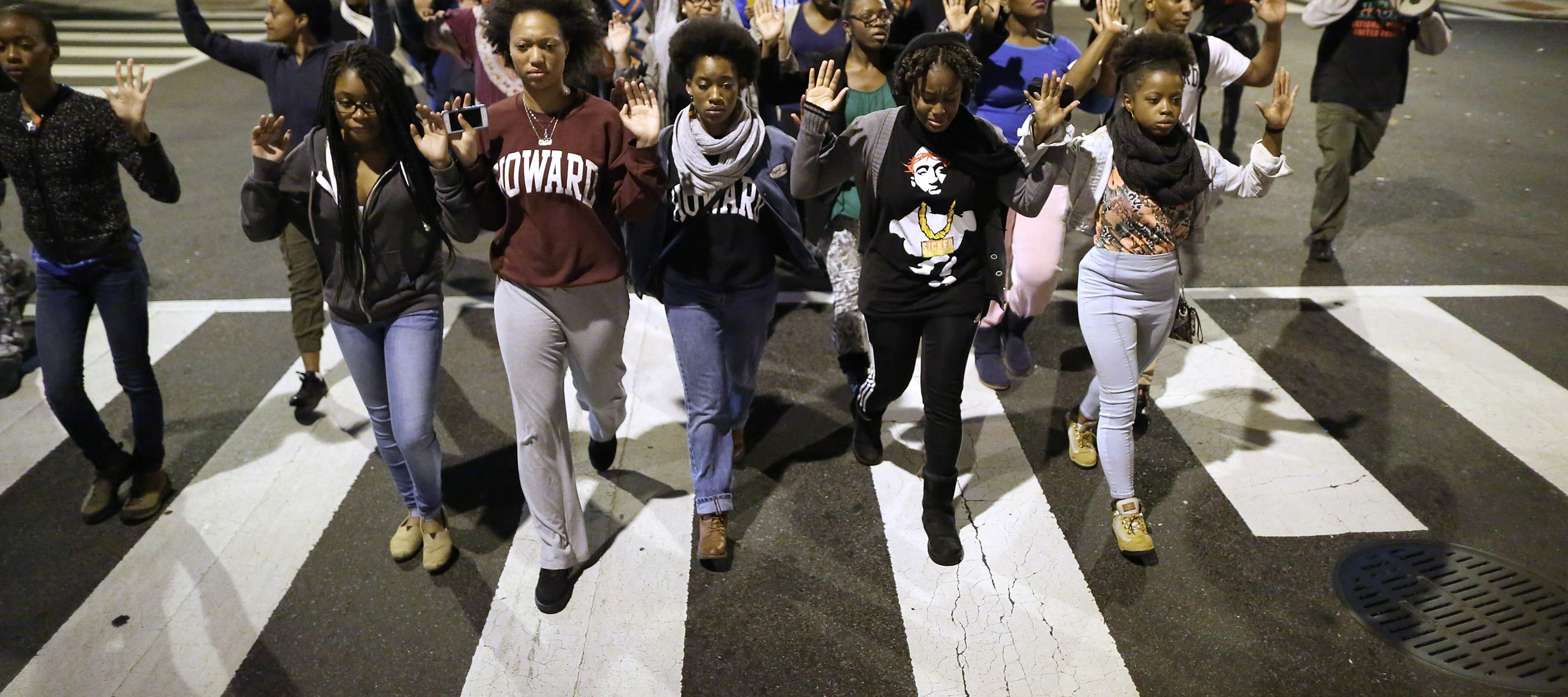
“We gon’ be alright! We gon’ be alright!” This phrase became a common refrain at demonstrations following the murders of teenager Michael Brown, 12-year old Tamir Rice, and father Eric Garner, whose last words, “I can’t breathe,” became a rallying cry in protests against police brutality. Many journalists and writers noted that chanting these lines collectively was reminiscent of “We Shall Overcome,” the unofficial song of the Civil Rights Movement. But unlike the origins of “We Shall Overcome,” the chant “we gon’ be alright” wasn’t based on a gospel song - rather, it came from the 2015 hit “Alright” by Grammy award-winning rapper Kendrick Lamar.
By being adopted into these demonstrations and into the Black Lives Matter movement more generally, Lamar’s “Alright” has solidified its position within a historic repertoire of songs that speak to African American’s continued struggle against injustice. These songs transcend genres and generations, from Billie Holiday’s haunting anti-lynching song “Strange Fruit,” to Nina Simone’s “Mississippi Goddam,” sung as a reaction to the murder of Civil Rights leader Medgar Evers and the 16th Street Baptist Church bombing, to James Brown’s jubilant “Say it Loud - I’m Black and Proud,” often regarded as an anthem for black pride. “Alright” additionally points to the role hip-hop has played in speaking out against racial injustice, from Public Enemy’s assertive “Fight the Power” to N.W.A.’s “Straight Outta Compton,” which brought to light issues of urban poverty and dispossession among the black community.
Disclaimers
This lesson contains racial slurs and violence. Teacher discretion advised.