
90 mins
The Myth of the American Cowboy
How did Westward Expansion and the idea of Manifest Destiny inform the image of the cowboy in American culture?
Essential Question
How did Westward Expansion and the idea of Manifest Destiny inform the image of the cowboy in American culture?
Objectives
Know (knowledge):
- The history and origins of the cowboy
- The philosophy behind the idea of manifest destiny and westward expansion
- Legislation, treaties, and Supreme Court decisions related to westward expansion, including the Indian Removal Act, Cherokee Nation v. Georgia, The Indian Appropriations Act, The Homestead Act, and the Dawes Act
- The genocide and forced relocation of Native Americans during the period of westward expansion
- John Lomax's collection Cowboy Songs and Other Frontier Ballads
Mastery Objective:
- Students will be able to describe the philosophy of manifest destiny and explain the effects westward expansion had upon Native Americans and wildlife in the United States by examining traditional cowboy songs and primary source documents.
Background
In this lesson, students will analyze select songs from John Lomax’s collection Cowboy Songs and Other Frontier Ballads with other primary sources to explore the period of westward expansion in the United States.
In popular culture, the American cowboy is regularly portrayed as a singular white male, traveling through desolate and dusty towns of the Southwest region of the United States. But in truth, such a depiction contrasts greatly with the historical realities of the cowboy.
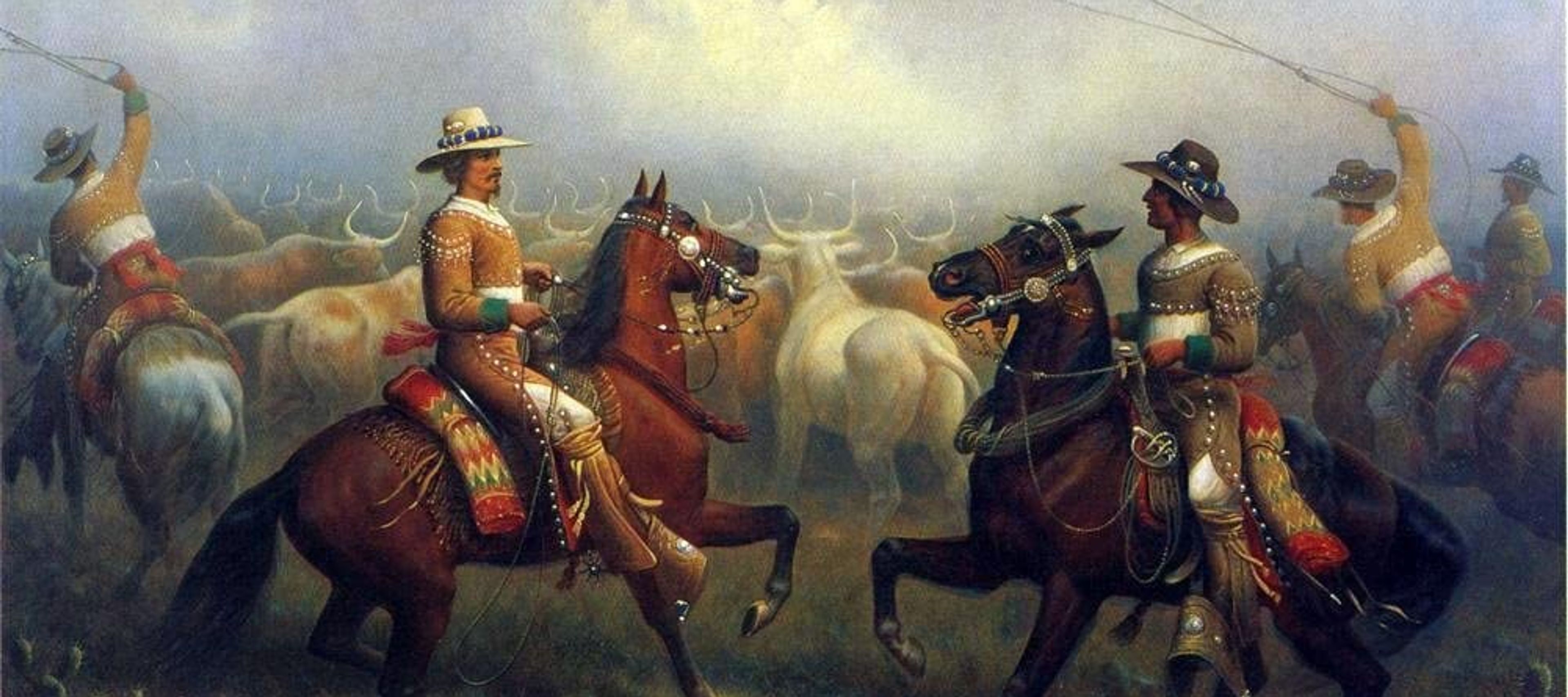
The origins of the cowboy begin with vaqueros who herded cattle on horseback in Mexico and in what today is the Southwestern United States. Vaqueros emerged from an earlier Spanish herding tradition which arrived in Mexico with Spanish colonization in the 16th century.
The vaquero tradition and culture began to change as white settlers in the United States began migrating to the West in the 19th century. Seeing the West as an opportunity to expand the United States from “sea to shining sea” and motivated by the idea of manifest destiny, white settlers conceptualized westward expansion as a divine right.
The infiltration of the West under the guise of manifest destiny had dire consequences for Native Americans for much of the 1800s. Westward expansion led to the forced removal and massacre of Native Americans. The tense relationship between the U.S. government, settlers, and Native Americans inspired dramatic “Western” tales that gave rise to the caricature of the heroic American cowboy, sans its vaquero origins.
The image of the American Cowboy also contributed to the erasure of Black cowboys. After the Civil War, many Black people traveled West in search of opportunity and in hopes of escaping the racism of the South. They took on jobs as cowboys throughout the Southwest, herding cattle. The job was not an easy one and racism still persisted in the West. One of the most prominent Black cowboys was Nat Love, who published his memoir in 1907 that detailed his life as a cowboy. While Love himself often turned to the trope of the American cowboy as a hero, his memoir reflects the prominence of Black cowboys in the West which still exists today.