
270 mins
Asbury Park, An American Tale
What does the history of Asbury Park reveal about practices and effects of segregation in the Northern United States?
How to Use This Lesson
Note: This is a 3-part lesson, with each part expected to take 1-2 class sessions. Each part can be used individually, so that all three parts do not need to be taught.
Essential Question
What does the history of Asbury Park reveal about practices and effects of segregation in the Northern United States?
Objectives
Know (knowledge):
- The definition of “de facto" segregation
- The history of segregation in Asbury Park
- The Asbury Park "Riots" in 1970
- The distinction between a “riot” and a “rebellion”
- The practice and effects of gentrification
- The importance of Asbury Park to the history of American Popular music
- The role music can play in bringing people together
Mastery Objective:
- Students will be able to define practices of segregation and systemic racism in the Northern United States by analyzing primary source documents and watching clips from the film Asbury Park: Riot, Redemption, Rock & Roll.
Background
In this 3-part lesson collection, students watch clips from the film Asbury Park: Riot, Redemption, Rock & Roll and examine documents in order to gain a deeper understanding of segregation as it has been practiced in the Northern United States, both in the past and today. Students will also consider the role music has played in segregated Asbury Park.
In Part 1, students explore the founding of Asbury Park and the city’s history up to 1970, and debate the extent to which music played a role in integrating the city.
In Part 2, students explore the conditions that led to violence between residents and police in Asbury Park in 1970. Then, they debate the distinction between a “riot” and a “rebellion,” and consider the role music might have played in possibly mitigating the violence that occurred.
In Part 3, students discover the history of Asbury Park from 1970 to today. They then hear from contemporary activists on the current issues Asbury Park faces, and compare the issues to those articulated by Dr. Martin Luther King, Jr. when he gave a speech at Monmouth University. To conclude the collection, students discuss how the current issues affecting Asbury Park may be informed by the history of the city, and brainstorm ways to overcome these challenges with music and the performing arts.
On October 6, 1966, Dr. Martin Luther King, Jr. spoke in the gymnasium at Monmouth University, just outside of Asbury Park, New Jersey. Dr. King titled his speech at Monmouth “The Future of Integration,” but he began with the past – moving from 1619, the year the first enslaved African set foot on U.S. soil, through slavery into the Civil Rights Era. While celebrating recent accomplishments in ending legally enforced segregation in the United States, such as the Brown v. Board of Education court decision and the rectification of the Voting Rights Act of 1965, Dr. King also reminded the audience: “in order to tell the truth, it is necessary to move on and not only talk about the fact that we’ve come a long, long way but to make it palpably clear that we still have a long, long way to go before the ideal of integration is a reality.”
By this point in his life, Dr. King had broadened his fight for equality beyond the legally enforced segregation of the Jim Crow South, and was now tackling the multitude of policies related to education, economics, and housing that maintained and reinforced segregation across America.
It was these issues– housing, economics, and education – that Dr. King touched upon in his speech. The inequal distribution in these areas result in what has been termed "de facto" segregation, or segregation that is not legally enforced, but nonetheless maintained. "De facto" segregation has and continues to affect the Black community in cities across America – including Asbury Park, just minutes away from where Dr. King delivered his speech.
While only occupying around one square mile, Asbury Park, New Jersey provides a case study on the way segregation in the Northern United States was practiced. The city was founded in 1871 by James A. Bradley, who found wealth manufacturing cannon brushes for the Union army. Asbury Park quickly became a resort town for people vacationing from New York City or elsewhere.
The rise of hotels and other amusements in Asbury Park required a workforce of cooks, maids, laundresses, janitors, waiters, and other essential labor. These mostly Black workers settled in the “West End” of town, away from the large resorts and Victorian mansions on the east side. In addition to living in segregated neighborhoods, Black workers endured other forms of segregation. Early in the city’s history, many white vacationers complained that the presence of Black people on the beaches was “disruptive,” to the point that Bradley sought to ban Black workers from visiting Asbury Park beaches, over concerns that their presence threatened the profitability of the resort town. Bradley insisted the proposed banning was not “a question of color or rights,” but a business decision based on his belief that potential tourists would be unwilling to “endure the crowds of Africans infesting every promenade and public space.” As a result, Asbury Park reserved some beaches for tourists alone, and others for residents, which in essence meant segregating beaches based on race.
In contradiction to Asbury Park’s history of segregation, the thriving music scene the city created offers a story of racial integration. In its heyday in the 1950s and 1960s, Asbury Park became a prime location for touring musicians, introducing Black and white residents alike to new musical experiences. For the youth living in or nearby Asbury Park, these experiences translated into a thriving and integrated local music scene, with clubs like The Upstage provided opportunities for integrated groups to come and play music together – producing, perhaps most notably, Bruce Springsteen and the E Street Band.
Asbury Parks flourishing music scene, however, could never remedy it’s underlying economic and racial issues. On the Fourth of July, 1970, a confrontation between police and teenagers accelerated into a 4-day uprising occurring in Asbury Park’s neglected (and mostly Black) West Side. Community leaders such as Rev. Verner R. Matthews and Ermon K. Jones called for an end to the violence, while asserting the need for economic investment into the West Side community. They, along with other Black Leaders, presented the Asbury Park Mayor and City Council with a list of twenty one demands to improve the conditions of the West Side. The list included an expanded jobs program and an urban renewal program. Only one of the twenty one demands was approved.
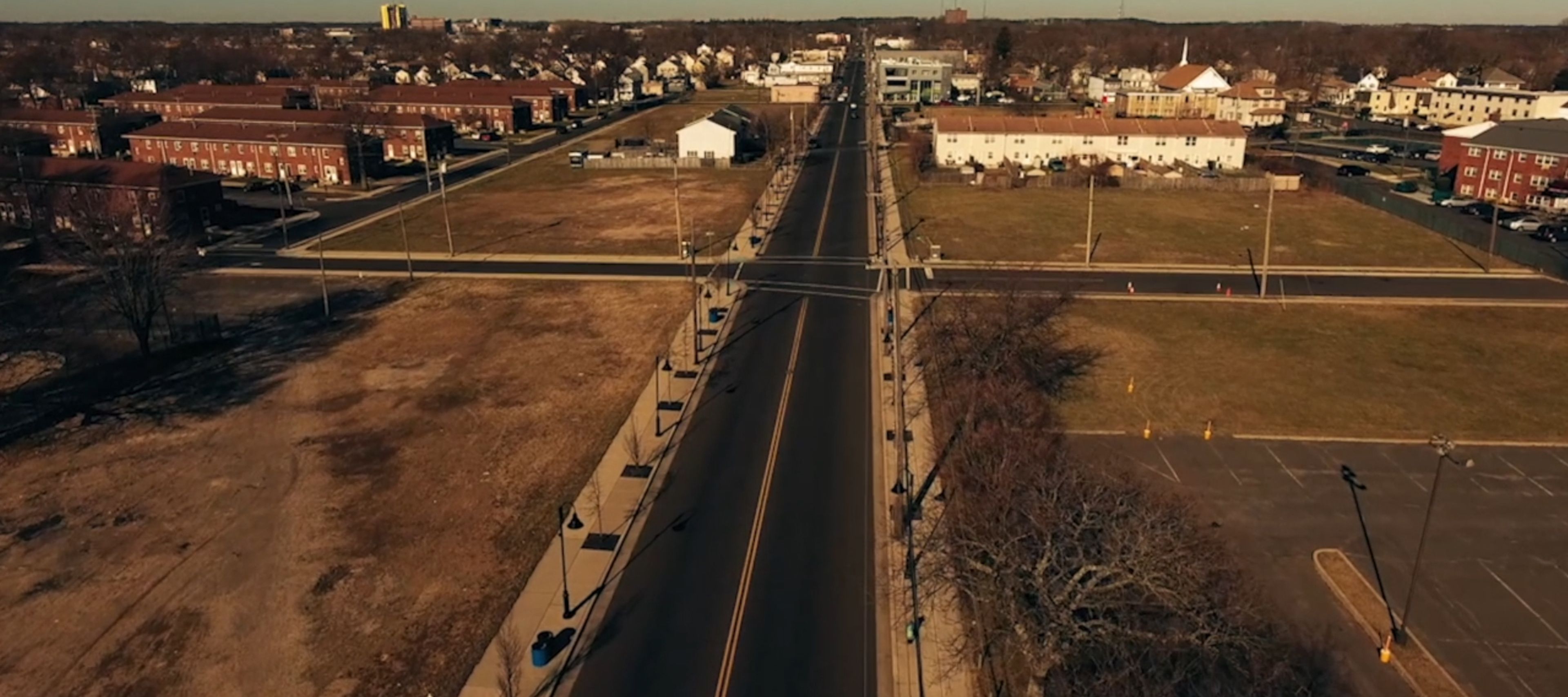
The decades following the Asbury Park rebellions in 1970s are characterized in most historical accounts as a period of “downfall” for the entire town. On the West Side, Springwood Avenue - once the center of music and nightlife on the West Side - remained decimated for decades following the uprisings. Additionally, a series of misfortunes and instances of political corruption led the once thriving East Side to a period of neglect. Facing lowering tourist revenue, city planners in the 1970s contracted with the State of New Jersey to build housing in Asbury Park for de-institutionalized psychiatric patients, which for the better or worse further stigmatized a town once considered a tourist destination.
In the 1980s and 1990s, attempts to revitalize the town into a resort destination and residential city floundered. In the mid-1980s, brothers Henry and Sebastian Vaccaro invested heavily into the Asbury Park waterfront area, restoring the Berkeley-Carteret hotel and signing a contract to build 2,400 residential units in the area. In 1989, however, Carabetta Enterprises - the company the Vaccaro brothers contracted to construct the residential units - filed bankruptcy, leaving a series of deserted and half-finished condominiums through the waterfront. Other contractors, upon facing similar dilemmas, purposely burned down buildings to collect insurance money.
Redevelopment plans on the West Side failed to materialize as well. In 1976, the A.M.E. Zion Church developed a plan to revitalize the West side of town, going so far as securing $5.5 million in federal and state funding before the city council vetoed the project.
The sharp decline of real estate values in Asbury Park during this time was beneficial to one community of people: artists and other creatives. Here, musicians such as Bruce Springsteen, Steven Van Zandt, Davey Sancious, and Southside Johnny were able to live cheaply as they honed their craft playing in clubs such as The Upstage and The Stone Pony. The release and celebrated reception of Bruce Springsteen’s Greetings from Asbury Park at this time helped contribute to the image of Asbury Park as a gritty “party town.”
Promise of cheap rent and little oversight also appealed to the LGBTQ+ community, who saw the potential Asbury Park had as a welcoming place for a group of people who continued to be marginalized in the 1970s and 1980s. Soon, bars, clubs, and venues serving LGBTQ+ clientele proliferated throughout Asbury Park.
After many years, the presence of musicians, entrepreneurs, and impresarios within the LGBTQ+ and artistic community created fertile ground for the “redevelopment” or “revitalization” of the area. One of the first figures to perceive the potential of Asbury Park were Luke Magliaro and Howard Raczkiewicz, owners of the Moonstruck restaurant in nearby Ocean Grove. Paying little heed to warnings of financial ruin, the partners moved Moonstruck to Asbury Park, paving the way for more boutique establishments along the waterfront. Slowly, the East Side of Asbury Park became revitalized - old abandoned buildings were bought and reopened, new luxury housing has been built, and people began flocking to the beaches once again.
The West Side residents of Asbury Park who had lived and raised families through the 1980s and 1990s, however, saw little change as the East Side redeveloped. The Asbury Park city council, seeing the potential for tourist income, spent the majority of their efforts revitalizing the waterfront to attract new business and vacationers. Funding for education, infrastructure, and development on the West Side remained low.
To compound matters for West Side residents, the “revitalization” of Asbury Park has led to a process of gentrification: as the city becomes more popular, rents increase, which threaten to push out some of the city’s longest residents. In such a way, history threatens to repeat itself in Asbury Park today: without investment into the West Side, the mostly Black residents of the area may continue to feel ignored, disenfranchised, and unwelcome in the East Side, which caters to visitors more than residents. But history-minded scholars, activists, and musicians continue to illuminate the complications of gentrification and advocate for those living the Asbury Park’s West Side - some of the longest residents in the city.
Connected Themes
Artist(s)
Genre(s)