
90 mins
#BlackLivesMatter: Music in a Movement
How have musicians responded to the Black Lives Matter movement?
Essential Question
How have musicians responded to the Black Lives Matter movement?
Objectives
Know (knowledge):
- The formation and mission of the Black Lives Matter organization and movement
- The significance of an anthem to a group of people
- How Kendrick Lamar’s “Alright” and Beyoncé’s “Formation” celebrate Black culture in America and relate to the Black Lives Matter movement
Mastery Objective:
- Students will be able to define an anthem by exploring how Kendrick Lamar’s “Alright” and Beyoncé’s “Formation” celebrates Black culture, while also speaking out against racism in America. Students will also draw connections between the songs and the goals of the Black Lives Matter organization.
Background
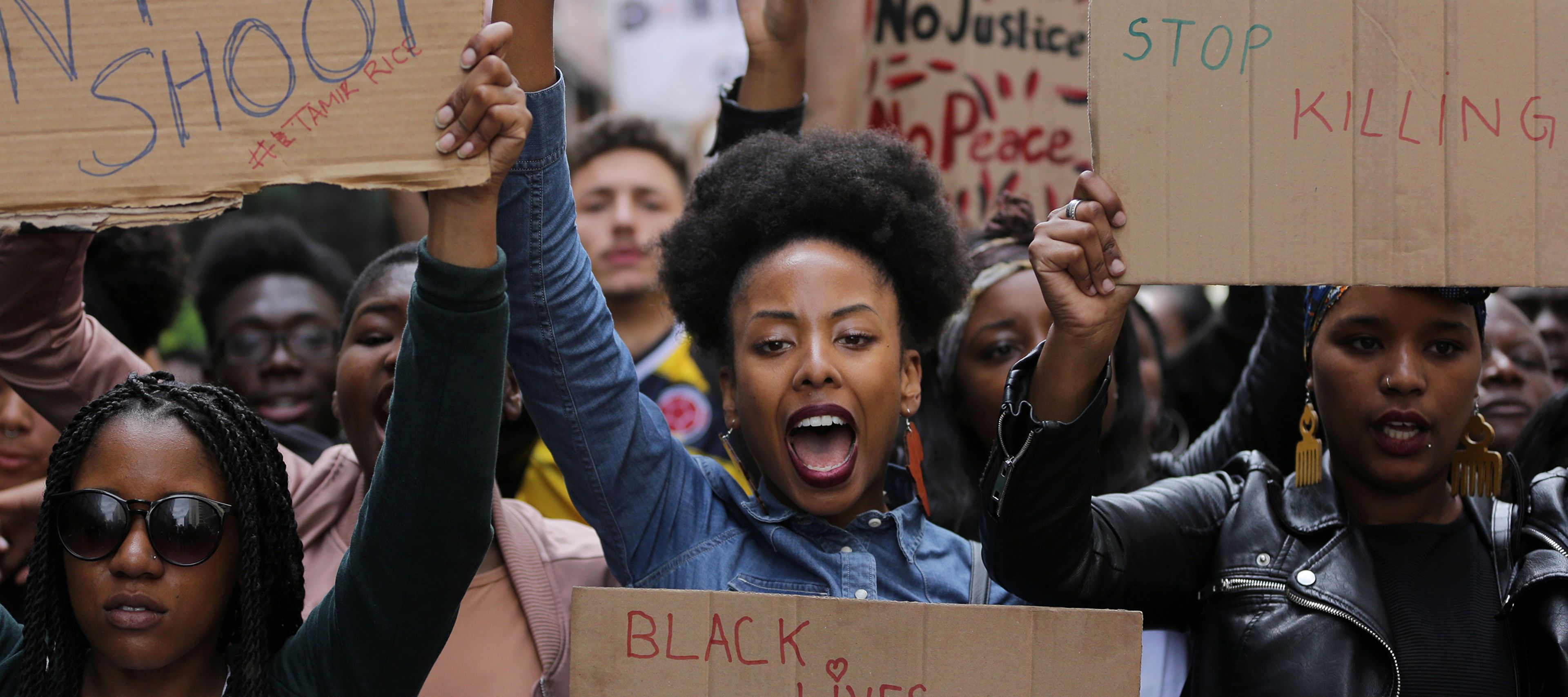
On July 13, 2013, George Zimmerman was acquitted for killing Black teenager Trayvon Martin. Zimmerman, who was part of the neighborhood watch program in a Sanford, Florida community, shot Martin after a physical altercation. Martin was unarmed. When Zimmerman was found not guilty of murder, protests erupted across the country, both on foot and online. In response to the verdict, activist Alicia Garza wrote a note on Facebook affirming her love for Black people and that their lives matter. The post went viral, leading friend Patrisse Cullors to repost Garza’s statement to Twitter with the hashtag, #BlackLivesMatter. The hashtag soon became a slogan, then, with the help of activist Opal Tometi, an online campaign. After the 2014 killing of unarmed Black teen Mike Brown by a Ferguson police officer, Black Lives Matter gained further momentum and became an organization with chapters nationwide.
Black Lives Matter is a new movement, reminiscent of the Civil Rights and Black Power movements, but one of the digital age where activism occurs as much in virtual spaces as it does real spaces. The movement calls for not only justice for Black Americans affected by police brutality, but for social, political, and economic power in Black communities. Black Lives Matter advocates for the eradication of poverty, addressing the mass incarceration problem, and ensuring that Black queer, trans, and disabled lives matter too. As it has grown in notoriety, politicians, actors, athletes, musicians, and other public figures have also joined in the movement.
One of the most applauded and debated projects to come out of the Black Lives Matter movement is Kendrick Lamar’s 2015 sophomore album To Pimp a Butterfly, which features the song “Alright.” Not only was the single a commercial success, but its chorus, “we gonna be alright,” was chanted at protests across the country in response to cases of police brutality and other unrests. It was only a short amount of time before “Alright” became associated with older protest songs such as “We Shall Overcome” and “Fight the Power.” Lamar orchestrated political performances around the song: during the 2015 BET Awards, he performed the song atop police cars in front of a torn American flag, and at the 2016 Grammy Awards he performed the song while wearing shackles. Thanks in part to these performances, “Alright” became, for many, an anthem for the Black Lives Matter movement. But Kendrick Lamar isn’t the only megastar to connect their work to the Black Lives Matter Movement.
The day before her February 2016 appearance at the NFL Super Bowl 50 halftime show, Beyoncé surprised fans with the unannounced release of a new single, “Formation.” The song charted a new, more political and unapologetically black direction for Beyoncé. At her Superbowl performance, the new lyrical direction of “Formation” was visualized through the all-black outfits featuring military style jackets and leather berets Beyoncé and her dancers donned, which were reminiscent of both Michael Jackson and the Black Panther party. Behind the scenes photos showed Beyoncé and her dance team throwing up one fist, a gesture often associated with Black power. The song and the performance caused an uproar. Some police unions called for a boycott of Beyoncé. But writers and activists praised the performance for its pro-Black women sentiment. Indeed, many consider “Formation” a Black women’s anthem due to lyrics expressing pride in Black culture and physical features, such as a nose with “Jackson Five nostrils,” and an Afro hairstyle with slicked baby hairs.
In this lesson, students will read statements from Black Lives Matter and watch a clip from CNN’s Soundtracks to explore the significance of the movement and the music made in response to the issues they rally behind. Students will also analyze clips from the music videos of artists Kendrick Lamar and Beyoncé Knowles-Carter to understand music’s relation to the Black Lives Matter movement.
Disclaimers
Note: this lesson contains some profanity. Teacher discretion advised.
Connected Themes
Artist(s)
Genre(s)
Topics
Decade/Era
Monthly Theme