
90 mins
Ciranda: The Brazilian Music and Dance that Creates Community
What is Ciranda, and how can group singing and dancing help us feel like a part of a community?
Essential Question
What is Ciranda, and how can group singing and dancing help us feel like a part of a community?
Objectives
Know (knowledge):
- The importance of Brazilian Northeastern music culture in the world
- The way Ciranda helps people to interact with one another and form a community
- How to dance Ciranda and sing in Portuguese
Mastery Objective
- Students will be able to investigate how music contributes to social engagement with one’s community by using their bodies and voices to dance, play, and sing Ciranda.
Background
In this lesson, students will learn how to sing a Ciranda song in Portuguese, dance Ciranda steps as it is traditionally done, and define the meaning of “pulse” in music. They will familiarize themselves with part of Ciranda’s history and learn how it is a part of the larger culture of building community in the State of Pernambuco, in Northeast Brazil.
Ciranda is a type of dance and music from the Brazilian state of Pernambuco that is very popular on the country's Atlantic coast. It is particularly important to the culture of the island of Itamaracá, where the wives of fishermen sang and danced while waiting for their husbands to arrive from the sea after the day’s catch. Ciranda has also appeared simultaneously in areas of the interior of the Zona da Mata Norte (countryside) in Pernambuco. In the early history of Ciranda, participants were mostly rural workers and fishermen.
Pernambuco's strategic location at the easternmost tip of the continent of South America made it an economic and cultural center during colonialism and the trans-Atlantic slave trade. Because of its most important crop, sugar cane, millions of Africans were brought through the capital city, Recife, and traded into slavery for other products and services. As a result, it became a hub for the exchange of knowledge and culture between the Pernambuco State and other nations. The culture of the region was influenced not only by Portuguese and Dutch colonizations, but later, by English Jews who, together with African slaves and Indigenous Peoples, transformed the state into a great cultural melting pot. Pernambuco is also home to the oldest and most traditional of Carnival celebrations, in Recife and Olinda. Throughout this region oral tradition is of great importance, as knowledge has been passed down in formal and informal ways from generation to generation, through the people who keep traditions alive. Ciranda is a perfect example of this.
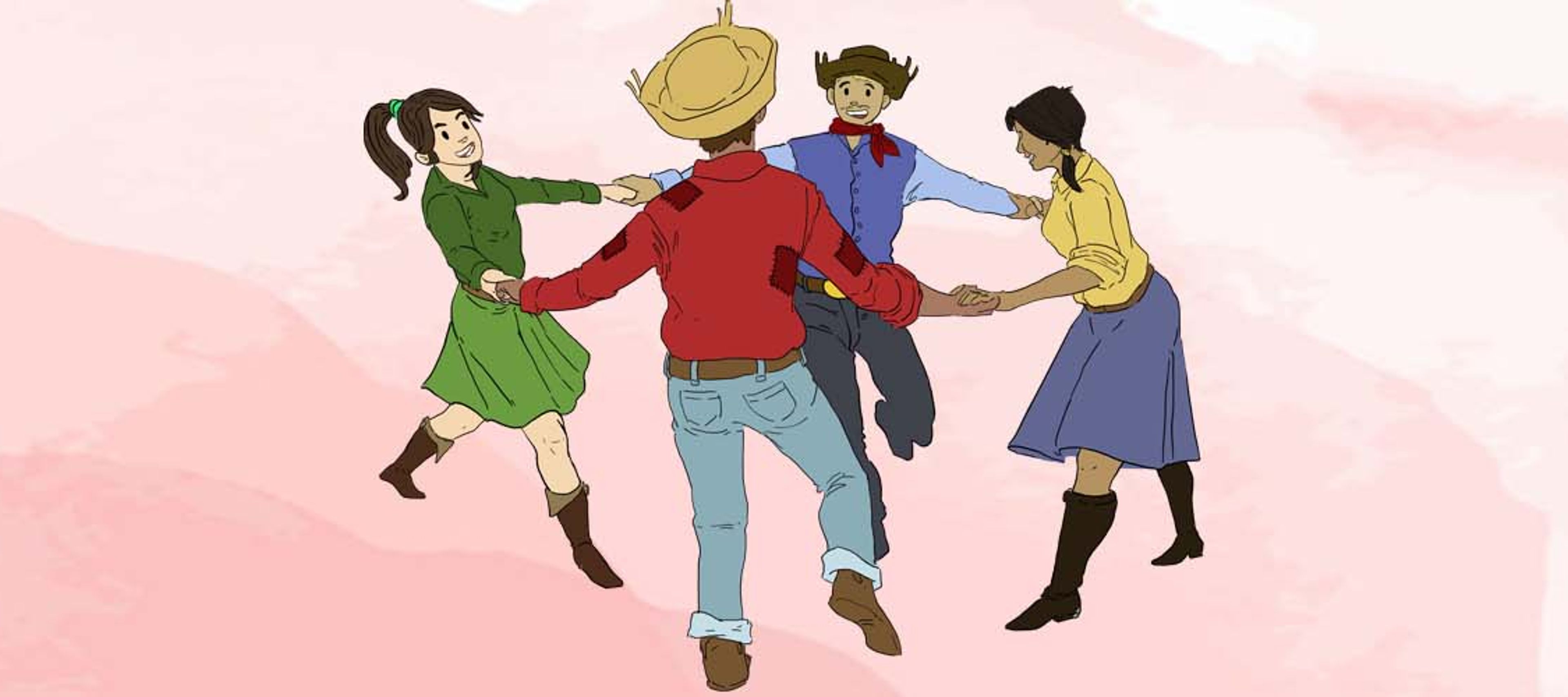
Ciranda is described as a democratic dance. It does not hold space for prejudice or discrimination regarding sex, race, age, social or economic status of the participants, and there is no limit to the number of people who can participate in it. It is characterized by the formation of a large circle (roda), usually on beaches or in town squares. Members hold hands and dance to the sound of slow and repeated rhythms. It is very common in Brazil to define Ciranda as a children's circle game, but in the Northeast region, mainly in Pernambuco, it is known as an adult circle dance. Participants can be of various age groups, with no impediments to children's participation as well. Over the years, it has transformed itself as a working class dance to one enjoyed by all, regardless of the time of year.
Ciranda begins as a small circle that increases as people come to dance. The circle grows in size as participants join hands with those who are already dancing. As it is customary to invite others to join, a participant can enter and leave without the slightest problem. When the circle or “wheel” reaches a size that makes it difficult to move, a smaller one forms inside the larger “wheel” (roda de ciranda).
The cirandeiro/a master is the most important member of the ciranda, being responsible for improvising verses, sometimes playing the ganzá (a shaker made of steel with seeds inside), and presiding over the music. The music is characterized by the use of call and response singing: the cirandeiro/a master sings the verse, then a vocal group or dancers repeat that same verse in response.
One of the most famous cirandeiras is Lia de Itamaracá, a Brazilian singer and composer who is considered a living heritage of the Pernambuco State. She has become a national Ciranda reference and her name is linked to the tropical island and state municipality of Itamaracá, where she was born and still lives. She is an icon of perseverance and resistance because of her music. Her importance transcends categories, as she is known internationally and in circles outside of folk, regional, or popular music circuits. Other important cirandeiros/as include Antônio Baracho, João Limoeiro, and Mestre Anderson. Pernambuco artists from outside of the genre, such as Chico Science and Lenine, have included Ciranda in their repertoires and played them live in their concerts.
Much remains unknown about Ciranda, its origins, and its practices. The first scholarship on the emergence of Ciranda dates from 1960 and is the work of the priest and musicologist, Jaime Diniz. With the title "Ciranda: Circle of Adults in Pernambuco Folklore," published in the Magazine of the Department of Cultural and Artistic Extension, it is considered one of the most important documents about the genre. From the 1960s through the 1980s, dancing the ciranda had become fashionable and well-known as an important cultural expression. Unfortunately, folklorists who produced studies on the most diverse cultural practices in Pernambuco during this time merely cited the research of Diniz and Evandro Rabello when discussing Ciranda. As a result, there is still much to discover, and Ciranda remains primarily a tradition lived out and learned orally, by the people.
Connected Themes
Artist(s)
Genre(s)
Monthly Theme