
90 mins
Colombian Cumbia: African, Indigenous, and Spanish Roots of Rhythm
What is Cumbia, and how do you play its traditional rhythms?
Essential Question
What is Cumbia, and how do you play its traditional rhythms?
Objectives
Know (knowledge):
- The history of Cumbia in Colombia and understand its African, Indigenous and Spanish roots
- The concept of rhythm and steady beat
- Spanish vocabulary related to Cumbia and Colombian culture
- How to play the four percussion instruments that are part of the cumbia ensemble (tambor alegre, tambora, llamador, maraca) through vocalizing and body percussion exercises
- How to sing Cumbia lyrics in Spanish and dance Cumbia steps
- How oral traditions bring people together to understand their history and culture
Mastery Objective:
- Students will be able to perform the traditional rhythms of Cumbia by singing and playing a body percussion game.
Background
In this lesson, students will learn how to play Cumbia by using their own voices and bodies as instruments. They will familiarize themselves with how its traditional drums are played, how a percussion ensemble works, and will sing in Spanish and dance traditional Cumbia steps. Through these activities students will learn how to use their body as an instrument and explore Cumbia as a cultural practice that continues to change with the creativity and innovation of its members.
Cumbia is a cultural movement that unites all of Latin America and represents the resilience of its people. After the Conquest of the Americas, the Spanish colonists granted enslaved Africans and Indigenous Peoples only one day of the year for celebrations. On that day, over many years, Cumbia was born. It is the creation of Black and Indigenous resilience in order to preserve culture and community through the act of music-making. According to oral tradition, the El Dos de Febrero (2nd of February) celebrates the survival of culture, community, and memory in Black and Indigenous communities that had otherwise lost land and experienced oppression at the hands of the Spanish conquistadores (conquerors). An act of remembrance, Cumbia is a symbol of identity and an homage to the roots of the original peoples of Abya Yala, a word in the Kuna language which means “mature land, living land or flowering land”, used by indigenous peoples of Latin America to describe the continents of North and South America.
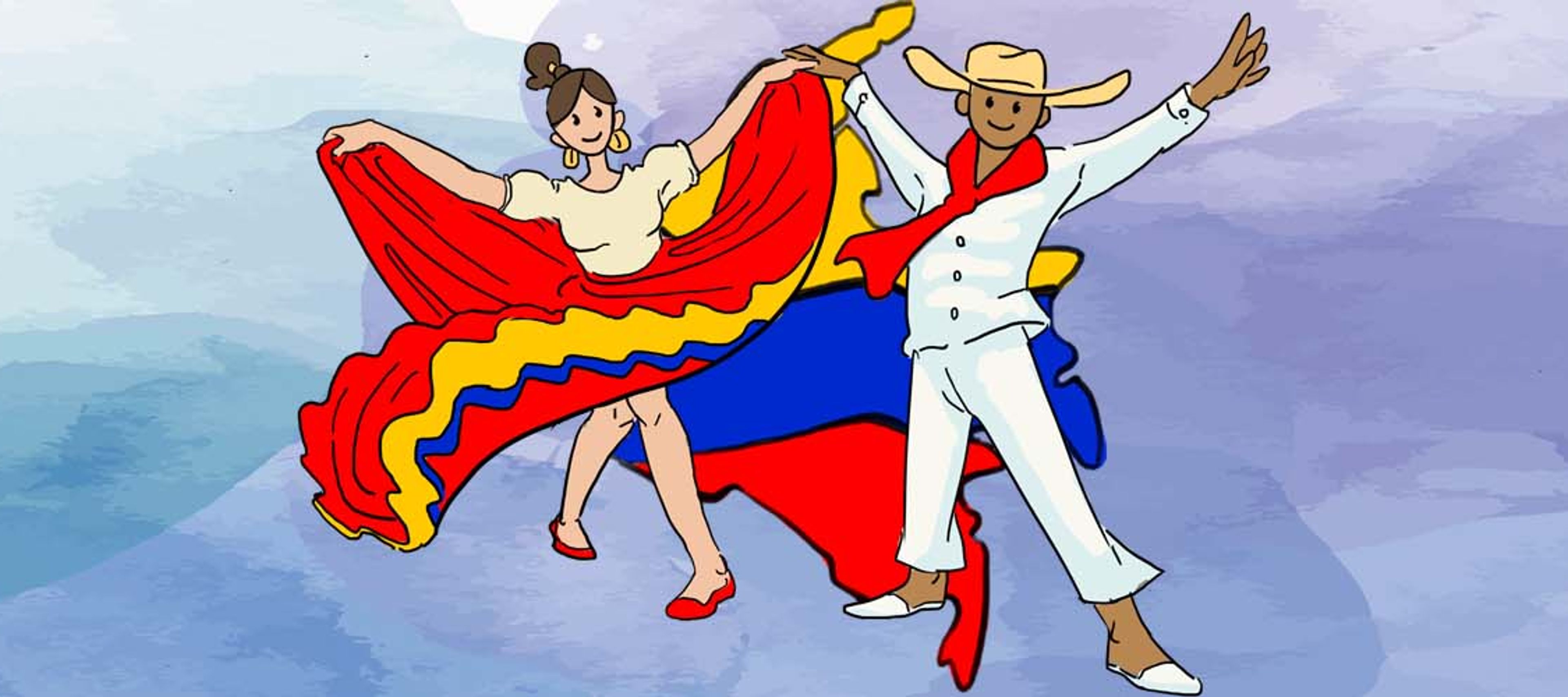
With its roots in the five states of the Caribbean Coast of Colombia, and more specifically on the banks of the Magdalena River, Cumbia’s history is born from three cultures; African, Spanish, and Los Indigenas (First Nations Peoples) who were in the Americas before the Spanish arrived. Africans from diverse nation-states and cultures, were forced into slavery in the New World by the Spanish conquerors. But they brought with them the memories of their drums and rhythms, which they reimagined and refashioned as the percussive and sonic foundations of Cumbia. Already living on the land that is now called Colombia, the Koguis people of Santa Marta contributed the gaita (kuisi or flute), and the maracas (shakers) to Cumbia. The pito atravesao (pierced whistle), also known as caña de millo (millet cane), is another Indigenous flute from the Caribbean Coast and a foundational instrument of the genre. The third element, brought by the Spanish conquistadores, is the Spanish language and traditional clothing worn during the dance: large skirts, flower headdresses and a package of candles for women; pants, white shirts, red scarves, espadrilles and vueltiao hats for men.
In the 1940s, Lucho Bermúdez, a clarinetist and composer who was inspired by the work of Jazz clarinetist Benny Goodman, combined the Afro Colombian rhythms of Cumbia with the format and sonority of a Big Band, and popularized the music across Colombia and Latin America by touring and playing for rich, white audiences. Cumbia and other traditional Caribbean rhythms such as Gaita and Porro had been previously frowned upon by the white, upper and middle classes of Bogotá because of its Black and Indigenous roots. Because of its assimilation into the Big Band format, it quickly became popular and was soon the national music of Colombia.
Bermudez’s innovative approach to Cumbia inspired other musicians to continue mixing the diverse cultures and expressions of Colombia as an act of resilience to the violence, conquest and oppression that are part and parcel of its history of colonization. These musicians include José Barros, a prolific composer from el Banco, Magdalena, with more than 700 published songs; Andres Landero, “the King of Cumbia” an accordion player from San Jacinto, Bolivar; and Los Gaiteros de San Jacinto, music legends of Colombian Cumbia that spans the entire Caribbean.
In present day Colombia, the innovation of Cumbia continues. Young artists and bands like Carlos Vives, Sidestepper, Bomba Estéreo, Systema Solar and Lido Pimienta have incorporated Cumbua and other Caribbean oral traditions into their original Rock, Pop and Electronic styles. As a result, the Colombian music scene has exploded internationally since the 1990s.
Connected Themes
Artist(s)
Genre(s)
Monthly Theme