
180 mins
Communism and the Beginning of the Cold War featuring Bone Music
How did the political and ideological differences between the United States and the Soviet Union lead to the period of the Cold War?
Essential Question
How did the political and ideological differences between the United States and the Soviet Union lead to the period of the Cold War?
Objectives
Knowledge:
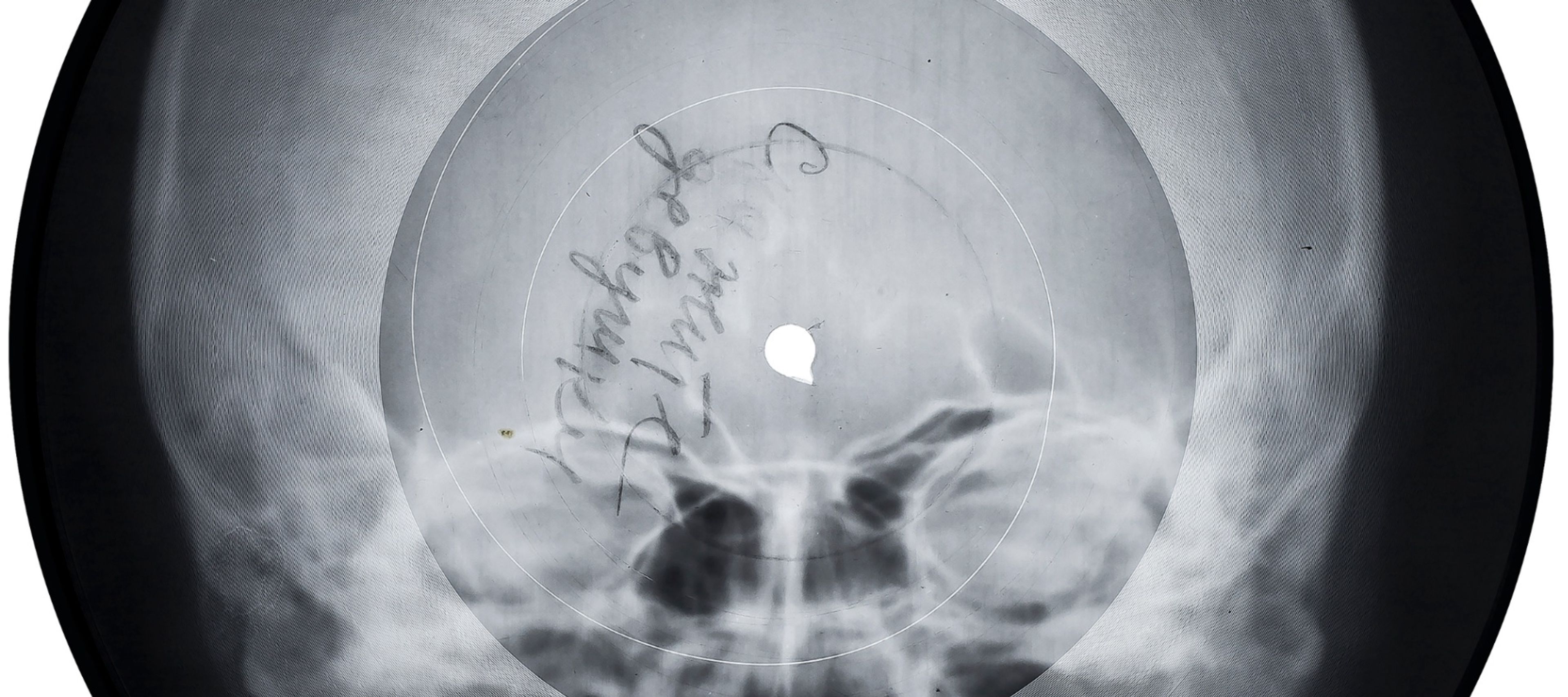
- The phenomenon of Soviet “Bone Music” (“roentgenizdat”)
- The political and ideological differences between the United States and the Soviet Union after World War II
- The differences between capitalism and communism
- Post World War II Europe in terms of United States and Soviet Union involvement
- Sources of Cold War conflict between the United States and the Soviet Union
- Alliance systems and other steps the United States used to combat Soviet expansion
Mastery Objective:
- Students will be able to describe the sources of conflict between the United States and the Soviet Union that led to the period of time known as the Cold War through the analysis of musical artifacts, film, published materials, and secondary sources.
Background
In this lesson, students will explore the history of Soviet Bone Music and the society that created it. They will then analyze primary and secondary sources to determine how this story can provide insight into the political and ideological differences that led to the Cold War between the United States and the Soviet Union.
Stephen Coates of the British band The Real Tuesday Weld and The X-Ray Audio Project was in Russia to perform in 2012 when he made a discovery in a St. Petersburg market. He found a musical record etched onto an x-ray of bones. Coates soon learned what he found was the Soviet phenomenon of “bone music” (“roentgenizdat”) - bootleg recordings of banned music in the Soviet Union pressed onto used x-rays. Coates went on to publish two books; X-Ray Audio: The Strange Story of Soviet Music on the Bone and Bone Music: The History of the X-Ray Underground.
What was society like in the 1950s Soviet Union, where popular western music and even music of the Soviet Union’s past had to be bootlegged onto used x-rays to be distributed? How can the story of “bone music” shed light on understanding how the Cold War began between the United States and the Soviet Union?
While the United States and the Soviet Union were allies against Germany during World War II, that relationship crumbled almost immediately as the war ended. The stage for the growing tensions between the two nations (and their respective allies) would be set at the various meetings between the “Big 3” (Britain, U.S., and the Soviet Union) at the Yalta and Potsdam conferences in 1945. It was at these gatherings in the final months of World War II, where the leaders of the Allied nations came together to bring the world back together again, that the impending conflict between the U.S. and the Soviet Union began to arise.
At the center of the dispute between the Soviet Union and the United States, was what to do about Nazi Germany. The Soviet Union, whose casualties during the war were around 27 million, proposed harsh reparations, large territorial losses, and complete destruction of German society.
The United States and Britain proposed a more lenient path, fearing a repeat of the rise of Nazisim due to the severe terms placed upon Germany by the Treaty of Versailles that concluded World War I. There was also a divide developing between how the western and eastern parts of Germany were going to operate, with the Soviet-controlled eastern territory moving toward more communist ideals. The divide between west and east, democracy and communism would continue to play out for the next 45 years across the globe during the Cold War.
During the Cold War, the United States adopted a policy of containment to stop the spread of Soviet influence and communism. During the 1940s and 1950s, the policy of containment took shape in the form of money given to countries to rebuild after World War II through the Truman Doctrine and Marshall Plan. In 1947, President Harry S. Truman outlined the choice for Americans:
“At the present moment in world history nearly every nation must choose between alternative ways of life. The choice is too often not a free one. One way of life is based upon the will of the majority, and is distinguished by free institutions, representative government, free elections, guarantees of individual liberty, freedom of speech and religion, and freedom from political
oppression. The second way of life is based upon the will of a minority forcibly imposed upon the majority. It relies upon terror and oppression, a controlled press and radio, fixed elections, and the suppression of personal freedoms. I believe that it must be the policy of the United States to support free peoples who are resisting attempted subjugation by armed minorities or by outside pressures. I believe that we must assist free peoples to work out their own destinies in their own way. I believe that our help should be primarily through economic stability and orderly political process.”
Alternatively, while President Truman spoke about stopping communism from spreading, Soviet Premier Joseph Stalin was providing justification for stopping the spread of capitalism.
“The point is that the uneven development of capitalist countries usually leads, in the course of time, to a sharp disturbance of the equilibrium within the world system of capitalism, and that group of capitalist countries regards itself as being less securely provides with raw materials and markets usually attempts to change the situation and to redistribute “spheres of influence” in its own favor — by employing armed force. As a result of this, the capitalist world is split into two hostile camps, and war breaks out between them.”
For more information about bone music, go to https://www.x-rayaudio.com/x-rayaudioproject to look at a museum exhibit, BBC documentary, blog posts and more.
Materials
1. A device with internet access for students (Chromebook, etc.)
2. Scissors, tape, or glue
Preparation
1. Digitally share Image 1, Bone Music with students before class.
2. Digitally share Document - Communism Pamphlet (1962) with students before class.
3. Make 2 compare and contrast charts on the board using using this image as a guide: Compare and Contrast Charts