
90 mins
Early Reconstruction featuring the Hyers Sisters
Who were the Hyers Sisters, and how did their work represent the Reconstruction era?
Essential Question
Who were the Hyers Sisters, and how did their work represent the Reconstruction era?
Objectives
Know (knowledge):
- Reconstruction was a contentious national project that sought to economically and socially rebuild the United States immediately following the Civil War
- The 13th, 14th, and 15th Amendments were one of the biggest accomplishments of Reconstruction, ending slavery and greatly altering the lives of African Americans
- The creation of the Freedmen's Bureau and other mutual aid organizations assisted African Americans who gained freedom
- The Hyers Sisters created the first all-African American theater company in the United States and achieved enormous popularity by showcasing the African American experience during this time with grace and dignity
Mastery Objective
- Students will be able to describe the effects Reconstruction had on African Americans by watching video clips, investigating primary source documents, and doing a dramatic reading of excerpts of musical theater work performed by the Hyers Sisters.
Background
“I went a mile and a half in the most furious tempest of wind and snow that I have seen for five years, to see the plantation sketches of the Hyers Troupe and hear their exquisite music, and I would go three miles through just such a tempest to have that pleasant and satisfactory experience again.”
-Samuel L. Clemens (Mark Twain)
In this lesson, students imagine what life might have been like for African Americans during the Civil War, Reconstruction, and Post-Reconstruction by exploring the life and work of the Hyers Sisters, the originators of American musical theater. By analyzing primary source documents, watching clips from the film "Voices for Freedom - The Hyers Sisters' Dream & Legacy" and performing a dramatic reading of scene excerpts from Out of Bondage – the Hyers Sisters’ first musical – students will come away with a better understanding of the Civil War, Reconstruction, and Post-Reconstruction, and how they affected the lives of enslaved and formerly enslaved people.
Sisters Anna Madah and Emma Louise Hyers were born in Sacramento, California in the 1850s. The daughters of amateur opera singers who made their way to California during the Gold Rush, the Hyers Sisters received musical training at a young age. After moving to San Francisco, this musical training was enriched by an education in civics via the city’s activist African American community that surrounded them.
On April 22, 1867, Anna (a soprano) and Emma (a contralto) made their singing debut in Sacramento’s Metropolitan Theater, performing operatic arias for an enraptured audience. Under the management of their father, the sisters then toured the country, performing across the United States to great acclaim.
The sisters began their career during Reconstruction, a time in U.S. history defined by the U.S. Government’s attempts to reconstruct the country socially and economically after the destruction of the Civil War. Perhaps more than anything else, Reconstruction is defined by the emancipation of enslaved people. Through the so-called “Reconstruction” or “Civil War” Amendments - the 13th, 14th, and 15th Amendments - African Americans gained the rights of freedom, citizenship, and (for men) participation in democracy through voting. Yet the process of fully realizing the rights to citizenship was an arduous one, and one that continues to this day. Lifted from the yolk of slavery, African Americans were given sparse economic resources to succeed, and needed to rely on federal and local programs such as the Freedmen's Bureau to attain loans, property, or secure jobs. And while freed from slavery, African Americans still faced extreme racism, prejudice, and violence throughout the United States.
It was in this environment that the Hyers Sisters operated, and by many accounts, thrived. At a time when the primary form of entertainment was Minstrelsy, noted for its reliance on racist and derogatory stereotypes of African Americans, the Hyers Sisters purposely chose to perform Opera. The sisters’ virtuosity at the artform is evidenced by the fact that they were one of, if not the first, women and African American performers to receive billing on the illustrious Redpath Lyceum touring circuit.
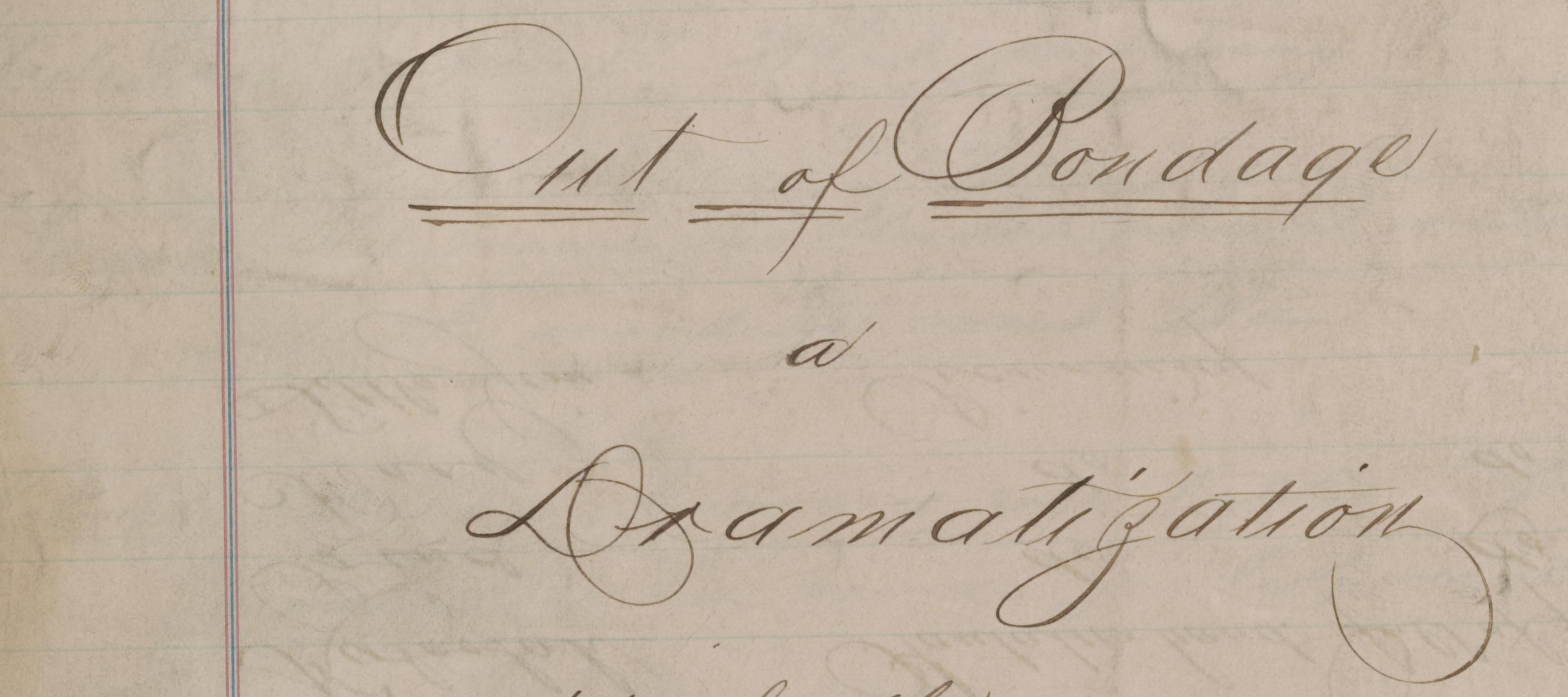
By the late 1870s, the Hyers Sisters’ prestige as opera singers granted them the opportunity to pursue the dream of touring Europe. However, at the same time, President Rutherford B. Hayes pulled federal troops from the South. Very quickly, the promises of Reconstruction for formerly enslaved people vanished before the now unchecked threats of violence from groups such as the Ku Klux Klan and the ratification of discriminatory “Jim Crow” laws throughout the South. The popularity of minstrelsy only increased at this time, and the Hyers Sisters had to choose whether to travel to Europe, or continue their artistic project of establishing the dignity and humanity of African Americans through the stage. They chose the latter, releasing Out of Bondage, the first American musical ever produced.
Out of Bondage exemplifies the Hyers Sisters' approach to creating a genre which spoke to the dignity and ingenuity of African Americans. Written by Joseph Bradford, it focuses on a family of enslaved people who, in the process of the play, become free, move to Boston, and become professional singers. The story is intertwined with song performances, mostly coming from a repertoire of music closely associated with Spirituals and popular songs known among African Americans at the time.
Both the fictionalized account of the characters in Out of Bondage and the historical account of the Hyers Sisters demonstrates the opportunities and challenges African Americans encountered during and after Reconstruction.
Disclaimers
This lesson contains primary source documents and other materials that may include terms and images reflecting the attitudes, perspectives, and beliefs of different times that today are considered offensive and demeaning. Teachrock.org does not endorse the views expressed in these documents, but recognizes the value such materials provide for historical inquiry. For guidance on introducing controversial historical materials into the classroom, we suggest reviewing this document from The Library of Congress.