
90 mins
Immigration and Ellis Island featuring Irving Berlin and Bruce Springsteen
What is Ellis Island, and what might have been the experience of Europeans who immigrated to the United States at the turn of the century?
Essential Question
What is Ellis Island, and what might have been the experience of Europeans who immigrated to the United States at the turn of the century?
Objectives
- Know (knowledge):
- Many European immigrants had the shared experience of entering the United States through Ellis Island
- Immigrants have contributed to the culture and economy of the United States by creating classic American songs and musical instruments for iconic American brands
- The contributions of Jewish American immigrant, Irving Berlin
- Mastery Objective
- Students will be able to explain the historical significance of immigration in the early 20th Century to the development of the United States by analyzing texts, examining media, and interpreting primary source documents.
Background
“There's treasure for the taking, for any hard working man who'll make his home in the American land” - Bruce Springsteen
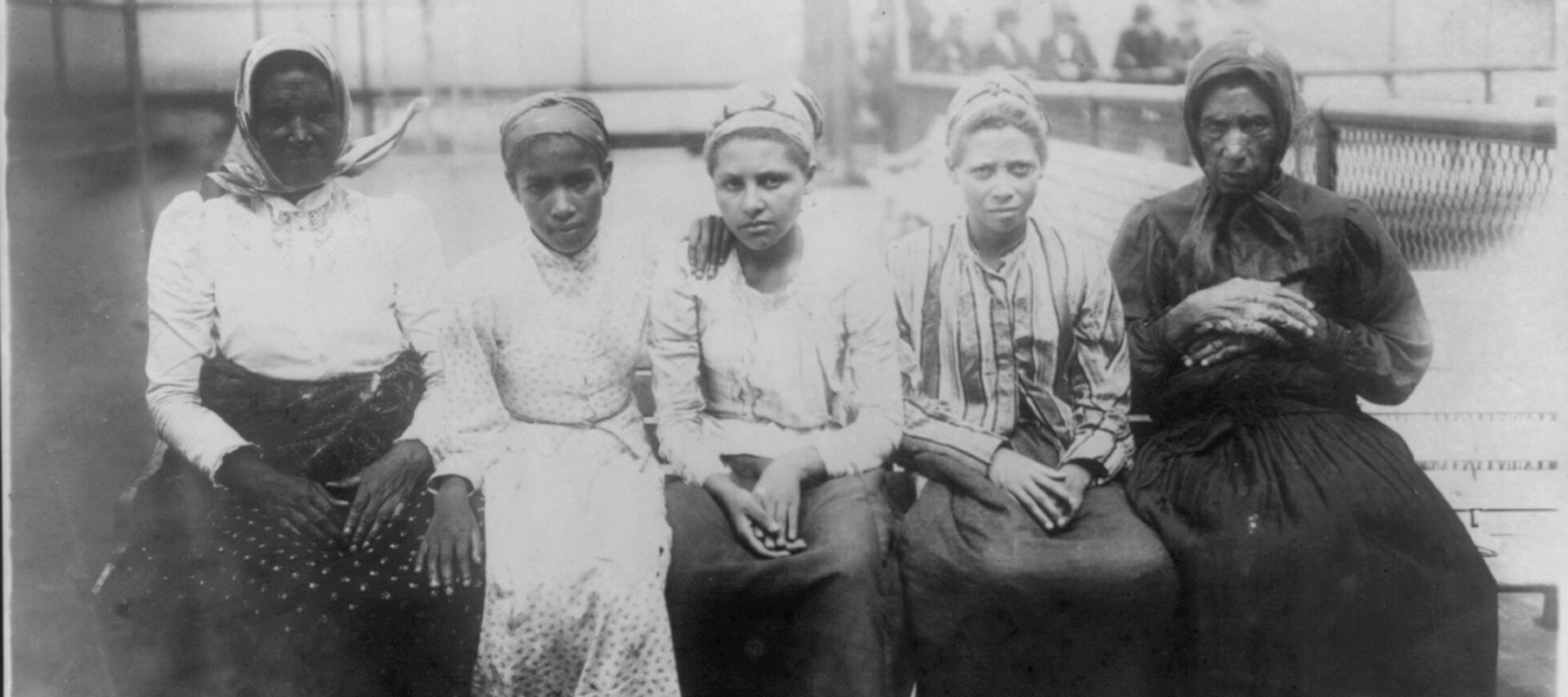
In this lesson, students will explore the promise of the American Dream through the experience of immigrants who passed through Ellis Island in the early 20th Century. In their exploration, students will be examining artifacts from Ellis Island, analyzing song lyrics, and researching iconic songs and musical instruments created by immigrants.
The beauty, power, and magic of a well written song can illuminate history with an emotional clarity like no other. It can serve as a revelation, a motivation, and an inspiration to learn more. In 2012, Bruce Springsteen wrote “American Land” after being inspired by “He Lies in the American Land", a poem by immigrant steelworker Andrew Kovaly. Kovaly was a Slovakian steelworker in McKeesport, Pennsylvania. He wrote the poem after a friend was run over by a buggy just prior to the arrival of his wife and children from Slovakia - Kovaly had to break the news to the family after they arrived. Springsteen's “American Land” weaves a hopeful sound with lyrics that tell the story of the dreams and reality of the millions of immigrants who left their home countries for a new home in their American Land. History is about people, and the people that forever changed, built, and contributed to the United States in ways that are still being celebrated, debated, and regulated. Music’s power is in the connection it fosters with the listener. “American Land” allows students to develop a deeper empathy and understanding of the hopes and realities faced by immigrants during this time period.
Between 1900 and 1915, more than 15 million immigrants arrived in the United States. That was about equal to the number of immigrants who had arrived in the previous 40 years combined. In 1910, three-fourths of New York City's population were either immigrants or first generation Americans (i.e. the sons and daughters of immigrants). In the years between 1881 and 1924, millions of European Jews in particular left their native lands to embark on the challenging and arduous journey to what they referred to as the “Golden Land” of America. These Jewish immigrants were propelled from their towns and villages by persecution and the lack of economic opportunity. They settled in cities where they were clustered in downtown districts, joined the working class, spoke Yiddish, and built strong networks that embraced and preserved their Jewish culture while forging a new way in this new world.
Few Jewish immigrants embodied this experience more than one of America’s most famous and enduring songwriters, Irving Berlin. Born in Russia, Berlin immigrated with his family to America in 1893. Born Israel Isidore Beilin, he pulled himself out of poverty in New York’s Lower East Side, and despite not knowing more than the basic principles of music composition, he wrote more than 3,000 songs, produced 17 Hollywood film scores, and created 21 Broadway scores. One of Berlin's best known songs is his 1942 hit release, “White Christmas”, which was recognized as the best selling single in any category, up until the release of Elton John’s “Candle in the Wind,” 50 years later. He also wrote America’s unofficial national anthem, "God Bless America", which was relased in 1939 and became an immediate sensation. Berlin had written an earlier version of the song in 1918, however with war again threatening Europe in 1938, he made some changes to reflect the different state of the world. Additionally, Berlin co-founded the performing rights organization ASCAP (American Society of Composers, Authors, and Publishers), founded his own music company, and donated millions of dollars in royalties to organizations like the Army Emergency Relief and the Boy and Girl Scouts.
Immigrants not only had an indelible impact on American music by writing popular songs, but also by crafting the instruments that were used to create those compositions. Immigrants, and the descendants of immigrants, invented and produced many of the renowned musical instruments still making music today. With knowledge, passion, and technique, these newcomers to the American melting pot brought trade skills that had been learned in the old country. With those skills, immigrants built musical instruments for what are now considered iconic American brands within the music industry worldwide. These settlers never settled for ordinary, and if we listen to the instruments they built and the songs they wrote, we can hear the dedication to their craft and their contribution to the soundtrack of America - from yesterday through to today.
Materials
A device with internet access for each student
Connected Themes
Artist(s)
Genre(s)
Topics
Decade/Era