
90 mins
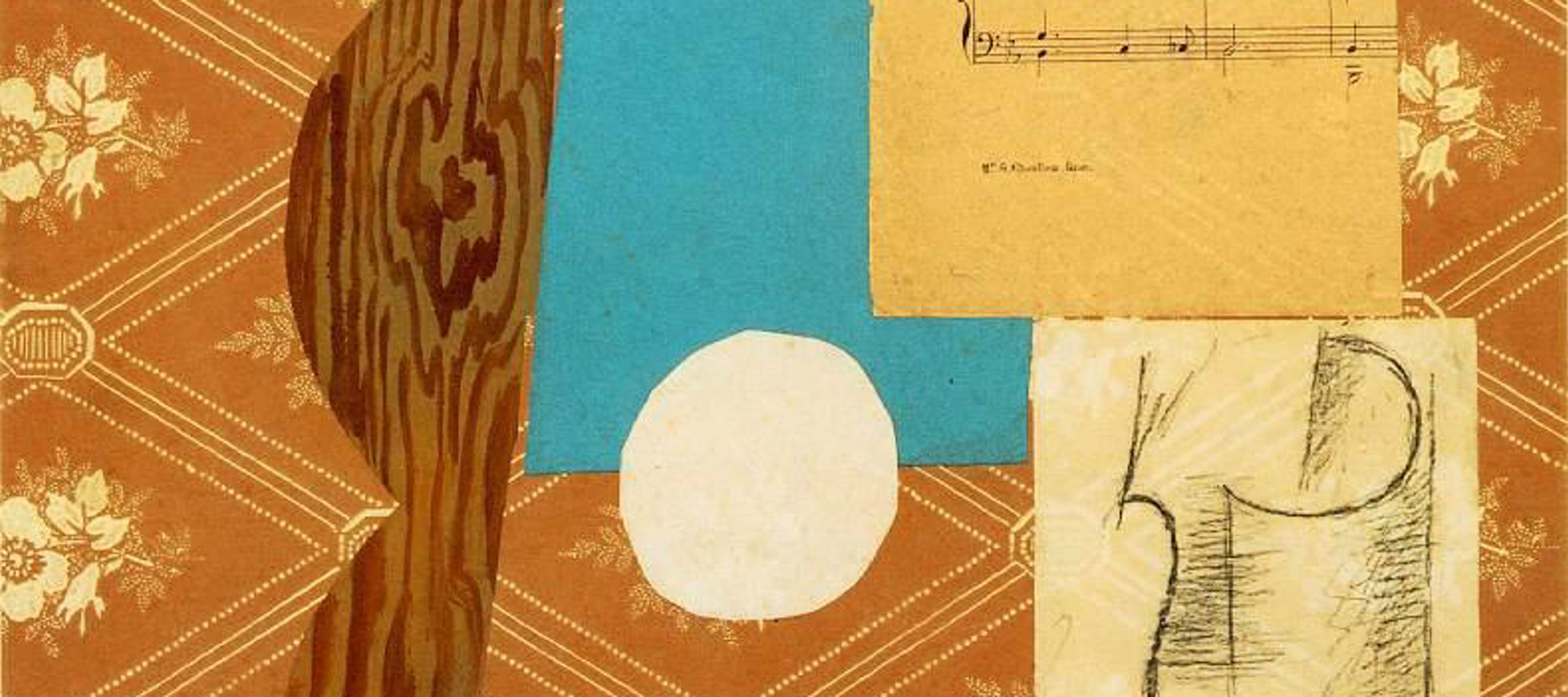
Exploring Shapes in Pablo Picasso's "Guitar, Sheet Music, and Glass"
What shapes did Pablo Picasso use to create his piece Guitar, Sheet Music, and Glass and how can similar shapes be used to create other instruments?
Essential Question
What shapes did Pablo Picasso use to create his piece Guitar, Sheet Music, and Glass and how can similar shapes be used to create other instruments?
Objectives
Know (knowledge):
- How to identify a shape based upon its characteristics
- How to identify curved and straight lines
- The defining characteristics of Cubism
- Pablo Picasso’s Guitar, Sheet Music, and Glass (1912)
Mastery Objective:
- Students will be able to create their own Cubist collage of a musical instrument by analyzing the shapes used in Pablo Picasso’s work Guitar, Sheet Music, and Glass.
Background
In the early 1900s, young artists in Paris yearned to move beyond the realistic portrayals of objects and landscapes that shaped much of the history of painting. To break from the past, they reduced objects to fragmented geometric shapes and angles, and experimented with new ways of presenting images from multiple perspectives within a single painting. While past artists showcased perspective and dimension in their works, younger artists like Pablo Picasso and Georges Braque created flat scenes that merge the subject and surface as one. They also experimented with forgoing paint altogether, pasting everyday items like newspapers and sheet music to the canvas. The results of their cumulative efforts was later termed Cubism.
Picasso’s 1912 piece Guitar, Sheet Music, and Glass exemplifies many of the techniques associated with Cubism. It uses traditional geometric shapes such as squares, rectangles, and circles, while also incorporating imperfect shapes like semi circles and rounded oblong figures. Picasso also uses various materials such as a newspaper, a piece of sheet music, wall paper, and a drawing of a wine glass in the piece. Together, the shapes and mediums create the depiction of a guitar, an object that appears in much of Picasso’s work.
In this lesson, students identify basic shapes and types of lines, and analyze how Pablo Picasso’s might use such shapes and lines in Guitar, Sheet Music, and Glass. Drawing upon Guitar, Sheet Music, and Glass as an inspiration, students than cut out and paste shapes to create their own cubist collage of a musical instrument.
Materials
- Various types of paper (construction, patterned, cardstock, newspapers, magazines, tissue paper, etc.)
- Glue
- Scissors
Connected Themes
Topics