
90 mins
From the Stage to the Studio
What caused The Beatles to cease touring in 1966 and how did the innovative music they then created during their subsequent immersion in the recording studio both reflect and influence the world at that time?
Essential Question
What caused The Beatles to cease touring in 1966 and how did the innovative music they then created during their subsequent immersion in the recording studio both reflect and influence the world at that time?
Objectives
Know (knowledge):
- About the Baby Boomer generation as a shaping cultural force in mid-1960s America
- About the Vietnam War and its effect on American popular culture in the mid-1960s
- About the “Summer of Love” and major events of 1967
- How The Beatles’ stadium tours in 1965-6 pushed the boundaries of concert technology
- Why The Beatles decided to stop touring in 1966
- How The Beatles 1967 album Sgt. Pepper’s Lonely Hearts Club Band made groundbreaking use of studio technology
- How The Beatles reflected the cultural climate of the “Summer of Love”
Be able to (skills):
- Interpret a range of media, including songs, images, and text to develop and demonstrate an understanding of a particular historical period
- Make connections between popular music and historical events
- Extrapolate arguments about music by assessing sound, mood, tone, instrumentation
Background
The “Beatlemania” that swept much of the world in 1964 was so intense that many pundits projected it could not sustain beyond a year. However, the opposite was true. By 1966 The Beatles, who had played tiny pubs only a few years earlier, graduated from multi-night theater engagements to sports stadiums. As was often the case throughout The Beatles’ history, they were the first; no group had yet performed in venues this size. As trailblazers, The Beatles discovered many ways in which the technologies of producing live music events were not yet capable of supporting their needs. For instance, P.A. systems--the microphones, mixing boards and speakers through which sound is projected at concerts--were inadequate at these venues. The Beatles had no “monitor” speakers on stage and strained to hear one another over the screaming audience. And it could be hard for that audience as well: at Shea Stadium in New York, The Beatles sang through the tinny, pole-mounted speakers used by The Mets’ announcer to introduce baseball players. There were physical dangers too. On stage, rain meant the very real possibility of electrocution. Unlike the fortified boundaries between performers and fans one finds at present-day venues, The Beatles were exposed to their audience on nearly all sides at all times. Fans rushed the stage at concerts and blocked roads and swarmed The Beatles' vehicles elsewhere.
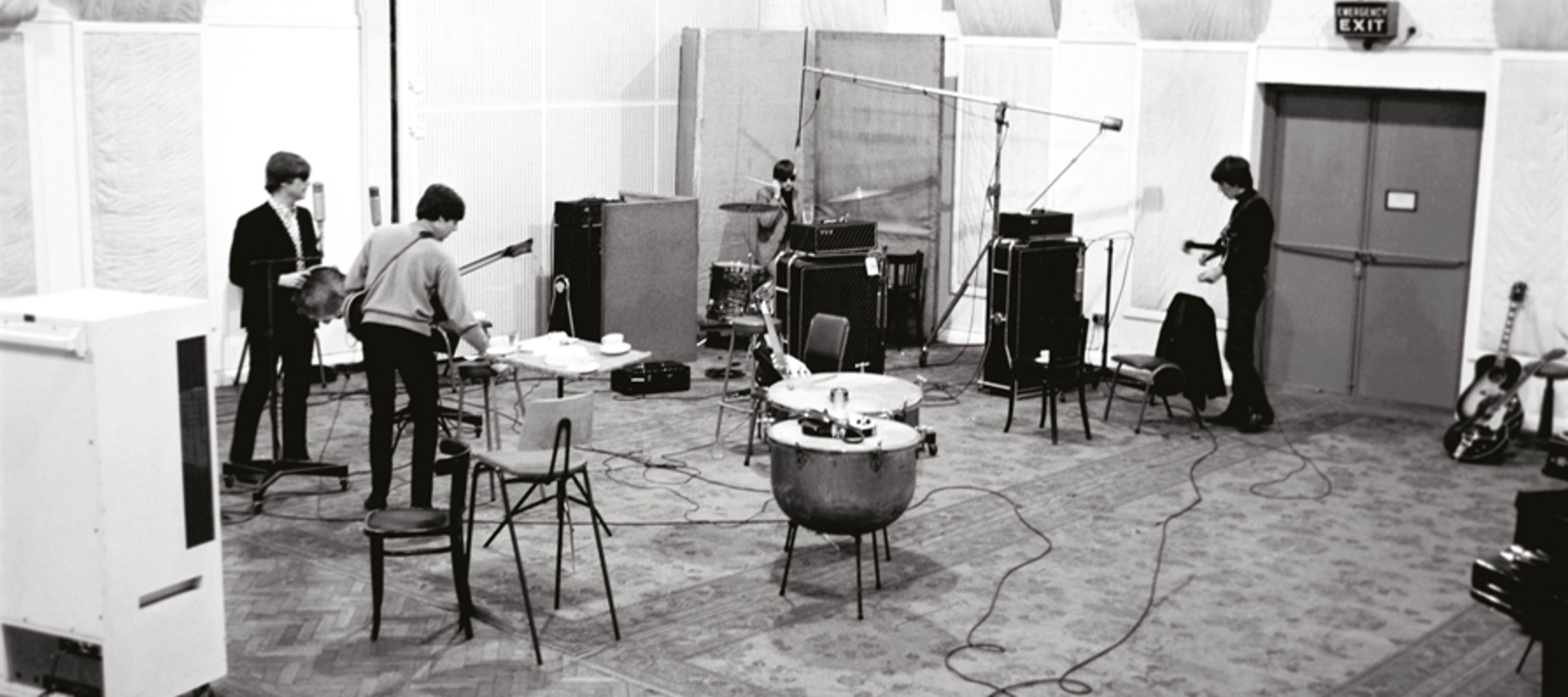
By the end of their 1966 summer tour, The Beatles had grown weary of the live concert setting. Concurrently, they had become increasingly comfortable within, and inspired by the possibilities of the recording studio. In the fall of 1966, in a culminating moment, The Beatles announced that they would no longer tour and would instead focus their creative energy on making records.
Though The Beatles had already demonstrated a penchant for invention in the recording studio, Sgt. Pepper’s Lonely Hearts Club Band, their first post-touring effort released in June 1967, was revolutionary in its use of studio technology, its diverse instrumentation, its unified character as a "concept album," and in The Beatles’ "surrealistic" approach to rendering popular song. It was widely influential at the time and has never become less so. In 2012, a large panel of musicians and writers in Rolling Stone named Sgt. Pepper’s Lonely Hearts Club Band the “most important rock and roll album ever made.”
However, The Beatles were not the only entity undergoing transformation in the mid-1960s. The teenagers of the “Baby Boomer” generation, a demographic that represented more than 40% of the U.S. population in 1965 and was the driving force of Beatlemania, were now reaching adulthood. Though the voting age was 21, the draft age was 18, and American presence in Vietnam was rapidly increasing. The “Human Be-In,” a sit-in protest of 20,000 to 30,000 people held at Golden Gate Park in San Francisco, CA in January of 1967, addressed a wide swath of social, political and cultural issues generally linked to the new teenaged and young adult majority in the United States. Press coverage of the Human Be-In inspired a massive wave of young people to descend on San Francisco and other U.S. cities in 1967. The “Summer of Love,” as it came to be known, began technically on June 21, 1967. Sgt. Pepper’s Lonely Hearts Club Band landed on American shelves June 2. Like their fans, The Beatles had grown. The Human Be-In asked Americans to open themselves to a new political consciousness. Sgt. Pepper’s Lonely Hearts Club Band presented listeners with the opportunity to experience a new musical consciousness. Both belonged to and defined their historical moment.
Connected Themes
Artist(s)