
60 mins
“Glory” and the Continuing Civil Rights Movement
How does Common and John Legend's “Glory” signal Civil Rights movements of the past and the present?
Essential Question
How does Common and John Legend's “Glory” signal Civil Rights movements of the past and the present?
Objectives
- Know (knowledge):
- The motivation behind John Legend and Common’s song “Glory”
- About Martin Luther King, Jr.’s “I Have a Dream” speech
- About Alicia Garza’s “Why Black Lives Matter” speech
- How popular songs reference larger social movements
- Mastery Objective:
- Students will be able to explain how the song “Glory” references both the Civil Rights Movement in the 1960s as well as the Black Lives Matter movement by analyzing the music video and song lyrics.
Background
Perform "Glory" with your class using Modern Band Charts provided by Music Will.
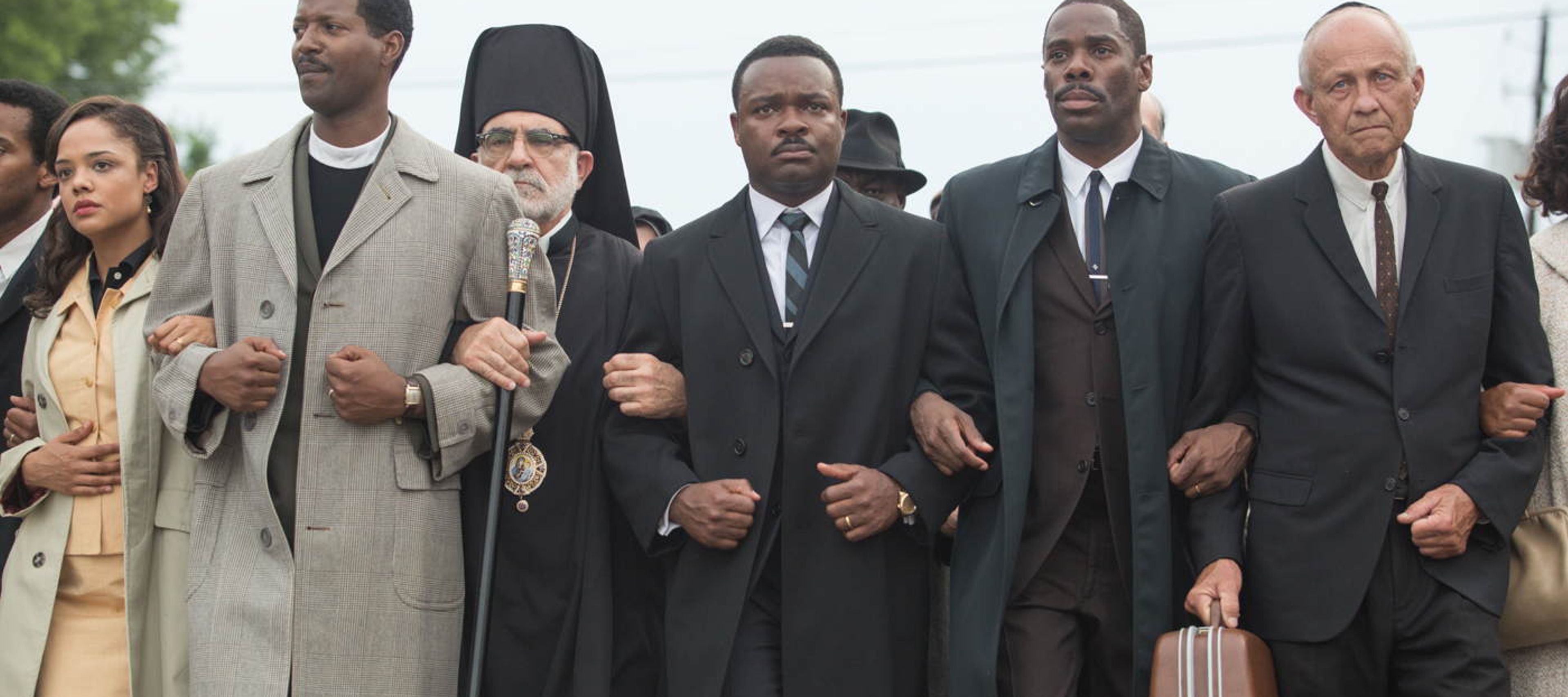
In October 2014, the production of Selma, a film recounting the 1965 Civil Rights marches, was nearing completion. But before the cast disassembled, director Ava DuVernay approached rapper Common, who was playing the role of activist James Bevel in the film, and asked him if he was interested in writing a song for the end credits.
In a later interview with Katie Couric, Common recalled that he was “moved so much by the experience” of being a part of Selma that he embraced the idea of providing a song for the film. He also knew who he wanted to collaborate with for the project: “I thought John Legend would be the perfect voice,” Common told Couric, “because he is a very soulful artist and a meaningful artist but he also is active in helping out the community.”
Working over the phone and internet, Common and Legend wrote the song more quickly than they anticipated. “It was really one of those moments when the thoughts just come to you, and you really are truly inspired and you don’t let your ego get in the way,” Common later told Variety. With Common writing the lyrics and Legend the melody, the two created the foundation of the song “Glory” within a few days. When they gave DuVernay a rough recording of the song, she responded, “you might get an Oscar nomination for this!” As it turned out, not only was “Glory” nominated for an Oscar for Best Original Song--it won the award.
From the beginning of the collaboration, both Common and Legend agreed that the song could not just be about Martin Luther King, Jr.’s Civil Rights Marches, which happened almost 50 years ago. It also had to speak for the current moment. Following this motivation, Common penned lyrics that intertwined references to the marches in Selma with references to the more recent protests occurring after the 2014 killing of Michael Brown in Ferguson, Missouri, thus creating a parallel between the two movements. As Legend later admitted to Deadline Hollywood, bringing such contemporary issues into the song may have been “a little controversial,” but to him it was the best way to honor the legacy Martin Luther King, Jr. “Dr. King was controversial,” Legends reminds us, “he was seen as a radical by a lot of people. So for us to talk about things that may not be popular with everybody, it is part of carrying on with his spirit.” In his Oscar acceptance speech, Legend stated, “Selma is now because the struggle for justice is right now.”
In this lesson, students compare the music video for “Glory” with archival footage of Martin Luther King, Jr.’s March on Washington, and draw parallels between the lyrics of “Glory” and Dr. King’s “I Have a Dream” speech. Students then analyze Alicia Garza’s speech “Why Black Lives Matter,” to discover how Common and Legend draw parallels between the Civil Rights Movement in the 1960s and the Black Lives Matter Movement occurring when the song “Glory” was written.
Connected Themes
Genre(s)
Decade/Era
Monthly Theme