
90 mins
Joropo: Music Inspired by Nature from the High Plains of Venezuela
What is Joropo, and how is it inspired by nature?
Essential Question
What is Joropo, and how is it inspired by nature?
Objectives
- Know (knowledge):
- How to play the rhythms of Joropo
- How to sing the lyrics of traditional Joropo song and dance
- Spanish vocabulary related to Joropo and the High Plains in Venezuela
- How Joropo music is inspired by animals native to the High Plains in Venezuela
- Mastery Objective:
- Students will be able to draw connections between the natural environment of the Venezuelan High Plains and Joropo by learning the rhythms, dances, and lyrics of the musical style.
Background
In this lesson students will dance, sing in Spanish, and learn the basic rhythm of Joropo music. They will investigate how Joropo culture is inspired by the people of the high western plains of Venezuela and their relationship to the animals, plants, and geography of their natural environment. Students will also learn how oral tradition preserves and celebrates the unique history of the Venezuelan people.
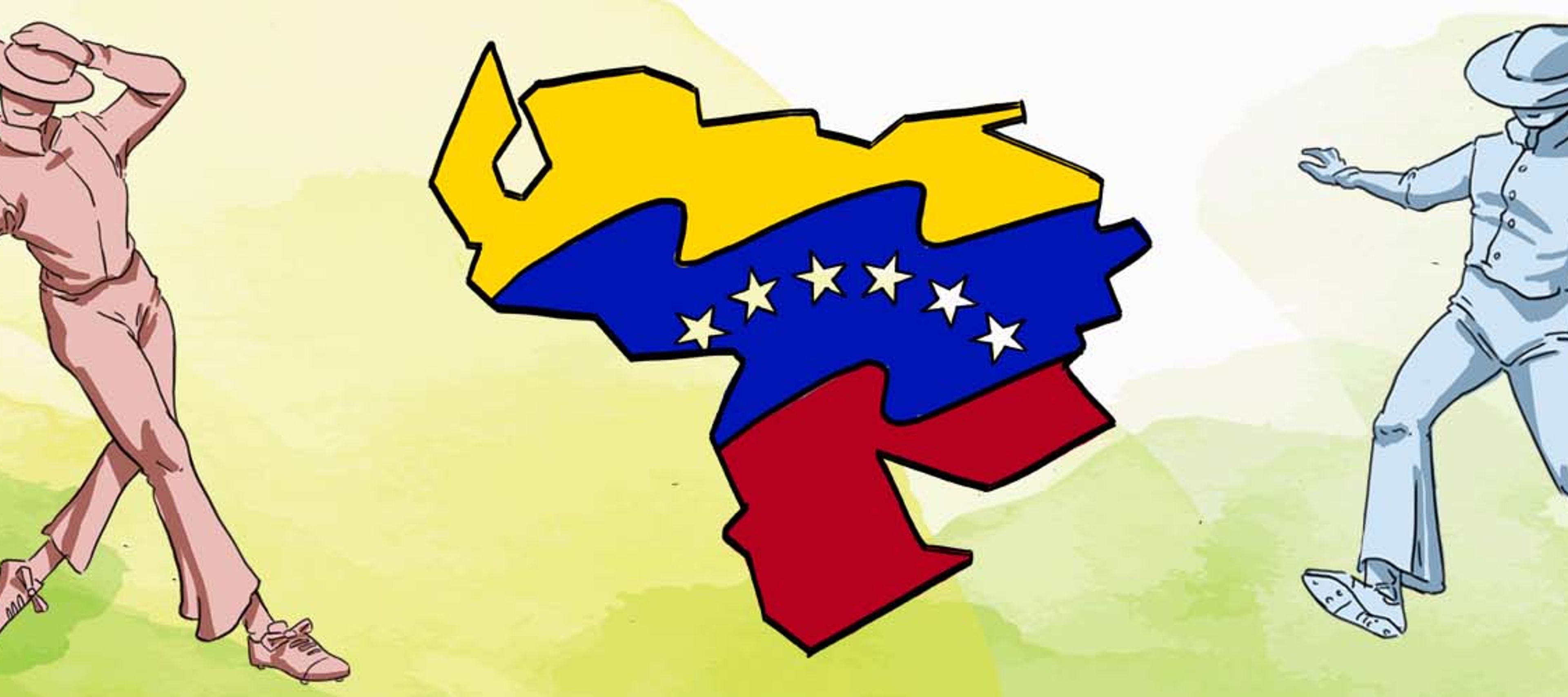
Joropo Llanero is a cultural expression from the western high plains (llanos) of Venezuela. Like many dance and music styles in South America, it is a mixture of Indigenous, African, and Spanish traditions. During colonialism in Venezuela, enslaved Indigenous and African peoples would watch their Spanish enslavers dance waltzes inside their mansions. As a joke, they created their own dance mocking the waltz by exaggerating its movements. Thus, Joropo was born as a genre of resistance against the oppression of enslavers.
But Joropo is not only a genre of music or dance, it is an event where people come to dance and celebrate. It is a party. Historically, people of the llanos might say that they are “going to the Joropo.” In fact, the word “Joropo” replaced the original Spanish word for these festivities, Fandango. Fandango, like Joropo, is not only a genre of music, it is an event of African origin, made popular in Spain, where people gathered to dance and celebrate.
The music of Joropo is also intimately related to the animals, flowers, and landscapes of the region. Its lyrics, chord shapes (the placement of fingers on a stringed-instrument to create music), and themes take inspiration from the natural world, and are an integral part in understanding the culture of the people of the Venezuelan llanos. Joropo chord shapes originally had the nomenclature of the animal's footprint, such as that of a dog, duck, or tapir, and the lyrics of the songs are poems describing the flora, fauna, and daily life of llaneros ("people of the plains") as they interact with their livestock on their farms. The llaneros tend to have great knowledge of the behavior of flora and fauna during the cycles of dry and rainy seasons in Venezuela, as it is integral to their survival.
Joropo dance movements have been inspired by the movements of the animals in their natural habitat as well. During the second half of the 20th century, an influential Venezuelan dancer named Jovita Nieto created new steps from her observation of animals of the llanos, such as the heron, the tuqueque (salamander), the danta (tapir), and the picure (large rodent). Each new step has its own name such as “tutequeao step”, “the picurera returns,” and “the return of the picurera”.
Though it is an oral tradition, Joropo has been incorporated into classical music and played in symphonic spaces. El Sistema, a famous program in Venezuela that seeks to systematize classical music training for at-risk youth, has a project called “Alma Llanera,” where children and young people perform traditional songs in the context of classical music. Joropo Llanero is also heard in eclectic contemporary settings by young artists such as the C4 Trío ensemble, an ensemble of three cuatro players who perform percussion, complex harmonies, and unpredictable, energetic breaks on their cuatros (a Venezuelan 4-stringed lute) while innovating within the Joropo genre.
Presently, Venezuela is experiencing one of the most massive mobilizations in the history of South America. Due to the economic, political, and social crisis, many Venezuelans have gone to other countries, and the Venezuelan diaspora is now one of the most significant in modern history. Joropo Llanero continues to be a music of Venezuelans the world over. As they listen, play, and innovate within the genre, they feel closer to home while preserving the culture of the high plains. When Venezuelans miss home they might say, “I miss the Joropo,” because they miss the opportunity to come together and play, commune, dance, and eat with friends and loved ones. It is a form of resistance in the face of adversity, inside and outside their country, through the act of playing music.
Connected Themes
Artist(s)
Genre(s)
Monthly Theme