
90 mins
Latin Music and Puerto Rican Migration to New York City
What is the history behind Puerto Rican migration to New York City in the 1940s and 1950s, and how did Puerto Rican migration affect American Popular Music?
Essential Question
What is the history behind Puerto Rican migration to New York City in the 1940s and 1950s, and how did Puerto Rican migration affect American Popular Music?
Objectives
Know (knowledge):
- The history of U.S. foreign relations with Cuba and Puerto Rico in the 19th and early 20th centuries
- Amendments and policies related to the U.S.’s relationship with the Caribbean, including the Monroe Doctrine, Platt Amendment, Foraker Act, and Operation Bootstrap
- The economic and living conditions that encouraged Puerto Rican migration to the U.S. during the 1940s and 50s
- The importance of New York’s El Barrio (“The Neighborhood”) and other Spanish-speaking neighborhoods in affecting New York City culture
- Musicians Rafael Hernández, Tito Puente, Tito Rodríguez, and Frank “Machito” Grillo
Mastery Objective
- Students will be able to explain the historical reasons behind Puerto Rican migration to New York City in the 1940s and 1950s, and the effects the migration had on American Popular Music.
Background
In this lesson, students identify the reason behind Latin music’s growing presence in the United States by uncovering the history of U.S.-Caribbean relations during the 19th and early 20th centuries that led to Puerto Rican migration to New York City. By watching video clips, students discover how historical events and policies such as the Monroe Doctrine, Spanish-American War, Platt Amendment, Foraker Act, and Operation Bootstrap led to Puerto Rican migration into New York City. They then listen to the music popular among the Puerto Rican migrant community during the first half of the 1900s. Finally, students trace how specific Latin musicians borrowed elements from Swing and Big Band music to create a new form of Latin Music.
On February 15th, 1898, the U.S.S. Maine mysteriously exploded in Cuba’s Havana Harbor. The battleship was deployed to Cuba to protect U.S.-held lands during an ongoing war for Cuban Independence between Cuban Revolutionaries and the colonialist Spanish Army. The destruction of the U.S.S. Maine led to the U.S.’s direct involvement in the Cuban Independence struggle by initiating the Spanish-American War.
The Spanish-American War was relatively short, lasting only three months before resulting in a U.S. victory. As a result, Cuba became an independent country, but the U.S. had immense influence over its governance. The Platt Amendment, ratified in 1901, granted the United States the right to land in Cuba (most notably Guantanamo Bay), and the right to unilaterally intervene in Cuban political and economic affairs.
As part of Spain’s surrender, the U.S. also gained the island of Puerto Rico. In 1900, the U.S. Congress passed the Foraker Act of 1900, which made Puerto Rico an “unincorporated territory” of the United States.
Like Cuba, for much of the early 20th century Puerto Rico acted essentially as a vassal state to the United States: their economies and governments were molded by the U.S., largely at the behest of the sugar industry. Cuba and Puerto Rico’s economic reliance on the whims of the sugar trade led to widespread poverty for much of the population.
To remedy its economic reliance on sugar production, the Puerto Rican government began Operation Bootstrap in 1947, in an attempt to diversify Puerto Rico’s economy through industrialization. One of the effects of Puerto Rico’s industrialization was a mass migration of Puerto Rican agricultural farmers to the contiguous U.S., as they procured manufacturing jobs to aid the U.S. war effort.
The vast majority of Puerto Rican migrants arrived in New York City, and often settled in established Spanish-speaking communities. The largest of these communities was Spanish Harlem, also known as El Barrio (“The Neighborhood”). There, Caribbean culture thrived, and brought new forms of Latin music, dance, and culture to New York City.
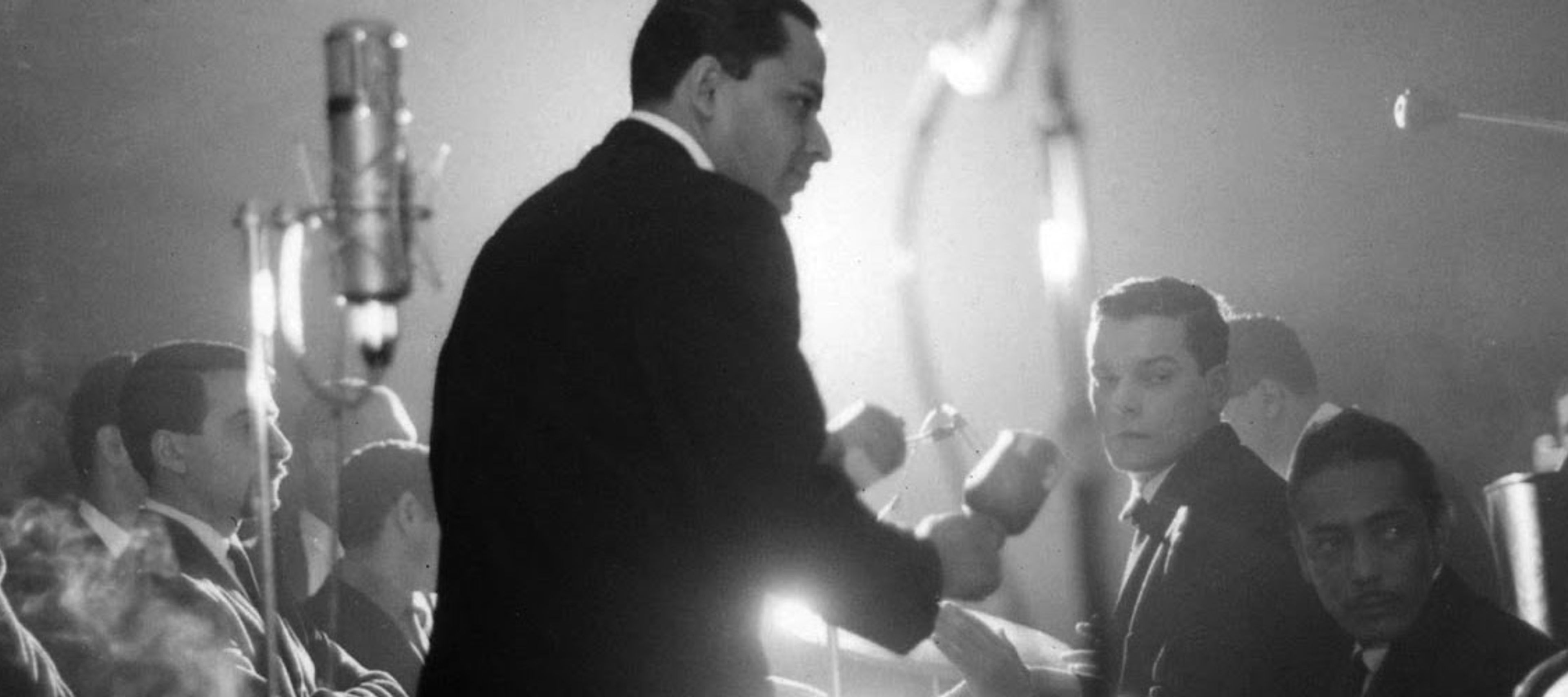
As Latin music developed a local New York fan base, Latin musicians and the promoters booking them began searching for larger spaces to showcase their music to a wider audience. In 1948, the manager of Manhattan’s Palladium Ballroom began hosting evenings devoted to Latin bands and dance contests, with a focus on popular Caribbean-influenced styles including the Mambo, Rumba, and Cha Cha. Attendance at the ballroom quickly grew, and by the early 1950s the Palladium was widely recognized as one of the nation’s premiere venues to see Latin entertainers, including famous bands led by Tito Puente, Tito Rodríguez, and Frank “Machito” Grillo -- known collectively as the “Big Three” within New York’s burgeoning dance music scene. The shows were a massive crossover success, leading to larger projects such as the musical and film West Side Story, which introduced the musical and cultural effects of Puerto Rican migration to new audiences across the United States.
On February 15th, 1898, the U.S.S. Maine mysteriously exploded in Cuba’s Havana Harbor. The battleship was deployed to Cuba to protect U.S.-held lands during an ongoing war for Cuban Independence between Cuban Revolutionaries and the colonialist Spanish Army. The destruction of the U.S.S. Maine led to the U.S.’s direct involvement in the Cuban Independence struggle by initiating the Spanish-American War.
The Spanish-American War was relatively short, lasting only three months before resulting in a U.S. victory. As a result, Cuba became an independent country, but the U.S. had immense influence over its governance. The Platt Amendment, ratified in 1901, granted the United States the right to land in Cuba (most notably Guantanamo Bay), and the right to unilaterally intervene in Cuban political and economic affairs.
As part of Spain’s surrender, the U.S. also gained the island of Puerto Rico. In 1900, the U.S. Congress passed the Foraker Act of 1900, which made Puerto Rico an “unincorporated territory” of the United States.
Like Cuba, for much of the early 20th century Puerto Rico acted essentially as a vassal state to the United States: their economies and governments were molded by the U.S., largely at the behest of the sugar industry. Cuba and Puerto Rico’s economic reliance on the whims of the sugar trade led to widespread poverty for much of the population.
To remedy its economic reliance on sugar production, the Puerto Rican government began Operation Bootstrap in 1947, in an attempt to diversify Puerto Rico’s economy through industrialization. One of the effects of Puerto Rico’s industrialization was a mass migration of Puerto Rican agricultural farmers to the contiguous U.S., as they procured manufacturing jobs to aid the U.S. war effort.
The vast majority of Puerto Rican migrants arrived in New York City, and often settled in established Spanish-speaking communities. The largest of these communities was Spanish Harlem, also known as El Barrio (“The Neighborhood”). There, Caribbean culture thrived, and brought new forms of Latin music, dance, and culture to New York City.
As Latin music developed a local New York fan base, Latin musicians and the promoters booking them began searching for larger spaces to showcase their music to a wider audience. In 1948, the manager of Manhattan’s Palladium Ballroom began hosting evenings devoted to Latin bands and dance contests, with a focus on popular Caribbean-influenced styles including the Mambo, Rumba, and Cha Cha. Attendance at the ballroom quickly grew, and by the early 1950s the Palladium was widely recognized as one of the nation’s premiere venues to see Latin entertainers, including famous bands led by Tito Puente, Tito Rodríguez, and Frank “Machito” Grillo -- known collectively as the “Big Three” within New York’s burgeoning dance music scene. The shows were a massive crossover success, leading to larger projects such as the musical and film West Side Story, which introduced the musical and cultural effects of Puerto Rican migration to new audiences across the United States.
Connected Themes
Decade/Era
Monthly Theme