
90 mins
Loudspeakers, PA Systems, and the "Wall of Sound"
What is a PA system, how does it work, and how were the Grateful Dead pioneers in live sound technology?
Essential Question
What is a PA system, how does it work, and how were the Grateful Dead pioneers in live sound technology?
Objectives
Know (knowledge):
- What a PA system is and its three basic components
- How to assemble a working loudspeaker
- The Grateful Dead’s historic role in pioneering live sound technology for concerts
Mastery Objective:
- Students will be able to identify the basic components in a PA system by assembling a working loudspeaker.
Background
“It was absolutely apocalyptic. It was like the voice of God.” - Phil Lesh, Grateful Dead bassist, recalling the band’s famed "Wall of Sound” PA system.
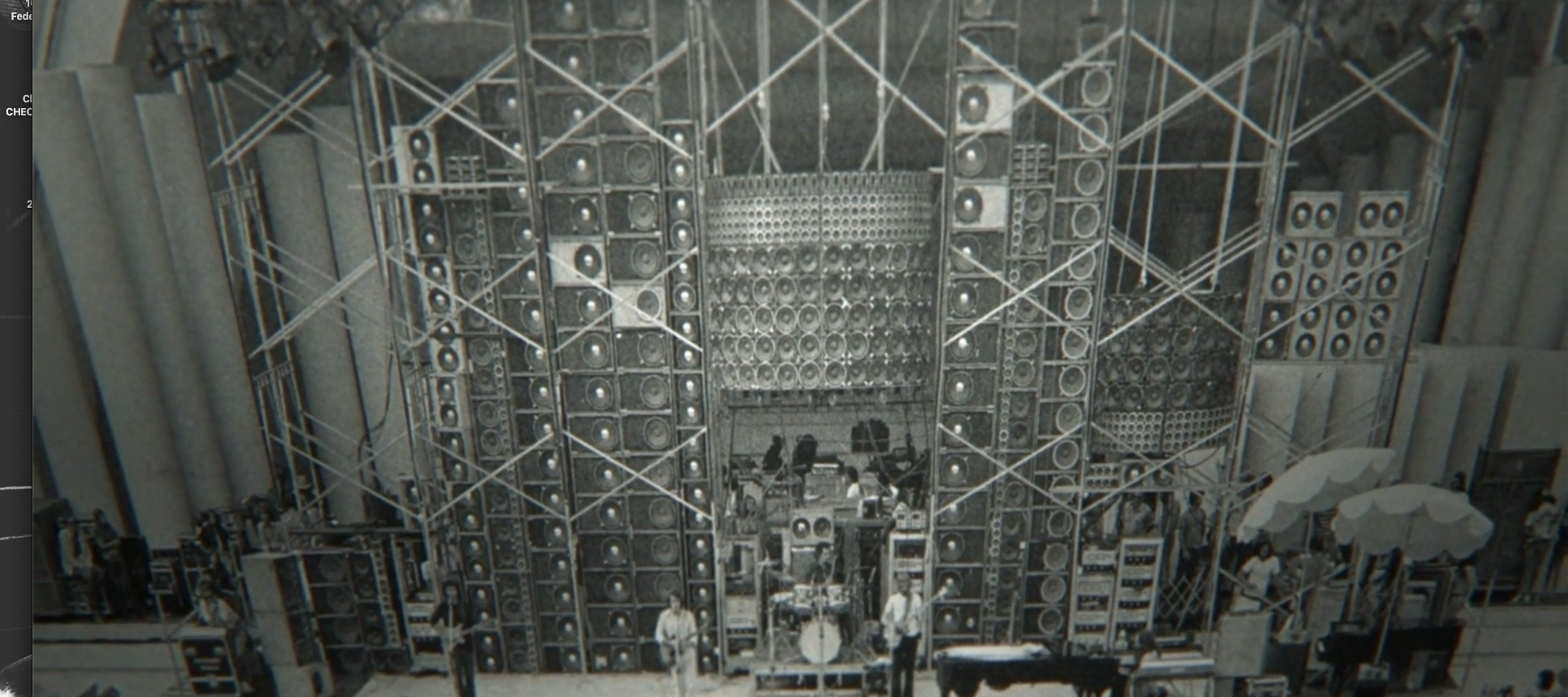
Grateful Dead bassist Phil Lesh was enthralled with his band’s monumental PA (public address) system. The early 1970s rig was an immense state-of-the-art structure, affectionately and begrudgingly known as the “Wall of Sound.”
The late 1960s were an era of emerging music technology. In 1966, The Beatles had ceased performing concerts, in part because they felt they could not be heard well in large venues. However, by 1969, sound engineer Bill Hanley had successfully engineered a sound system that could reach the hundreds of thousands of listeners at Woodstock. Still, for touring bands, the early 1970s was a time of inconsistent sound reproduction. What was limiting to some, however, was an exciting challenge to others, perhaps none more so that Augustus Owsley Stanley III, a serial tinkerer known as “Bear” in the Grateful Dead’s sprawling creative community.
Bear’s lead role in improving how the Grateful Dead were heard and experienced at their shows came about as the band’s popularity, and thus the size of their concert audiences, increased. The group dreamed of a system that could deliver their music clearly and dynamically to a larger crowd, but found their options limited by the rudimentary equipment available in the early 1970s. So, like any good tinkerer, Bear set out to invent the solutions to the band’s problems. Bear’s ingenuity and innovative design, greatly assisted by the techs and laborers with whom he built the sound system, resulted in the “Wall of Sound” - a 600 speaker, over 40 foot tall pioneering feat in PA system technology and the largest and loudest mobile sound system in the world at that time.
Although most PA systems from the early 1970s pale in comparison to what is available today, they did contain the basic electrical components found in modern systems: a sound source, amplifier, and loudspeaker. The sound source produces an electrical signal - whether it’s a voice captured by a microphone or an audio component in a home stereo system. The amplifier boosts the electrical signal and sends it to the loudspeaker. The loudspeaker then takes the amplified electrical signal and converts it into sound that can be perceived.
Electrical sound systems are often used to serve a basic need -- to project sound above the physical limitations of acoustic delivery. An additional benefit is that these systems can deliver sound simultaneously to multiple locations via a centralized system, such as a school intercom or the speakers throughout a sports stadium.
Speakers, which are fairly simple devices, are the final phase in transmitting sound. Discovering how speakers are constructed and operate, as students will do in this lesson, allows us to have a better understanding of how often we interact with sound systems in our daily lives.
In this lesson, students will identify basic components in sound systems, and then assemble a working loudspeaker. Students will also gain a deeper appreciation for the Grateful Dead’s historic role in pioneering live sound technology by watching video clips from Long Strange Trip.
Materials
- For students:
- Cups, bowls, and plates made from various materials (paper, plastic, metal, etc.)
- Magnet wire (a spool of 30AWG wire is recommended)
- Clear Tape
- Wire Cutters
- For teachers:
- Neodymium Magnets: 6 or more (Please be advised that neodymium magnets should be handled with care, they are very strong magnets. Students may need assistance if they are stacking them together and pulling them apart. The magnets should be kept at least 12 inches away from mobile devices, desktop computers, etc.)
- Sound device with headphone port: mobile phone, laptop, desktop computer, mp3 player, etc.
- 3.5mm tipped stereo cable
- Alligator clips (red and black)
- Wire Cutters
- Wire Stripper tool or Sandpaper (very light grain for removing coating from magnet wire)
Preparation
- Watch , to get step-by-step instructions on the entire process of building a speaker. (The steps presented in the video will be split between teacher activities and student activities in the lesson.)
- Cut a 3.5mm stereo TRS (tip-ring-sleeve) audio cable about 5 inches from the tip so that both the black and red cables are visible. Use wire strippers or fine grain sandpaper to fully remove the insulation and expose the inner copper wire.
- Plug the 3.5mm audio cable into your audio source (mobile phone, laptop, desktop computer with headphone port, mP3 player, etc.)
- Connect one clip of the black alligator wire to the exposed bare copper wire at the end of the black insulated wire of the 3.5mm audio cable.
- Connect one clip of the red alligator wire to the exposed bare copper wire at the end of the red insulated wire of the 3.5mm audio cable.
- TeachRock’s The Birth of the Microphone lesson may be a beneficial resource for historical background, tech terminology, and lesson activities for voice amplification, projection, and production.