
60 mins
Making Music Videos with a Homemade Projector
How can one reproduce the effects seen in the music video for Zedd, Maren Morris, and Grey’s song “The Middle” using a homemade projector?
Essential Question
How can one reproduce the effects seen in the music video for Zedd, Maren Morris, and Grey’s song “The Middle” using a homemade projector?
Objectives
Know (knowledge):
- The basic mechanisms of projectors
- The prototype-test-refine process
- Physical properties of light
- Different types of lenses and their effects on light
Mastery Objective:
- Students will be able to better understand the science behind light waves by building and refining their own projectors.
Background
Perform "The Middle" with your class using Modern Band Charts provided by Music Will.
Grey, Maren Morris, and Zedd’s “The Middle” proves that a music video doesn’t need millions of dollars, celebrity appearances, or extravagant special effects to be engaging. The elements of director Dave Meyers’ video are simple: a room, good lighting, and the lyrics to the song projected on the walls and furniture. At the most intense moments of the video, drinking glasses, fruit, and flower vases shake and fall to the floor. It’s a simple and beautiful concept -- and one that can be reproduced in the classroom.
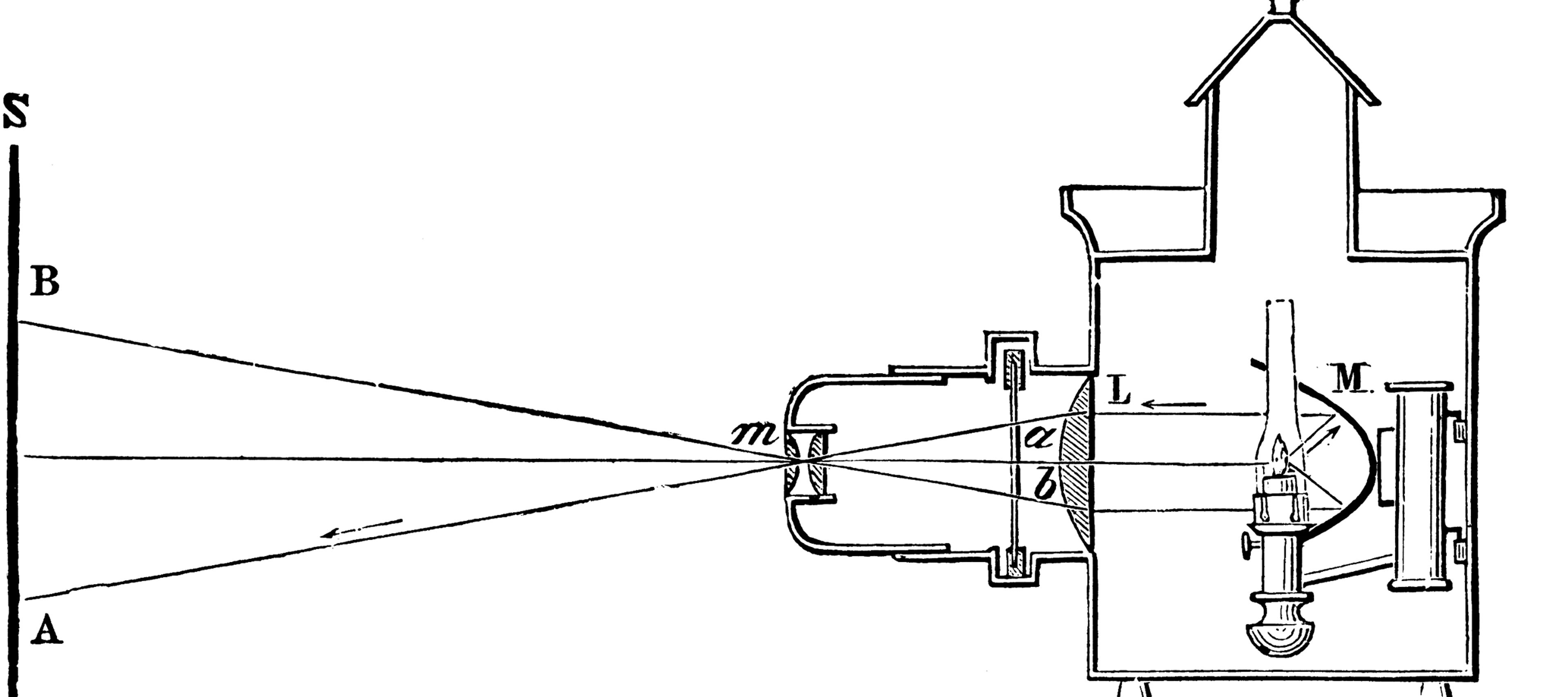
The main “special effect” of the music video is the projection of light, the science of which has been known for millennia. Around 300 B.C., Chinese philosopher Mozi wrote about the phenomenon today known as camera obscura, wherein a scene on one side of a screen can be projected as a reverse image through a small pinhole onto a canvas. Just around 100 years later, the Chinese were constructing bronze “magic mirrors,” which reflected various patterns when light was shined upon them in a dark room. With the development of concave mirrors and lenses came the ability to make projection devices much smaller, while still producing a large image. In the late 1600s, Dutch scientist Christiaan Huygens invented the fire-lit “Magic Lantern,” a small box that allowed images on glass slides to be projected on a canvas. Despite Huygen’s belief that the invention was frivolous, Magic Lanterns captured people’s interest, and quickly they became mass produced for entertainment and educational usage. With the invention of the light bulb, projectors no longer needed firelight to operated, paving the way for the slide and overhead projectors in the 1900s, and the digital multimedia projectors of today.
While the technology for projecting light is constantly improving, the basic elements remain simple: all that is needed is a light source, a lens, an image to project, and a dark container to hold the mechanism. In this lesson, student groups use their smartphones and household materials to build their own projectors, and create their own short videos in the vein of “The Middle.”
Materials
- Smartphone
- Small Box (Shoebox-sized)
- Pencils
- Magnifying Glass
- Cardboard
- Electrical Tape
- Scissors or a box cutter
- Hot glue gun