
90 mins
Mi Gente: Fania Records & New York Salsa Music
What is Fania Records, and how does it reflect the history of Spanish-speaking Caribbean communities in New York City?
Essential Question
What is Fania Records, and how does it reflect the history of Spanish-speaking Caribbean communities in New York City?
Objectives
Know (knowledge):
- The Fania Records label and its artists Celia Cruz, Héctor Lavoe, and Johnny Pacheco
- The historic presence of Caribbean people in New York City
- The folk music and dance traditions of Cuba, the Dominican Republic, and Puerto Rico
- Where the Caribbean is on a map and where Cuba, the Dominican Republic, and Puerto Rico are on a map
Mastery Objective
- Students will be able to identify artistic movements and the formation of new communities as the result of migration patterns, socio-political developments, and cultural expression by analyzing video of performances, studying maps, and investigating documents.
Background
In this lesson, students will explore the founding of Fania Records and its pioneering recording artists Johnny Pacheco, Celia Cruz, and Héctor Lavoe. They will compare performances by Lavoe and Cruz from the Fania All-Stars album, Live in Africa and examine the history of Spanish-speaking Caribbean communities in New York City during the 20th century.
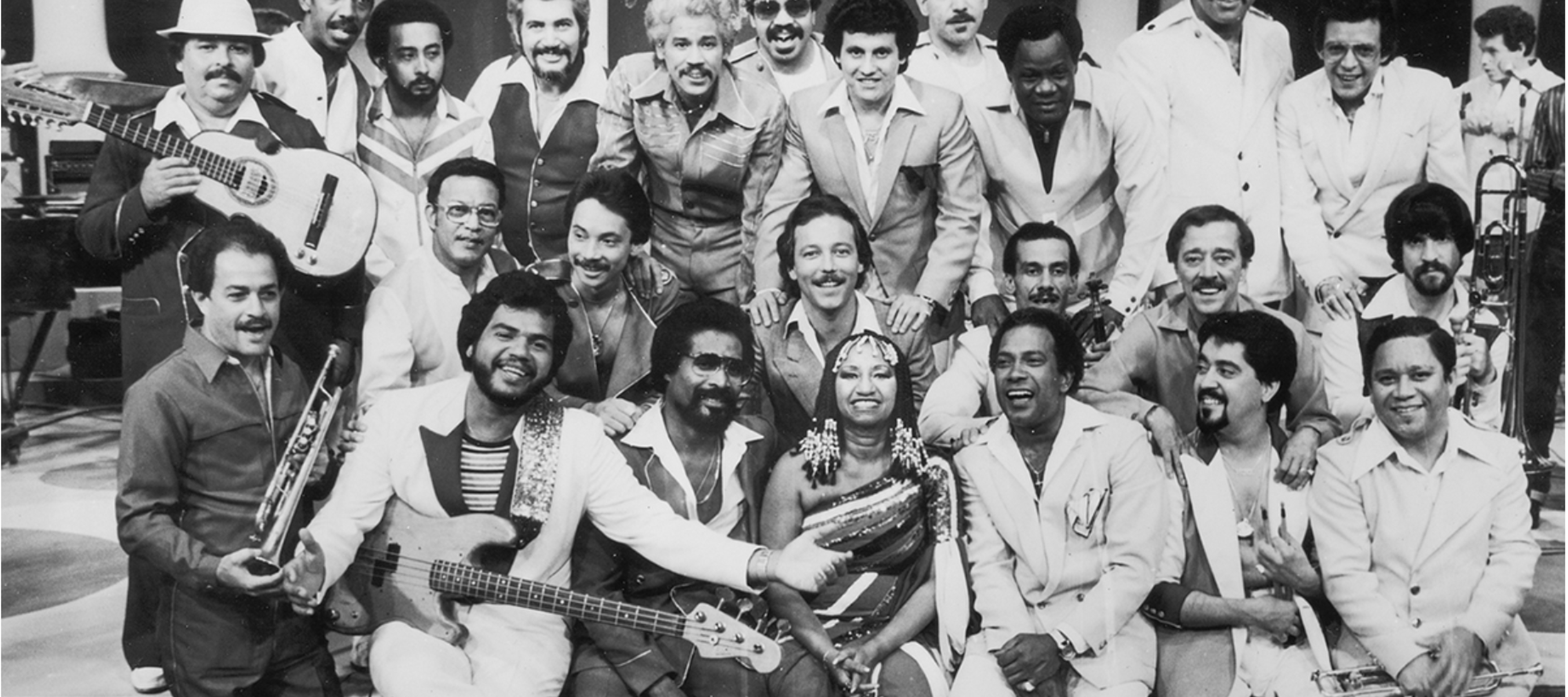
Fania Records, the record label established in New York City in 1964, helped popularize Salsa music around the world. Composer, bandleader, and flutist Johnny Pacheco founded the label in partnership with his attorney, Jerry Masucci. Fania was the full realization of Pacheco’s vision. Pacheco wrote, arranged for, and led the Fania All-Stars, the label’s house band, whose members were instrumentalists from the Caribbean, and Central and South America. Fania paired Pacheco with young musicians like him—introducing elements of Jazz, Rhythm and Blues, Funk, and other genres to traditional Afro-Cuban music. This unique musical blend created Salsa—Spanish for “sauce.”
Salsa grew out of the rhythms and dance of three Spanish speaking nations in the Caribbean: Cuba, the Dominican Republic, and Puerto Rico. These influences all came together in New York City in the early 1960s, where people with roots in all three Caribbean islands, and other Spanish-speaking Caribbean nations, found themselves living in New York in greater numbers. What began as a local style first heard in the streets and clubs of New York would grow to be one of the most beloved and commercially successful music genres in the world. In part, this was due to Salsa being sung in Spanish, the official language of 20 nations and spoken by over 42 million people worldwide.
Two vocalists who recorded for Fania Records would become international stars with legacies extending well beyond their lifetime: Héctor Lavoe and Celia Cruz. Héctor Lavoe was born in Ponce, Puerto Rico in 1946 and migrated to New York City as a teenager. He was a featured vocalist on dozens of recordings for Fania before recording La Voz, his debut solo album for the label in 1975. In addition to collaborating on recordings by other Fania Records artists, Lavoe released 10 solo albums on Fania through the 1980s.
Celia Cruz, who is known as the Queen of Salsa, first established herself as a musical force in her home nation of Cuba. There she led La Sonora Matancera, a band with an international fanbase that included listeners in Mexico and the United States. Cruz left Cuba in 1957, moving first to Mexico and then permanently to the U.S. In 1973, Cruz joined the Fania All-Stars touring ensemble and collaborated with Johnny Pacheco to record her first studio album for Fania, the landmark 1974 release, and one of Cruz’s favorites, Celia & Johnny. Celia Cruz’s career spanned nearly 70 years and during that time she won multiple Grammys. She was posthumously awarded a Grammy Lifetime Achievement Award in 2016.
Connected Themes
Decade/Era
Monthly Theme