
90 mins
Motown Records: Detroit's Sound of Success
How did Detroit’s cultural and economic history influence the sound and success of Motown Records?
Essential Question
How did Detroit’s cultural and economic history influence the sound and success of Motown Records?
Objectives
Know (knowledge):
- The defining elements and themes of “The Motown Sound” and its impact on American popular music
- The collaborations between and contributions of Motown artists, songwriters, producers, musicians, and staff members
- The cultural and economic conditions of Detroit in the 1950s and 1960s
Mastery Objective
- Students will be able to explain the sound and success of Motown Records while noting the cultural and economic issues facing the company by listening to music, viewing images and media, and analyzing text.
Background
In this lesson, students will examine the experience of Black communities in Detroit during the 1950s and 1960s to determine how the city’s cultural institutions and economic structure influenced the sound and success of Motown Records. Students will analyze a variety of materials including videos, music, and articles to understand the significance of Motown in American popular music and culture.
Motown Records is considered one of the most successful and influential independent entertainment companies in American history. Founded in Detroit, Michigan, Motown was Black-owned and operated, and featured some of the most acclaimed Black musical artists of the 20th century. Throughout its history, Motown helped to launch the careers of Stevie Wonder, Marvin Gaye, Diana Ross and the Supremes, Michael Jackson and the Jackson 5, The Temptations, Smokey Robinson and the Miracles, and many others. Notably, Motown was founded and thrived within the racially segregated and discriminatory practices of Detroit’s cultural institutions and its local economy.
Motown originated with founder Berry Gordy Jr. and his family, who had a history of entrepreneurial enterprises in Detroit throughout the 1940s and 1950s. Detroit had a growing and thriving Black population in the midst of the Great Migration - the movement of southern Black Americans into northern and western U.S. cities from the 1910s through the 1970s. Gordy, who came from a middle class Black family, had a range of job experiences, including serving in the military, working on an automobile assembly line, owning a record store, and music songwriting and producing. With his siblings Anna, Gwen, and Robert, Gordy had success writing songs for Rhythm and Blues artists like Jackie Wilson in the 1950s. Receiving only a portion of his songs’ earnings, he aspired to take more control of his music industry pursuits. In January 1959, with an $800 loan from his family, Gordy founded Tamla Records, the independent record label that would become the first of many labels created by Gordy under the Motown Record Corporation.
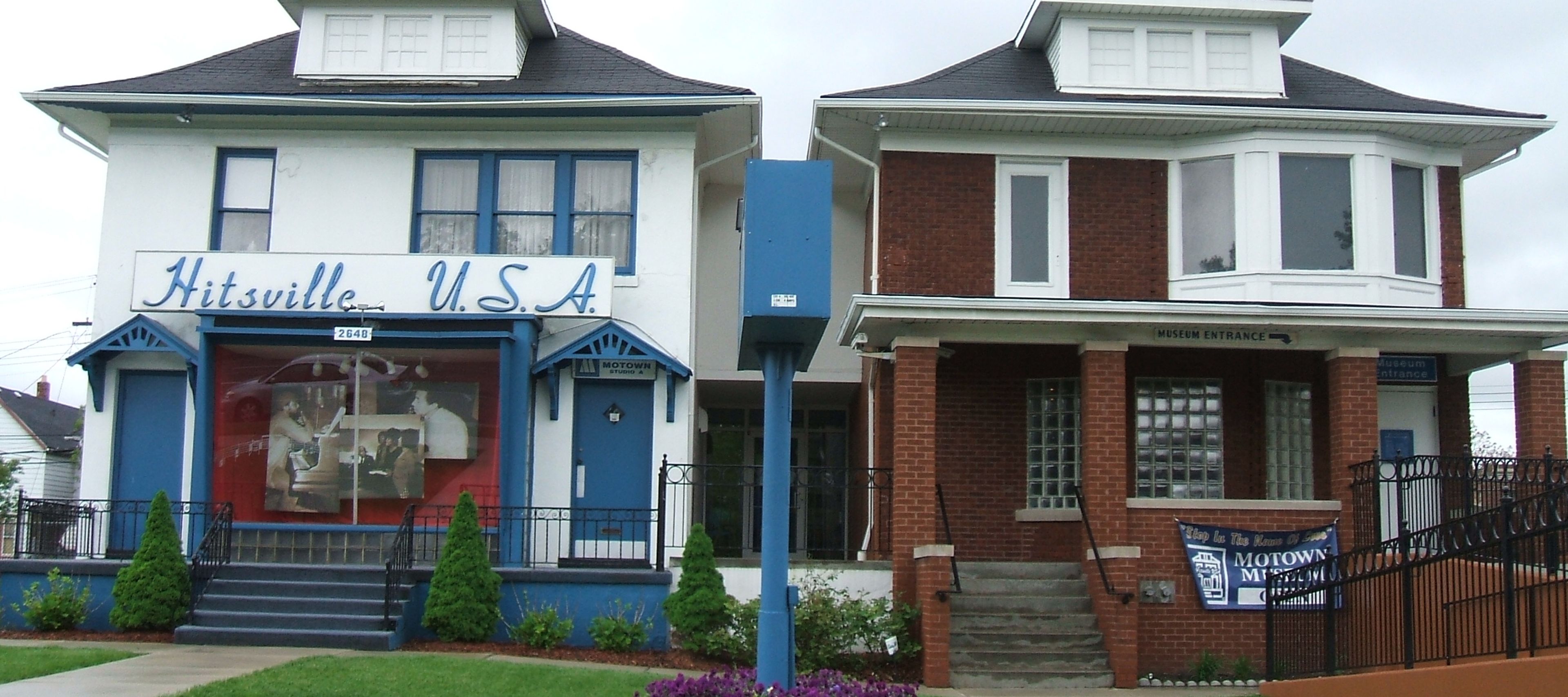
Later in 1959, looking to keep costs down and maintain record production in-house, Gordy purchased the now famous house at 2648 West Grand Boulevard in Detroit. Later nicknamed “Hitsville U.S.A.”, the large house would be the headquarters and main offices for Motown. Gordy and his growing young family would reside on the top floor of the house during the early years of the company. Additionally, the unattached photography studio in the rear of the property was turned into a recording studio. Gordy wasted no time expanding the company, hiring many of his family members as well as young people in the surrounding community, such as Smokey Robinson. Together, these new hires would write and produce music as well complete administrative work for the fledgling enterprise. The creation of the Motown company name was derived from the nickname for Detroit, the “Motor City” or “Motor Town” to finally “Mo-Town”.
Motown became well known for its in-house operations. It had house songwriters such as Smokey Robinson, and songwriting teams such as brothers Brian and Eddie Holland and their partner, Lamont Dozier. Similarly, Motown’s in-house recording studio group was comprised mostly of local Detroit Jazz musicians and became known collectively through their association with Motown as The Funk Brothers. The group and their celebrated, although publicly unrecognized, body of work for Motown established the careers of musicians such as pioneering bassist James Jamerson and guitarist Robert White. Keeping songwriting, recording, producing, publishing, and even at times distribution, in-house, helped Motown to establish their own unique sound in 1960s Soul and Pop music. Known as “The Motown Sound”, these songs featured call and response style vocals, sophisticated melodies, accentuated tambourines and handclaps, and large orchestral arrangements featuring strings and horns. Gordy instituted “quality control” meetings in which members of the company would closely scrutinize records before their release.
The collective efforts of a company such as Motown was revolutionary, and changed the course of American popular music. Motown had extraordinary success with their approach to making music, even within an industry that was racially segregated; becoming a company that accomplished “crossover” sales in both white and Black music markets. In fact, between 1961 and 1971, Motown had over 100 Top Ten songs on the Pop charts, something that has not been replicated since by an independent record company. This success has led Motown to be an essential part of popular music history, and an influential force in American history and culture. The lyrics and sound of Motown Records has informed music across genres well into the present. The look and sound of Motown acts became characteristically recognizable as TV expanded the means by which Americans engaged with music and entertainment.
Connected Themes
Decade/Era