
90 mins
Music of the Civil Rights Movement
How did music advance the goals and inform the tactics of the Civil Rights Movement?
Essential Question
How did music advance the goals and inform the tactics of the Civil Rights Movement?
Objectives
Know (knowledge):
- The essential role of music and singing during the Civil Rights Movement
- The African American history and culture of the music sung during the movement
- How music served as an organizational tool
- How singing was an act of nonviolent protest
- Important figures in the Civil Rights Movement
Mastery Objective
- Students will be able to articulate the role of music and singing songs during the Civil Rights Movement by watching video clips, examining primary sources, and analyzing music.
Background
In this lesson, students explore the relationship between music and the Civil Rights Movement. They will examine the development of the music within the movement and discover how that music helped organize the movement. Additionally, students will identify how singing songs served as a nonviolent protest tactic that characterized the movement. Students will discuss video clips, examine song lyrics and quotes, and analyze freedom songs to determine how music contributed to the success of the Civil Rights Movement.
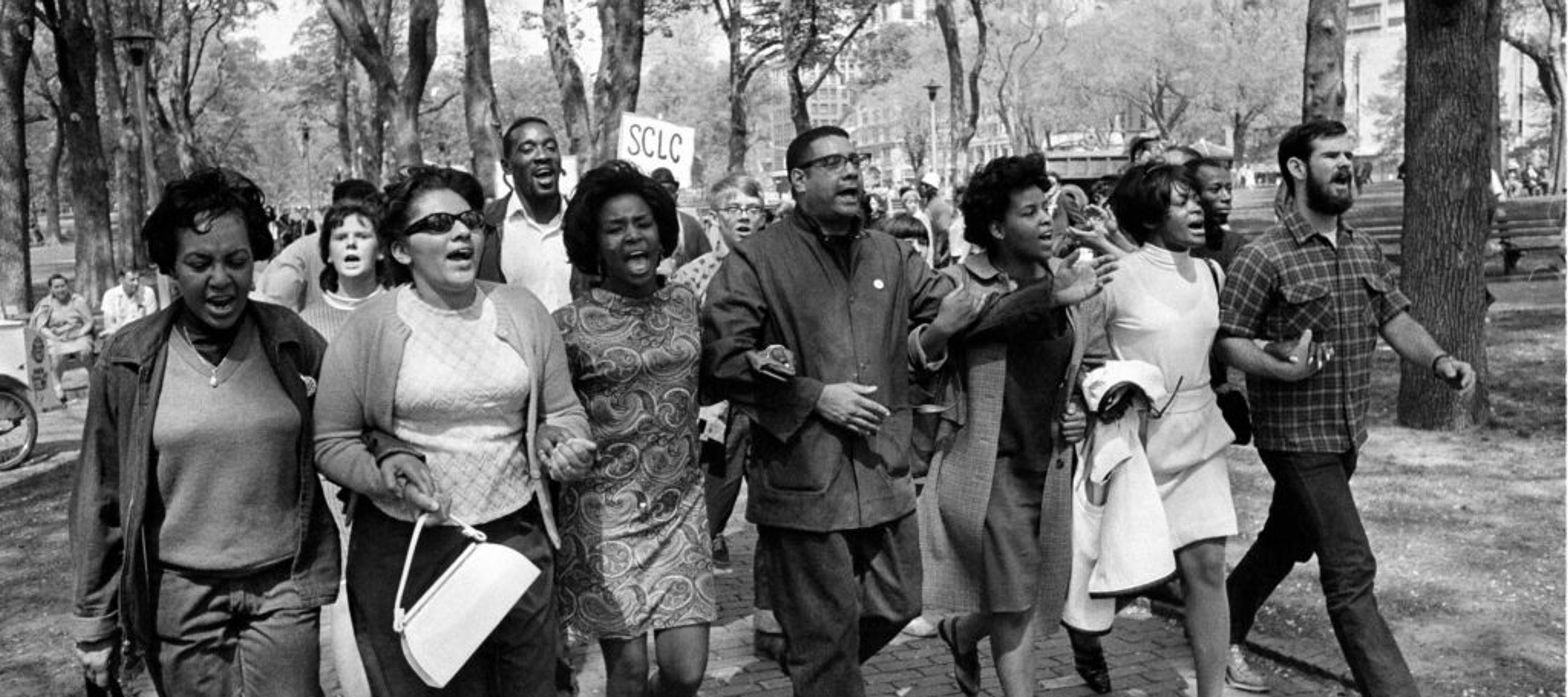
The Civil Rights Movement of the mid-20th century was inextricably linked to music. The songs that Civil Rights activists sang became collectively known as Freedom Songs. Freedom Songs articulated the committed spirit and progressive themes of the movement. And since they were sung together by large masses of people, freedom songs demonstrated the organized group solidarity that was essential to the movement. But freedom songs were also sang by activists for many other reasons; to assuage their fears, to summon their courage, to express their joy, and as an act of nonviolent protest.
Most Freedom Songs, and the themes expressed therein, were developed from African American Spirituals. Spirituals are a type of religious song created by enslaved African Americans in the southern U.S. that blended African musical elements and European church hymns. The use of Spirituals as the basis for Freedom Songs demonstrates the movement’s origins in and development out of the Black Church, and the Church’s cultural legacy within African American history.
Perhaps no song is more closely associated with the Civil Rights Movement than “We Shall Overcome.” With musical roots in numerous traditional Spirituals and hymns, its ubiquitous use in the movement can be traced back to the labor movement of the 1940s, as an early version of “We Shall Overcome” was sung by striking Black tobacco workers. But “We Shall Overcome” was not the only freedom song sung. Dozens of Freedom Songs were developed out of Spirituals, and more contemporary Gospel and popular music songs, and the lyrics were frequently modified to suit a particular moment in the movement.
Folk musicians like Odetta helped popularize Freedom Songs within the movement and throughout American society. As the profile of the Civil Rights Movement grew, popular music singer-songwriters like Sam Cooke wrote new Freedom Songs that reflected the themes of the movement, and their personal experience of racism as African Americans and offered inspiration and encouragement for transcending the hardship of oppression. Regardless of the origins or the person singing the song, Freedom Songs profoundly informed the Civil Rights Movement by serving as an organizational tool, a protest tactic, and an artistic expression of the myriad of emotions and intentions of the movement.
Materials
- Device to play music recordings at each station
Connected Themes
Artist(s)
Genre(s)
Decade/Era
Monthly Theme