
90 mins
Indigenous Music from Wounded Knee to the Billboard Charts
In what ways did the music of Native Americans mark them as outsiders from the developing narratives of “American-ness” in the late 19th and early 20th centuries, and how did the federal government attempt to use music as a tool to force assimilation?
Essential Question
In what ways did the music of Native Americans mark them as outsiders from the developing narratives of “American-ness” in the late 19th and early 20th centuries, and how did the federal government attempt to use music as a tool to force assimilation?
Objectives
Know (knowledge):
- The history of the Massacre at Wounded Knee from several perspectives
- About the Dawes Act
- About the Carlisle Indian Boarding School and Federal Indian schools of the late 19th and early 20th centuries
- Firsthand accounts of students’ experiences at Federal Indian Schools
- About Col. Richard Pratt and the movement to “civilize” Native Americans during the period
- About mainstream white feelings toward to the music culture of Native Americans
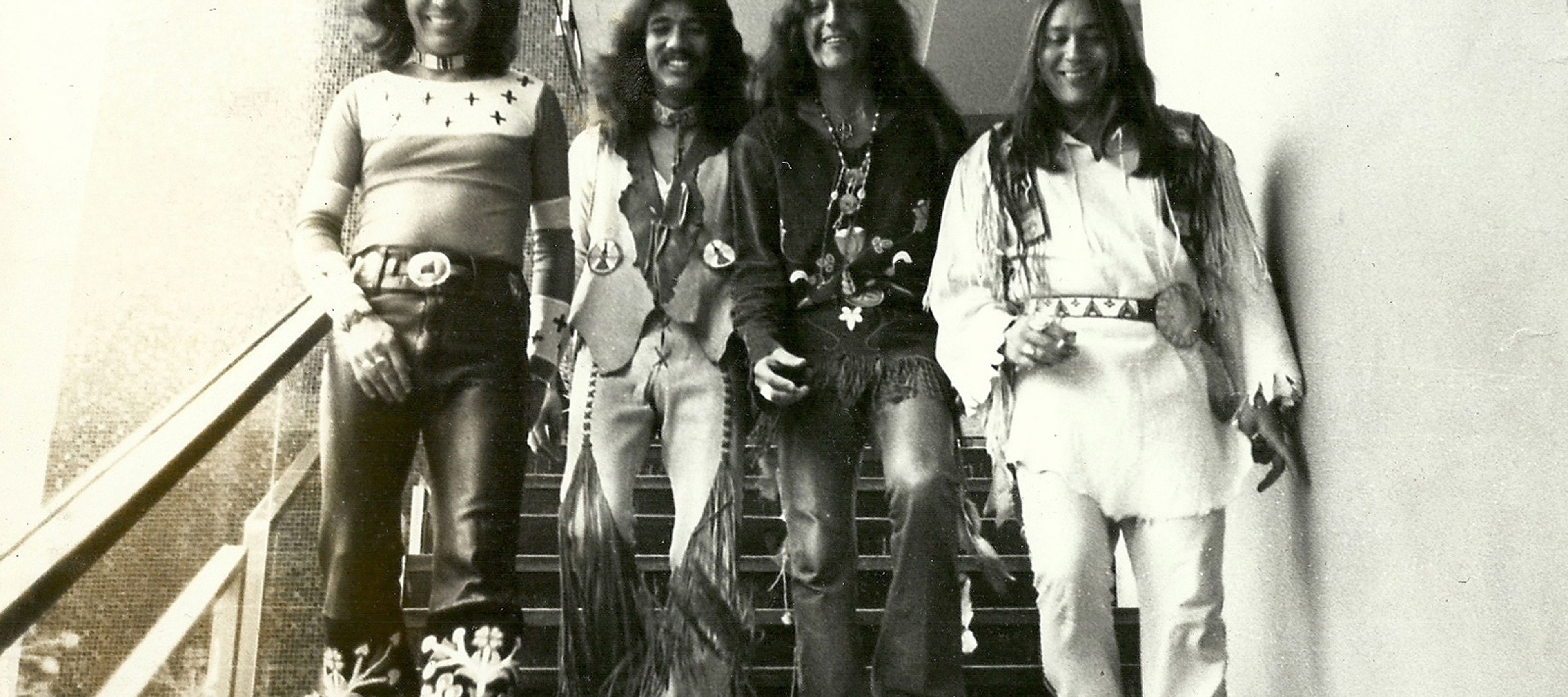
- About Pat and Lolly Vegas (Vasquez) and their band Redbone
- How the trauma of those acts continues to affect the lives of Indigenous People today by examining poetry written by Native Americans
Mastery Objective:
- Through analysis of source documents, students will be able to discuss how attitudes toward Native American culture impacted the events at Wounded Knee, and apply their historical perspective to interpret the success of Native American popular music later in the 20th century.
Background
In this lesson, students are introduced first to Pat Vegas and Redbone by way of interviews and music from RUMBLE. They then look back to the late 19th century to consider the significance of Redbone’s success. Students will use clips from the film, as well as a set of seven source documents to assess the U.S. government’s attempt to control Native American populations by way of culture, particularly music. The documents, which include letters, acts of Congress, testimony, and newspaper articles, introduce students to legislation and the Federal Indian Boarding School system from the perspectives of both government agents and Native Americans. Additionally, students analyze three poems that speak to the trauma Native Americans have experienced due to such governmental policies.
To a present-day listener with no additional context, Redbone’s single “Come and Get Your Love” may just sound like a classic mid-70s Rock tune. The song, which many might recognize from the opening sequence of the film Guardians of the Galaxy, is marked by a tight and funky drumbeat, as were many in that post-James Brown and Sly and the Family Stone moment. It’s harmony is punctuated by a punchy, dry bass line that contrasts with lush, rather deep-in-the-mix string overdubs. The sparse, repeated lyrics are not what many would call “deep.” “Come and Get Your Love,” however, is in many ways a breakthrough track.
When “Come and Get Your Love” broke the Billboard Top 5 singles in 1974, and when the track went “Gold,” meaning it sold at least half a million copies, it marked the first time an outwardly Native American ensemble had reached such heights.
Pat and Lolly Vegas, the Yaqui, Shoshone, and Mexican American brothers who founded Redbone in 1969, hadn’t always been “outwardly” Native American in performance. In the early 1960s, the brothers began their professional careers playing “Surf” music in Los Angeles. They recognized that their family surname, “Vasquez,” would mark them as Mexican-American and limit their potential. So, the Vegas brothers were born. However, as national attitudes toward identity and ethnicity began to evolve later in the decade, the Vegas brothers decided to take the advice of part-Cherokee friend Jimi Hendrix and, as Pat Vegas puts it, “do the Indian thing.” Redbone performed in Native American clothing, and also worked traditional drum, dance, and song into performances, even on TV.
Redbone’s success came less than a century after the U.S. government banned traditional expressions of Native American song and dance, and 84 years after the Massacre at Wounded Knee, where U.S. forces murdered between two- and three-hundred Lakota men, women, and children, ostensibly because they refused to cease performing a pan-tribal ritual known as the “Ghost Dance.”
Slides
Connected Themes
Artist(s)
Genre(s)
Monthly Theme