
90 mins
Plessy v. Ferguson featuring Bert Williams
Who was Bert Williams and how does his life represent an American experience during the rise of Jim Crow laws and the U.S. Supreme Court’s ruling in Plessy v. Ferguson?
Essential Question
Who was Bert Williams and how does his life represent an American experience during the rise of Jim Crow laws and the U.S. Supreme Court’s ruling in Plessy v. Ferguson?
Objectives
Know (knowledge):
- The U.S. Supreme Court ruling in Plessy v. Ferguson
- Jim Crow laws and their effects on African Americans and American society
- Minstrelsy and the musical origins of the phrase 'Jim Crow'
- Bert Williams and his historic career as a Black American entertainer
Mastery Objective
- Students will be able to describe the U.S. Supreme Court’s decision in Plessy v. Ferguson, identify Jim Crow laws and the term’s musical origins, and explain how the life of Black American entertainer Bert Williams represents an American experience by analyzing texts and examining media.
Background
In this lesson, students examine the life of the Black American entertainer Bert Williams to identify how the rise of Jim Crow laws and the ruling in the Plessy v. Ferguson case shaped the American experience.
With the end of Reconstruction in the late 1870s, the federal government relinquished its role in managing the affairs of the former Confederacy. Without federal oversight, Southern states began passing laws to reassert white supremacy and deny the social and political gains made by African Americans after the Civil War. In Louisiana in 1890, the state legislature passed the Separate Car Act, which racially segregated railroad passengers traveling in the state. Considering the legislation to be a violation of the 13th and 14th amendments, in 1891 a group of New Orleans men, identifying as “Creoles of color,” formed the Citizens’ Committee to Test the Constitutionality of the Separate Car Act. They devised a plan to challenge the law and a member of the group was Homer Plessy, a local shoemaker and social activist.
On June 7, 1892, Plessy boarded a Louisiana railroad car with a first-class ticket, which provided him a seat in the “white” car. After taking his seat and due to his light complexion, Plessy was asked by the train conductor to identify his race. When Plessy identified as “black,” the conductor ordered him out of the car. When Plessy refused, the train was stopped, and he was arrested and physically removed from the train. Plessy was convicted of violating the Separate Car Act and the Louisiana Supreme Court upheld his conviction when he appealed. His case, Plessy v. Ferguson was then heard before the U.S. Supreme Court.
On May 18, 1896, the U.S. Supreme Court upheld Plessy’s conviction. The Court ruled that the Separate Car Act did not violate the 13th and 14th amendments to the Constitution. Regarding the 14th Amendment, the Court’s opinion explained that there was no violation because the railroad provided equal accommodations regardless of racially segregating passengers - separate but equal train cars. The ruling sanctioned the practice of “separate but equal” and it transformed American society. Legislation like Louisiana’s Separate Car Act became known as, “Jim Crow laws” and they spread throughout the former Confederacy. Although racial segregation was codified into laws primarily in the South, throughout the United States policies and practices of separate but equal disenfranchised and segregated African Americans from much of white society.
The term “Jim Crow” comes from “Jump Jim Crow,” a comical routine performed during minstrel shows beginning in the 19th century. Created by the minstrel performer Thomas “Daddy” Dartmouth Rice in the mid-1800s, the performance was a racist caricature that grotesquely mimicked the appearance, movement, and speech of an enslaved African American man. As part of the costume for his prejudicial “Jim Crow” character, Rice darkened his face with makeup. This practice became a defining characteristic of Minstrelsy known as Blackface.
Minstrelsy was very popular throughout the United States during the mid-1800s but especially in the urban cities of northern free states where slavery had ended. The stock Jim Crow character was presented, and often perceived by northern audiences, as an authentic representation of enslaved plantation life. In time, a second racist stock minstrel character was created to mimic a free African American man from the city, Zip Coon.
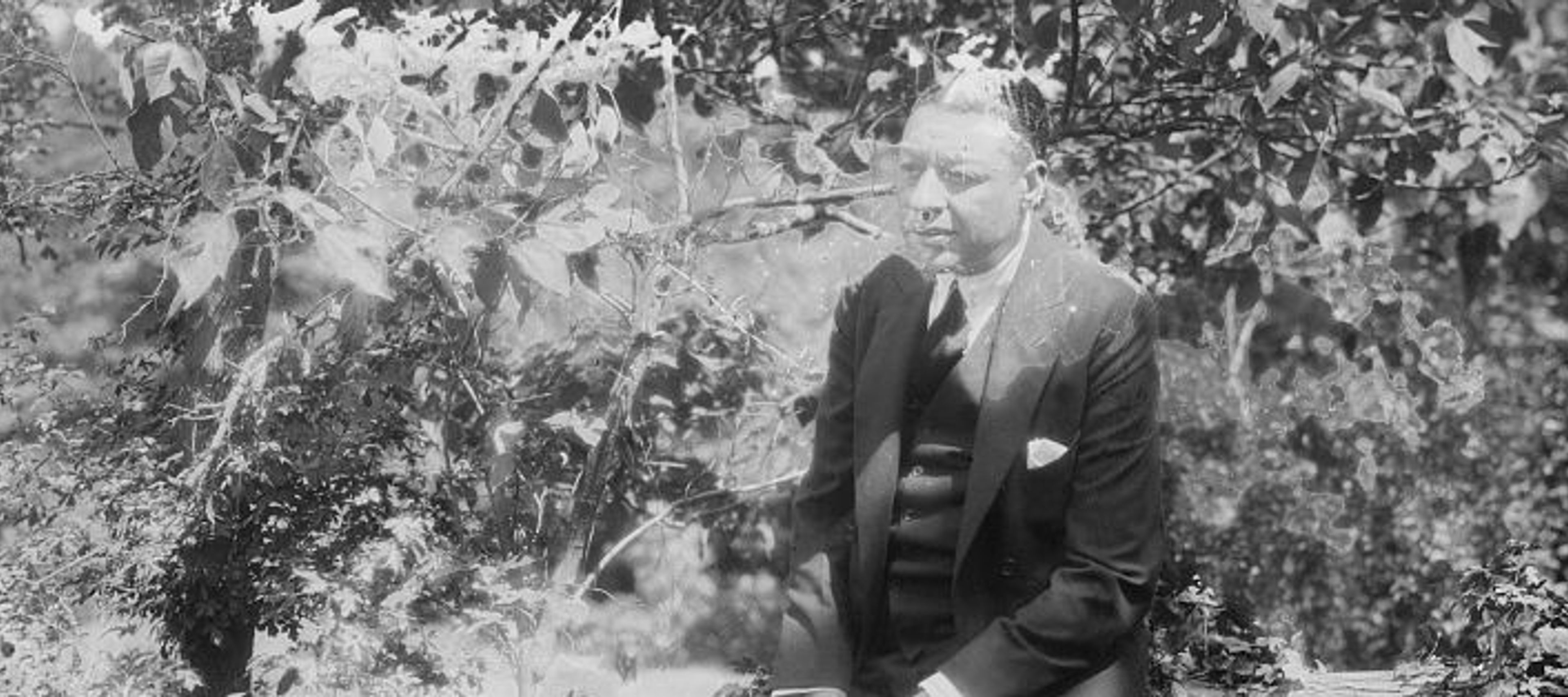
Around the time of the Plessy decision in 1896, Bert Williams was ascending to American entertainment stardom. A Black American born in the Caribbean, Williams forged a successful career within the American theatre - an industry, like many in the U.S., where few opportunities were available to people of color. Williams’ celebrity and success was built portraying Jim Crow-type characters, and in blackface. However, Williams approached the portrayals as an opportunity to reclaim and reshape how audiences experienced the Jim Crow character. His performances created a sense of humanity within and exposed the artifice of the Jim Crow character, all while making subtle social commentary on race relations in America. In 1903, Williams would have a lead role in the first show written, produced, and performed by African Americans on Broadway, In Dahomey: A Negro Musical Comedy. And at the dawn of the music recording industry, he was the first African American to sign and record for a major record company, producing nearly 80 recordings between 1901-1922.
Disclaimers
This lesson contains primary source documents and other materials that may include terms and images reflecting the attitudes, perspectives, and beliefs of different times that today are considered offensive and demeaning. Teachrock.org does not endorse the views expressed in these documents, but recognizes the value such materials provide for historical inquiry. For guidance on introducing controversial historical materials into the classroom, we suggest reviewing this document from The Library of Congress: https://blogs.loc.gov/teachers/2011/11/dealing-with-difficult-subjects-in-primary-sources.
Preparation
- Place large sheets of paper around the classroom and label them with the topic names (“14th Amendment,” “Jim Crow Laws,” “Homer Plessy,” “Plessy v. Ferguson”) for students to write on during the Graffiti activity.
- Print images or prepare devices to display images from Gallery Walk - Minstrelsy.