
90 mins
Post-War America featuring Elvis Presley
How did the relationship between the post-World War II economic boom and the emergence of a distinct youth culture affect both social and economic aspects of American life?
Essential Question
How did the relationship between the post-World War II economic boom and the emergence of a distinct youth culture affect both social and economic aspects of American life?
Objectives
Know (knowledge):
- How the G.I. Bill and Marshall Plan encouraged economic growth and the baby boom in the 1950s
- The social climate during the 1950s regarding segregation in housing
- How teenagers became a major economic force in Post War America
- Why Elvis Presley might be considered a cultural bridge
- How the emergence of Rock and Roll challenged societal norms around race
Mastery Objective:
- Students will be able to assess the economic and social conditions in the 1950s by viewing archival films, listening to Rock and Roll recordings, and interpreting primary source documents.
Background
In this lesson, students will investigate how Rock and Roll music reflected a cultural shift among teenagers in the Post-War 1950s, and how the rise of teenagers as a distinct consumer group contributed to this societal change in attitudes, style, and social identity. During this investigation, students will focus on the G.I. Bill, the Marshall Plan, the rise of suburbs, teenagers, and Elvis Presley by examining archival documents, viewing video, analyzing music, and exploring written historical reflections.
“A new young generation of Americans was breaking away from the habits of its parents and defining itself by its music. There was nothing the parents could do…” Historian David Halberstram from The Fifties
The perfect storm of a robust economy, the explosive population growth of the baby boom, and new suburban communities spurred by the support from the G.I. Bill all came together in the Post-War years in America. The soldiers returned home from World War II and their desire to accelerate the American Dream of having a family and a home to call their own was a direct reaction to their experiences. This was the generation that grew up in the Great Depression. They fought in battles as young adults and witnessed unimaginable horrors. That inspired many of them to embrace and value the opportunities afforded them, and provide their “boomer” children with a good life, a safe community to grow up in, and the ideal space to turn their radios up.
No place exemplified this new energy more than the prototype for the new suburbs, Levittown, New York. With the demand for housing at an all time high, Levittown began building the first mass produced subdivision in American history. With its cookie-cutter single family homes, recreation centers, shopping centers, swimming pools, and community schools, these affordable housing options were sold as a safer place to raise families away from the crowded cities. However, not every returning veteran was welcome. The Levitt family builders of Levittown included a whites-only policy in the sales contract.
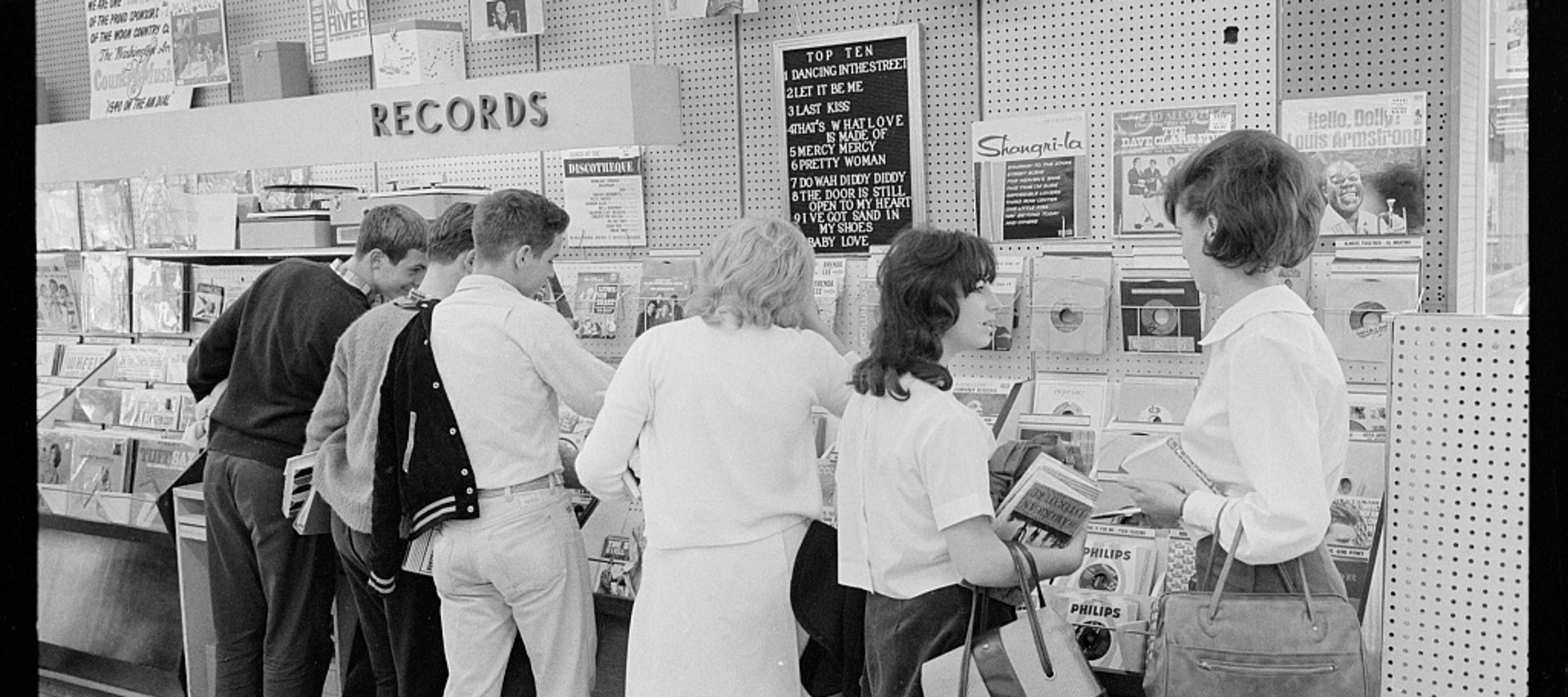
The economic boom of the Post-War years also led to the emergence of the Teenager - a young person who suddenly had extra money to spend. In an effort to differentiate themselves from their parents, this new teenager class found new fashions, new trends, and perhaps most of all, a new music: Rock and Roll, the origins of which were Black music such as Blues and Rhythm and Blues. They bought Rock and Roll records in massive numbers, and attended concerts with mixed audiences. In so doing, they increased interracial interaction, softening the lines of segregation while the music provided the soundtrack.
The artist who exemplified this shift perhaps more than any other was “the King,” Elvis Presley. With a subversive stage presence, Elvis quickly captured the interest and attention of scores of teenagers, while music industry leaders, who were looking for a marketable act to sell to middle America, embraced him. This was the breakthrough product they had been hoping for: a mass appeal, white performer, singing and gyrating to songs by Black artists.
Ultimately, the rocketship of Rock and Roll in the 1950s, with Elvis at the helm, may have inadvertently or deliberately moved the needle on racial acceptance, cooperation, and consideration. The undeniable fact is that by recording and releasing “That’s All Right” in 1954, a song written by the Black American Delta Blues musician Arthur Crudup, Elvis introduced a larger audience to the seeds of Rock and Roll. Teenagers in Post-War America were willing, able, and ready to rock. The record charts reflected the change in black and white, and the songs are the change that changed everything.
Preparation
- Arrange the images in Gallery Walk - Levittown Article around the classroom.