
60 mins
"Praying" and the #MeToo Movement
In what ways might Kesha’s legal battle and her song “Praying” reflect larger issues present in the #MeToo movement?
Essential Question
In what ways might Kesha’s legal battle and her song “Praying” reflect larger issues present in the #MeToo movement?
Objectives
Know (knowledge):
- The relationship between music and social movements
- The origins of the #FreeKesha movement
- The origins of the #MeToo movement
Mastery Objective:
- Students will be able to explain the differences and similarities between the #FreeKesha and #MeToo movements through paired discussion.
Background
Perform "Praying" with your class using Modern Band Charts provided by Little Kids Rock. Both Intermediate and Beginner charts available.
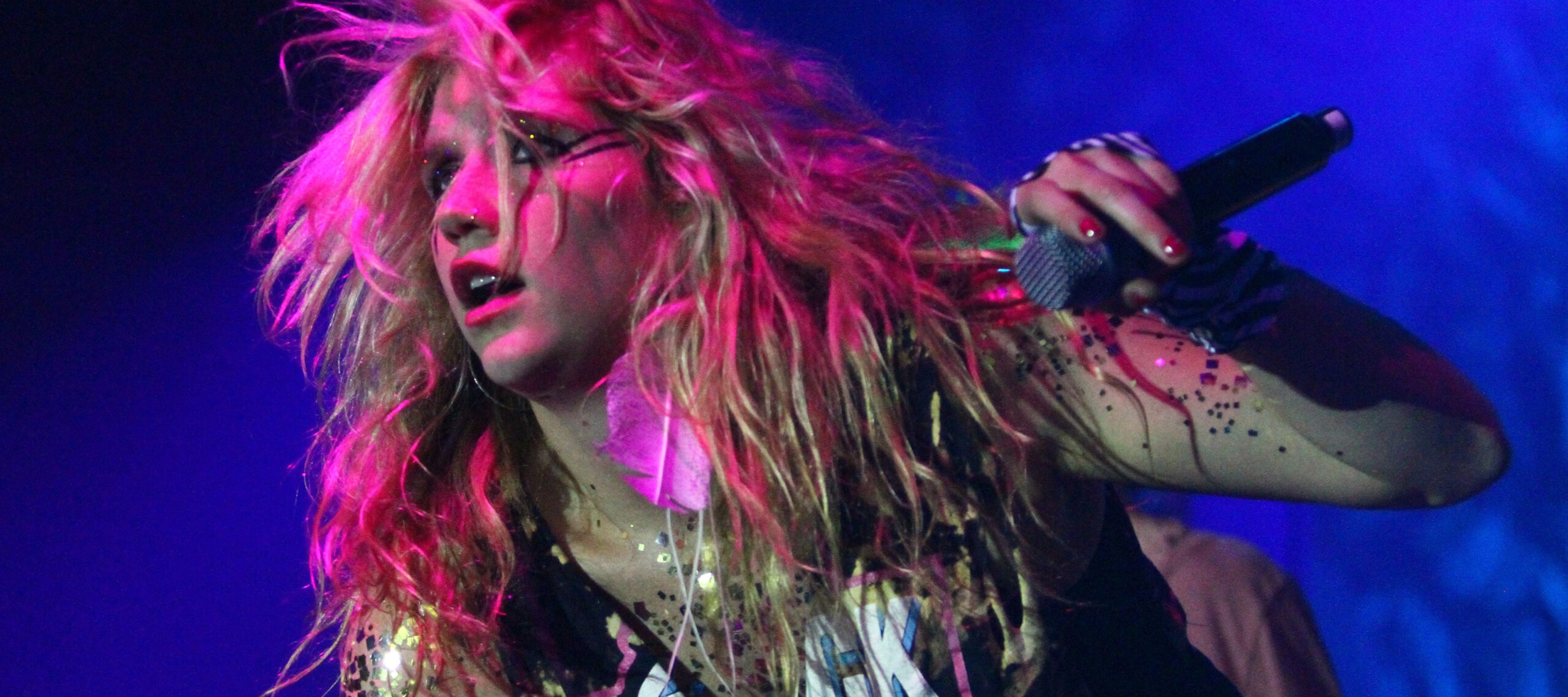
When Kesha Rose Sebert signed her first recording contract in 2005, she realized a near lifelong goal. Only 18, the singer and rapper was now to record on the Sony Records subsidiary Kemosabe. Sebert would be produced almost exclusively by “Dr. Luke” Gottwald, then a guitarist in the Saturday Night Live band whose short production career included elevating Kelly Clarkson into the upper echelons of the Billboard Hot 100 charts. Though it took a few years, in 2010 the singer--now just “Kesha”--topped the pop charts in eleven countries and broke all previous records for digital downloads with her first single, “Tik-Tok.” Kesha had “made it,” and her success continued through several subsequent releases. According to the singer, however, the experience was not what it seemed.
Kesha’s Kemosabe contract stipulated that Dr. Luke produce at least six songs on her first six albums. Kesha claims, however, that the producer attempted to control her life outside the professional boundaries of their musical collaboration. In 2014, she filed suit against Dr. Luke for sexual assault and battery, sexual harassment, gender violence, emotional abuse, and violation of California business practices. She also claimed that he had drugged and raped her on two occasions. Kesha filed an injunction that requested her release from the Kemosabe recording contract. Dr. Luke, who denied the allegations, countersued, claiming defamation.
Kesha’s allegations made headlines from the start, but images of a slumped, teary Kesha listening to a New York State Supreme Court judge rule against her release from the Kemosabe contract in February 2016 went viral, inspiring passionate fans to post hundreds of thousands of messages of support with a “#FreeKesha” hashtag. Kesha received public statements of support from celebrities including Lady Gaga, Adele, and, most notably, Kelly Clarkson, as well as a quarter-million dollar donation to offset legal fees from Taylor Swift. Kesha lost her first court case, but emerged at the forefront of a movement that bore her name: “#FreeKesha.”
Despite her fans’ wishes, Kesha was not “freed” from the Kemosabe record label. The judge--a woman--felt that voiding such a contract, willfully signed by both parties and with no language that allows for such an exit, would set a legal precedent with far-reaching ramifications. Furthermore, she suggested that Kemosabe’s offer to record Kesha without Dr. Luke’s involvement would insulate the artist from the man she claims abused her. The judge also ruled that the statute of limitations had expired for many of Kesha’s claims. Though disappointed, Kesha recorded Rainbow, an album produced for Kemosabe without the input of Dr. Luke. According to Kesha, recording the album was invigorating: “[Rainbow is] a record I’m extremely proud of, from the bottom of my guts,” she told Rolling Stone magazine in October 2017, “I excavated the most gnarly lyrics that were so difficult for me...I feel like I’m being seen for what I actually am, and people are OK with it.”
As a groundswell of collective support for a woman who made a public statement regarding sexual abuse, the #FreeKesha movement could be seen as the beginning of a broader, much larger wave of public expression regarding women’s rights issues that emerged in 2017. The Women’s March of January 2017, which was attended by an estimated 2-3 million people nationwide, was the largest mass protest in U.S. history. Later in 2017, following New York Times reporting on Harvey Weinstein sexual harassment allegations, the hashtag “#metoo,” an expression of female unity, was used 12 million times in 24 hours.
In this lesson, students explore key moments in the history of the women’s rights movement, and consider how the #FreeKesha campaign relates to broader women’s rights issues. Then, students will discuss why Kesha’s song “Praying” was embraced by many as a theme for the #MeToo movement.