
90 mins
Quitiplás: Deep Listening and Rhythm Building with Afro-Venezuelan Bamboo Drums From Barlovento
What is Quitiplás, how does it incorporate the natural world, and how is it an example of polyrhythm?
Essential Question
What is Quitiplás, how does it incorporate the natural world, and how is it an example of polyrhythm?
Objectives
Know:
- How to recognize polyrhythm in music
- How bamboo and the influence of the natural environment is part of a symbiotic relationship for Afro-Venezuelan culture
- How to recognize an idiophone - an instrument that makes its own sound when “struck, shaken or scraped”
- How to play a polyrhythm and differentiate the sounds (tones) of the Quitiplás by using the voice
Mastery Objective
- Students will be able to define rhythm, polyrhythm, and idiophone, be able to identify them in nature, and perform them by singing and clapping along to an Afro-Venezuelan Qutiplás drum ensemble.
Background
In this lesson, students will investigate the meaning of rhythm and the importance of polyrhythm (the presence of multiple, patterned rhythms) in the cultural life of the people of Barlovento, Venezuela. They will discover how Quitiplás, traditional bamboo drums, are idiophones (instruments that resonate on their own by being struck) and how Quitiplás were constructed from materials found in Venezuela’s natural environment as a way to emulate the rhythms and songs of enslaved people brought from Africa. Students will also examine how music is a tool used to celebrate and preserve cultural heritage by vocalizing polyrhythmic patterns and conversing with each other in song. Finally, they will discover Spanish vocabulary words related to Venezuelan culture and Quitiplás.
Quitiplás is the name of a family of bamboo drums, a dance, and a rhythm of Afro-Indigenous origin, born in coastal Barlovento, Venezuela during the colonial period.
The first enslaved Africans made landfall in Venezuela in the 16th century, but it was not until the 18th century that a large group from Congo and Angola arrived in Barlovento to aid the burgeoning cocoa industry. These enslaved people were forced into labor on large haciendas (ranch-like plantations), and it was in this specific environment that Quitiplás was born.
The bamboo drums unique to Quitiplás were developed after traditional drums with skin heads were destroyed and banned by the enslavers in Barlovento. Because the Quitiplás were made from bamboo, enslaved people could hide them in their bags and under their clothes and pass them off as work tools.
Often, these drums were, and continue to be used as, part of Afro-Catholic celebrations, syncretic ceremonies that mix Catholic and traditional Yoruba religious ideas and practices. In fact, the most important festival in Barlovento is that of San Juan, in which the Quitiplás are a predominant musical expression.
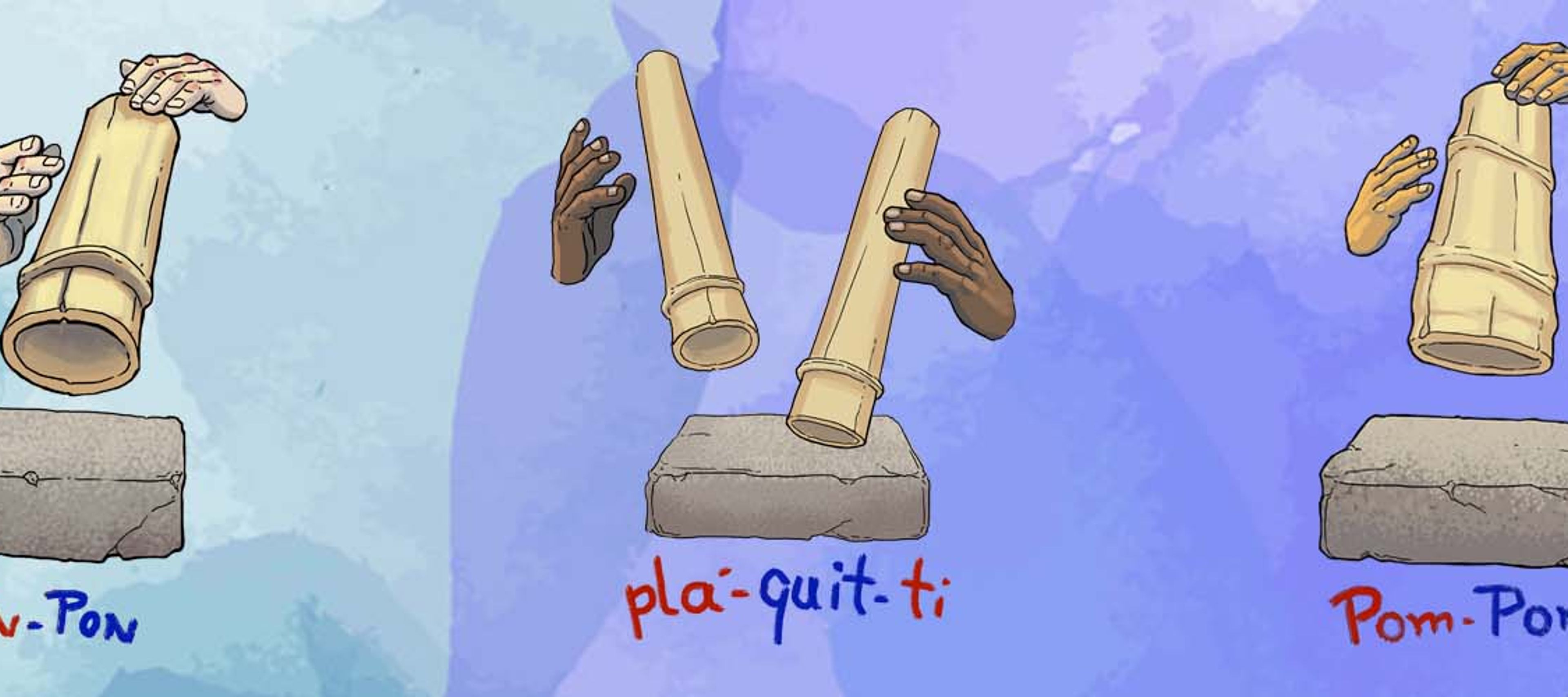
The celebration and reverence for nature has also been an important part of Quitiplás. To construct their drums, Afro-Venezuleans would cut the bamboo plant at specific times of the year according to the seasons of the moon. Since bamboo is a hollow plant, when musicians strike Quitiplás on the ground or against themselves, they resonate, making them part of the idiophone family of instruments (or instruments that create sound by vibrating when struck, plucked, or shaken). The word Quitiplás is itself an onomatopoeia, mimicking the way the bamboo’s sounds are produced when played. The set of Quitiplás drums consists of four instruments, Quitiplás (a set of two drums), Prima, and Pujao.
Because the roots of Quitiplás are in African culture and memory, (and more specifically, Congo and Angola), polyrhythm is an important part of Quitiplás music-making. Polyrhythm - the presence of one or more rhythms in conversation with each other - is a natural act of communing in many African cultures. In polyphony, when one person sings, another person “finds” their voice, or their melody/harmony, in relation to the first. Polyrhythm follows the same process, but using rhythm, and is an important and unique contribution from Africans brought to the Americas. In African cultures in the New World, creating polyrhythms, or conversations, were, and still are, acts of freedom - freedom of expression, freedom of “musical conversation”, and freedom of celebration with fellow members of the community.
The Quitiplás are still used in the context of traditional Afro-Catholic celebrations. However, today there are Venezuelan musical ensembles that incorporate bamboo drums and polyphonic singing into their work. Mesticanto and Ensamble B11 are two Venezuelan groups that are presently adapting these instruments and singing-styles to express their African roots, taking them out of the context of religious ceremonies and bringing the music to more secular audiences.
Connected Themes
Artist(s)
Genre(s)
Monthly Theme