
90 mins
Radio Before Rock and Roll
How did radio influence American life in the years before the birth of Rock and Roll?
Essential Question
How did radio influence American life in the years before the birth of Rock and Roll?
Objectives
Know (knowledge):
- The changing nature and influence of radio on American life in successive eras, from the 1920s through the early 1950s
- How radio helped create a “mass culture” in American society
- How commercial radio transformed itself after the rise of television from a medium that emphasized dramatic and comedy series to one that increasingly centered around music-based programming
Mastery Objective:
- Students will be able to compare and contrast the style and influence of commercial radio in successive eras in the 1920s, 30s, and 40s.
Background
In this lesson, students will analyze the growth and transformation of the radio in American society from the 1920s to the 1950s. Students will explore various forms of historical media to assess the impact of the radio on the daily life of Americans.
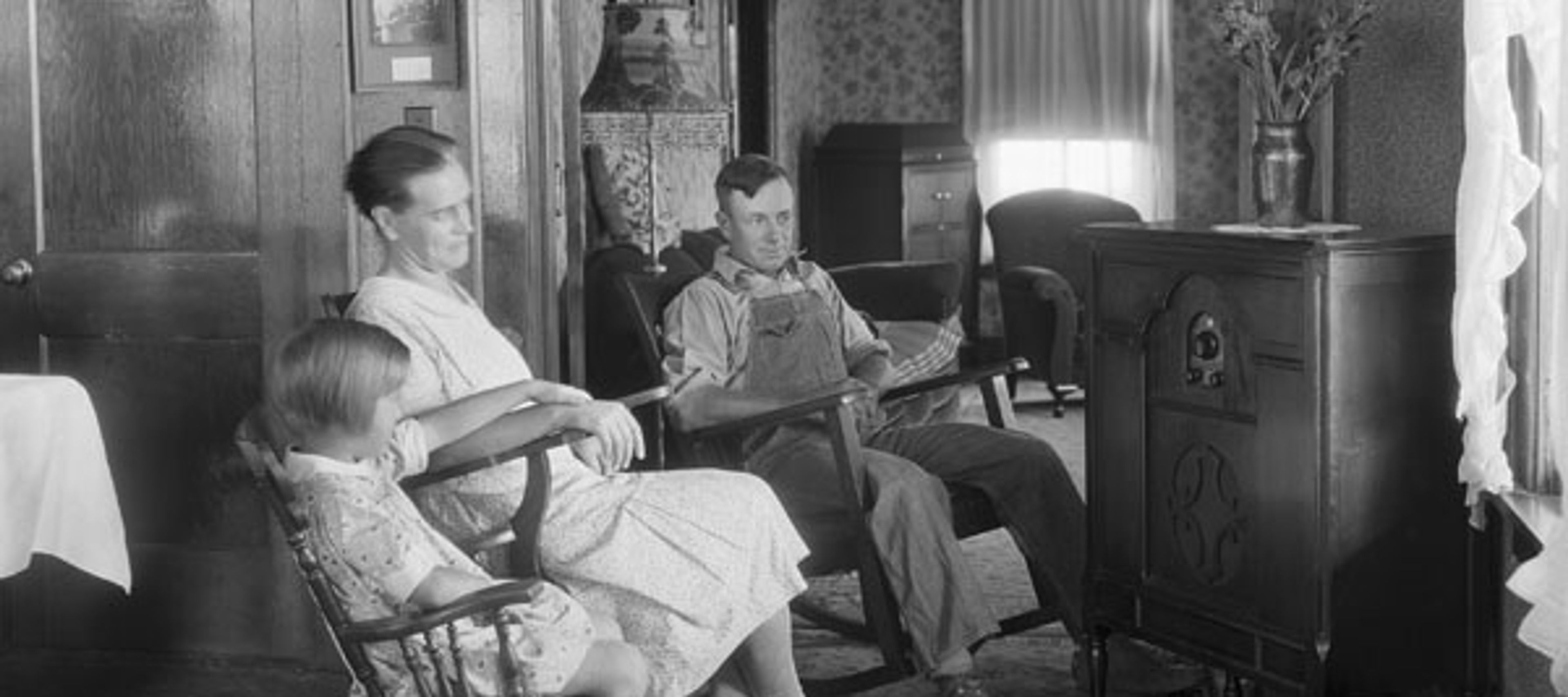
From its birth in 1920 to the rise of television in the early 1950s, commercial radio played a central role in American life. For much of this era, the radio itself held an honored place in the center of the home. Entire families would gather around it to hear important news events, listen to live music, or catch the latest installment of a hit drama or comedy series such as The Lone Ranger or Amos ‘n Andy.
But by the early 1950s, technological shifts—most notably the introduction of television into the family living room—heralded significant changes in the American people’s relationship with radio. The rise of smaller, portable radios meant that individuals could now listen virtually any time or place. The growing popularity of television rendered radio drama and comedy series nearly obsolete; listeners were less satisfied with merely listening to stories on radio when they could see them unfold before their eyes on television.
But far from disappearing from American life, as some predicted, radio instead reinvented itself in the early 1950s. Recorded popular music would come to play an increasingly central role in radio programming over the next two decades, as opposed to the live performances that dominated the airwaves in the decades prior. As the major networks, such as NBC and CBS, shifted their attention from radio to television, radio stations came more and more under local control, allowing for greater experimentation and creativity in programming. One such local owner, Todd Storz of WKOH in Omaha, Nebraska, pioneered a new format in which listeners could hear recordings of their favorite songs over and over again, paving the way for what would soon become known as “Top 40” radio. Some stations began playing a broader range of recorded music, including some that emphasized Rhythm and Blues performed by African-American artists. These changes set the stage for radio to play a central role in the Rock and Roll explosion of the late 1950s.
Preparation
- Prepare materials for a group project as follows below. Ensure each group has a device to watch internet clips.
- Group 1: Early Radio in the 1920s.
- Handout for Group 1 – Radio in the 1920s
- Video:
- Video:
- Group 2: The Golden Age of Radio in the 1930s
- Handout for Group 2 – The Golden Age of Radio in the 1930s
- Video:
- Video:
- Video:
- Group 3: Radio During World War II
- Handout for Group 3 – Radio During World War II
- Video:
- Video:
- Video:
- Group 4: Radio in the Late 1940s and Early 1950s
- Group 1: Early Radio in the 1920s.
Connected Themes
Topics
Decade/Era