
90 mins
Second Wave: Women's Rights and Music in the 1960s
What was second-wave feminism, and how did music contribute to the movement?
Essential Question
What was second-wave feminism, and how did music contribute to the movement?
Objectives
Know (knowledge):
- The founding of second-wave feminism and its guiding principles
- Betty Friedan's book The Feminine Mystique and the impact it had in the United States in the 1960s
- The Miss America beauty pageant protest in 1968
- The role music played in articulating the principles of the feminist movement
Mastery Objective:
- Students will be able to identify the principles and actions of the second-wave feminist movement by reading excerpts of Betty Friedan's The Feminine Mystique, watching clips from the CNN Soundtracks series, and analyzing the song, "You Don't Own Me" sung by Lesley Gore.
Background
In this lesson, students will investigate second-wave feminism and the fight for women’s liberation in the United States. Students will analyze the work of author Betty Friedan and singer Lesley Gore, and their influence on women during the 1960s and 70s.
With men beginning to return home to the United States from the battlefields of World War II in 1945, many Americans were eager for a sense of normalcy. Post-war economic growth, a booming birth rate, and the development of suburban living appealed to many young families as the nation moved into the 1950s. But suburban life relied heavily on gender expectations and the idea of the nuclear family: where men were expected to be the breadwinner and provider, with women left at home to tend to the kids and all of the household duties such as cooking and cleaning. This expectation of domesticity was reflected in pop culture, as well as the emerging consumer culture that targeted suburbanites with items like new household appliances. While the suburban lifestyle became part of the definition of the “American Dream,” for many women who were seen as nothing but a housewife it was anything but a dream.
One housewife who had begun to question this “problem that had no name” was Betty Friedan. Influenced by French feminist Simone de Beauvoir and her 1949 book, Le Deuxième Sexe (The Second Sex), Friedan published her own work titled, The Feminine Mystique in 1963. The book centered on how unhappy American housewives were, and the need for women to be more than just a housewife and mother. The Feminine Mystique was a hit as much as it was controversial, with many accusing Friedan of attempting to destroy the American family and demonizing happy housewives. In spite of the backlash, the book went on to sell about one million copies in its first year and influence a generation of women determined to carve out paths for themselves beyond societal expectations and pressures.
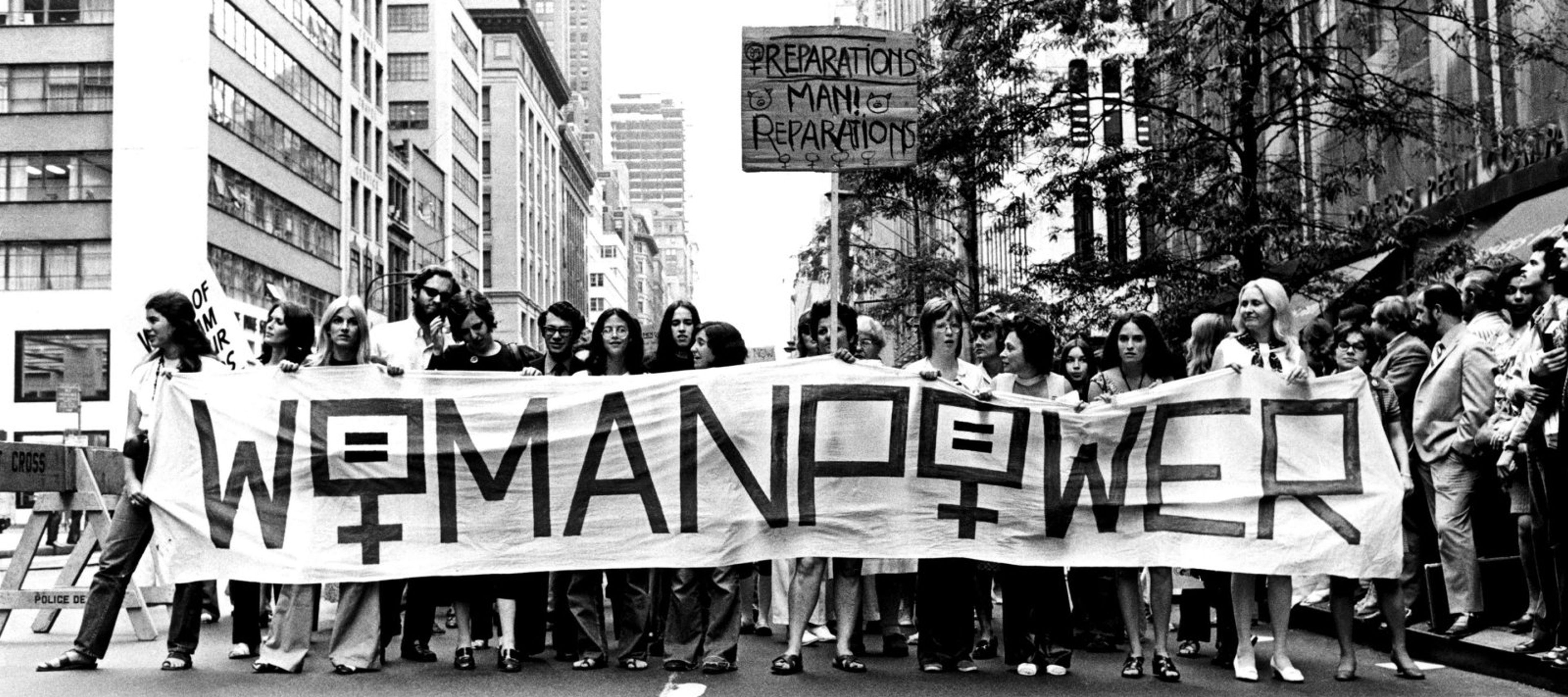
The 1960s and 1970s saw women like Friedan becoming more vocal against societal norms that expected them to be obedient and domestic. One major event where this became apparent was the protest of the 1968 Miss America beauty pageant in Atlantic City, New Jersey. Over 200 women participated in the demonstration, carrying signs and banners criticizing the pageant’s focus on women’s bodies and beauty ideals. The protest helped launch the women’s liberation movement into the public as it was covered by several media outlets.
A few years prior to the demonstration, seventeen-year-old singer Lesley Gore recorded the song, “You Don’t Own Me” in 1963. In the song, Gore emphasizes being independent and free to make choices as a young woman. It reached No. 2 on the Billboard Hot 100 record chart in February 1964. While not intentionally written with the emerging feminists radicalized by Friedan’s work in mind, “You Don’t Own Me” soon became an unofficial anthem associated with second-wave feminism. The song has been covered by artists such as Joan Jett and Kristin Chenoweth.
Second-wave feminism didn’t only encourage women to aspire to break free from societal expectations for women and gender norms. It also mobilized women to fight for legislation that protected women and secured autonomy. For example, Title VII of the Civil Rights Act of 1964 outlawed discrimination based on sex. The U.S. Supreme Court decision in Roe v. Wade (1973) ruled that “unduly restrictive” state regulations on abortion are unconstitutional. Organizations also formed, such as the National Organization for Women (NOW) in 1966, whose first president was none other than Betty Friedan. Second-wave feminism continued the work of first-wave feminists, who were victorious in their fight for women’s suffrage in the early 20th century. It also laid the foundation for third-wave feminists of the early ‘90s who centered their work around diversity and sexuality.
Connected Themes
Artist(s)
Genre(s)
Decade/Era
Monthly Theme