
90 mins
Social Movements of the 1960s and 1970s featuring Your Students’ Songs
What did the various social movements of the 1960s and 1970s have in common, and how were they unique?
Essential Question
What did the various social movements of the 1960s and 1970s have in common, and how were they unique?
Objectives
- Know (knowledge):
- That the Civil Rights Movement inspired and gave momentum to a wide variety of other social movements in the 1960s and 1970s
- Events, people, texts, and accomplishments associated with the social movements starting in the 1970s, including: the American Indian Movement, Disability Rights Movement, Women’s Rights Movement, LGBTQ+ Movement, Labor Rights Movement, Asian American Movement, and Environmental Movement
- Songs by artists: Jeff Moyer, Lesley Gore, Diana Ross, Luis Valdez, Chris Kando Iijima, Joanne Nobuko Miyamoto, “Charlie” Chin, and Joni Mitchell
- Mastery Objective:
- Students will be able to identify the connections between various social movements in the 1960s and 1970s by first analyzing primary and secondary sources and then crafting song lyrics which summarize each movement.
Background
In this lesson, students will survey seven different social movements from the 1960s and 1970s that co-existed and drew inspiration from the Civil Rights Movement (CRM). Students will break into groups and research the Women’s Rights Movement, the American Indian Movement, The LGBTQ+ Movement the Labor Movement, the Environmental Movement, the Asian American Rights Movement, and the Disability Rights Movement. After examining primary and secondary sources associated with each movement, students will craft a song as a class. The verses of the song will identify the principle people, events, and ideals of each movement, and the chorus will draw general connections between each movement.
By 1970, the Civil Rights Movement (CRM) had already left an indelible impact on American society. In 1964, The Civil Rights Act barred discrimination based on race, color, religion, or national origin in public facilities, greatly weakening Jim Crow laws across the country. In 1965, the Voting Rights Act passed, barring discrimination in voting. But beyond these concrete legislative successes, the CRM also had a profound cultural effect on the United States–particularly, the successes, demands, and tactics of the CRM served as inspiration for other, often long-standing social movements focused on other issues or communities.
Founded in 1968 in Minneapolis, Minnesota the American Indian Movement (AIM) was organized to address issues facing Native American communities: particularly poverty, discrimination, and police brutality. Like the CRM, many in AIM protested by occupying spaces - for Native Americans, this meant places generally part of their tribal history, including Alcatraz Island and the Bureau of Indian Affairs in Washington, D.C. These occupations came to a head at the Pine Ridge Indian Reservation in South Dakota–home of the Wounded Knee Massacre–in which AIM protesters engaged in armed conflict with the FBI and National Guard.
While there have been advocacy campaigns on behalf of people with disabilities since the 1900s, by the 1960s and 1970s the movement gathered enough momentum to culminate decades later in the groundbreaking American with Disabilities Act of 1990. To pass this historic legislation granting equal access to people with disabilities, activists like Patrisha Wright and Justin Dart Jr. built consensus and enacted protests–perhaps most famously with the 1990s Capitol Crawl, where hundreds of disabled people crawled up the steps to the U.S. Capitol building as a demonstration of the inequality of access in the country.
Like disability rights, the Women’s Rights Movement (WRM) had a long and venerable history well before the 1970s, but by the 1960s it was pushed forward by the momentum of Second Wave Feminism. Spurred by works such as Betty Friedan’s landmark non-fiction book, The Feminine Mystique, this new wave of the WRM strove not just for equality in voting, but also equality in living and working in the United States. By organizing groups such as the National Organization for Women, women fought for reproductive rights, equal pay, and economic freedom - culminating in events such as the development of the birth control pill and the 1973 Roe v. Wade decision by the U.S. Supreme Court.
Parallel with the WRM, the LGBTQ+ Movement intensified by 1970. In 1969, police officers raided the Stonewall Inn, a known Gay bar in New York City. The force of the police raid resulted in an uprising that led to the first Gay Pride parades along Christopher Street in New York City. The movement spread across the country, and became no less than a life and death matter a decade later during the AIDS Crisis, in which groups such as ACT UP demanded government attention to the fatal endemic. Like other movements, protests, organizing, and other activism helped change hearts and minds, leading to the seminal Obergefell v. Hodges case, which resulted in a U.S. Supreme Court decision legalizing same-sex marriage nationwide in 2015.
The Labor Rights Movement, too, entered into a new phase by the 1960s and 1970s, spurred by the development of the United Farm Workers of America (UFW) labor union. Founded by César Chávez, Dolores Huerta, and Larry Itliong, the UFW advocated specifically for the rights of (mostly) immigrant farmworkers, demanding a sustainable wage for the often exhausting labor they were asked to do in the fields. To build morale during strikes, marches, and boycotts, the UFW employed music and the arts, with creatives such as Luis Valdez writing songs and plays in support of the movement through the theater company, El Teatro Campesino (The Farmworkers Theatre).
Unlike other social movements, the Asian American Movement (AAM) did not have a long history. While Americans of Asian descent have long lived in the United States, for much of the country's history, they were divided by nationality and ethnicity. It was only after a group of activists in Berkeley, California - finding common cause not just across Asian Americans but also between Asian Americans and other ethnic minorities - that the inclusive category “Asian American” was developed. Through organizations such as the Asian American Political Alliance and The Third World Liberation Front, as well as publications such as Gidra, Asian American activists protested not just anti-Asian discrimination in the United States, but also the country’s imperialist approach to Southeast Asia during the Vietnam War era. Moreover, the AAM formed solidarity with Black organizations such as the Black Panthers. In fact, many of the AAM's most well-known activists - including Grace Lee Boggs and Yuri Kochiyama, felt the position of Black and Asian Americans to be bound up together under the oppression of white supremacy.
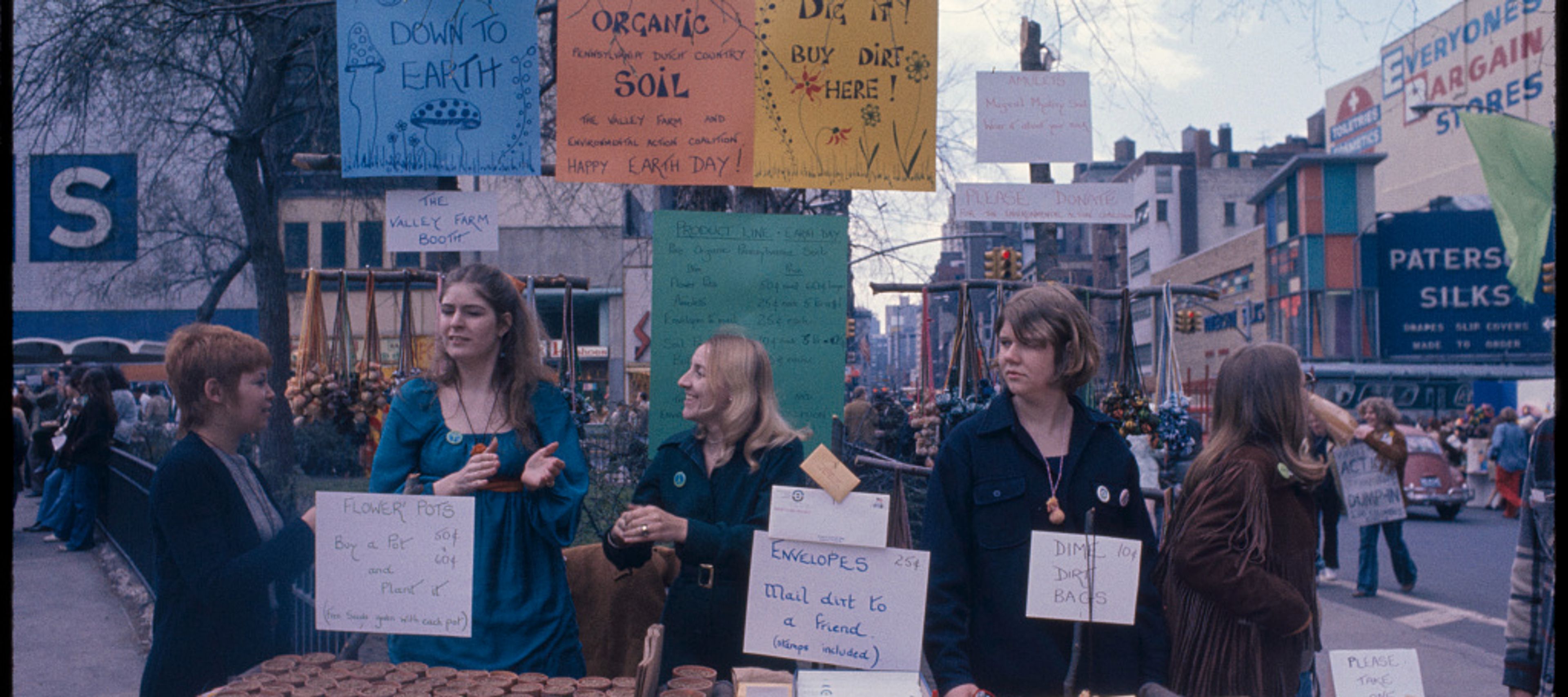
The Environmental Movement existed beyond specific communities of people but shared many of the advocacy characteristics of the social movements of the mid 20th century. In April 1970, the United States celebrated its first Earth Day. Spurred by scientist Rachel Carson’s investigation of the chemical DDT and her 1962 book Silent Spring, people across communities gathered and organized to protect the earth shared by all people. Through pressure campaigns and sympathetic members of the U.S. Congress, these efforts not only resulted in Earth Day, but also contributed to the establishment of the Environmental Protection Agency in December 1970, tasked at ensuring clean water and air are available to all Americans.
Just as in the Civil Rights Movement, music provided an essential tool to all these movements. Anthems were developed, mass songs were sung during protests, and in a few cases, established artists contributed their own songwriting talents to help the cause.
Materials
An internet accessible device for every student.