
90 mins
Swing Down: Afrofuturism & Flight in the Black Imagination
What is Afrofuturism and what are some of the cultural traditions and historical events that inspired and reinforced it?
Essential Question
What is Afrofuturism and what are some of the cultural traditions and historical events that inspired and reinforced it?
Objectives
Know:
- The definition of Afrofuturism
- About cultural continuity across the African diaspora
- The names of some Afrofuturist thinkers and artists of the 20th and 21st century
- About centuries old African astronomy and philosophy that anticipates Afrofuturism
Mastery Objective:
- Students will be able to define Afrofuturism and its defining characteristics by exploring folktales, song lyrics, visual art and film.
Background
In this lesson, students will explore Afrofuturism and its parallels in the oral traditions of the African diaspora, including Spirituals and accounts of Flying Africans. Students will view 21st Century music videos, live performances from the 1970s, hear primary documents read aloud and sing along with recordings of spirituals, to experience a range of Afrofuturist expression across eras, disciplines and artistic media.
“The one thing you say about a myth is that there’s some truth in there, no matter how bizarre they may seem. I read a lot of those slave narratives, you know, that they published in the thirties, and the interviewer would ask certain basic questions and then he or she always asked that. ‘Have you ever heard of flying Africans or people taking up and flying back to Africa?’ They also asked them about ghosts trying to get at the heart of their mythology and their magic. And everybody, everybody said one of two things. No, I never saw any, but I heard about it or they said they had seen it...no one said, ‘What are you talking about? Flying Africans! Where’d you get that?’ ...Instead of it being a more naive escape story, it’s about flight. It really is about flight and flight comes up a lot in Spirituals. “I’ll Fly Away”. Understandably...I mean, it has a lot of connotations. So, I’m thinking how can I make a contemporary story about a Black man, a young Black man, who learns to fly or who makes his escape. Not geographical escape back to Africa but another mindset. How does he escape the prison, the cultural prison, that he found himself in? That was his journey.” - Toni Morrison
In the above quote, the late Nobel laureate Toni Morrison describes the corpus of folklore about flying Africans that is found throughout the diaspora. Space is a recurrent theme of African diaspora mythology and the interest in flight can be traced back to the oral tradition that was sustained through centuries of slavery in this United States and Caribbean. In the late 20th and 21st century, older material including spirituals like “Swing Low” and “I Got Wings,” and folktales about flying Africans gave rise to the musical output of artists that include Sun Ra, Parliament-Funkadelic, Missy Elliott and Janelle Monae, and the novels of Octavia Butler, N. K. Jemisin, and Samuel Delany. Some of these artists reclaimed the symbolism of ancient African belief systems such as those of Egypt, the Yoruba people that reside in Benin and Nigeria or the Dogon people of Mali; they all envision an alternative present and future. Their ideas and aesthetic can be described as Afrofuturistic.
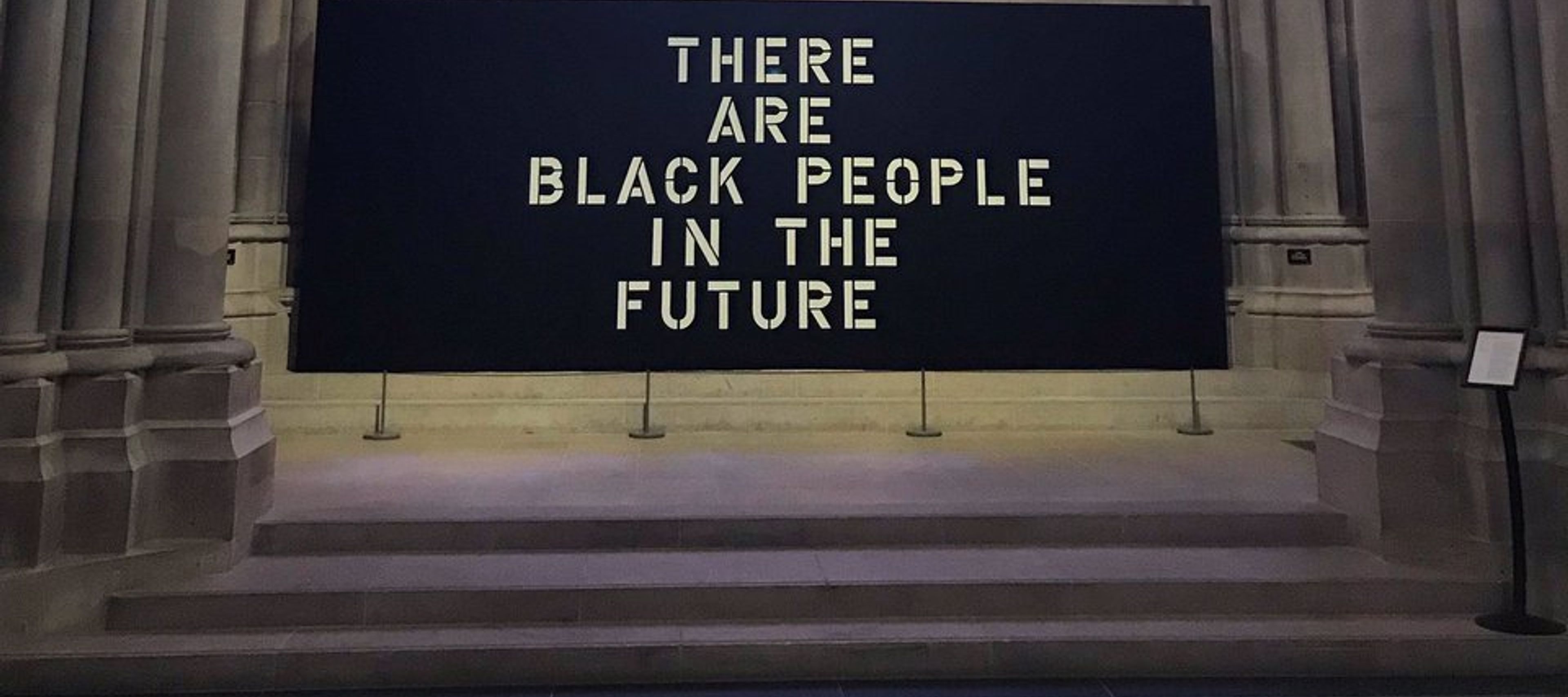
While the term Afrofuturism did not emerge until the 1990s, it describes this continuous stream of thought and cultural production that is documented over centuries. Cultural critic Michael Gonzales defines Afrofuturism as a catchphrase that describes the way that the possible worlds of tomorrow appear in music, art, theater, literature, politics, and academics today. But he also notes that even the meaning of the term is contested. Afrofuturism embraces an infinite range of possibilities for Black people to live free and whole in a future of their design. Afrofuturism deals with breaking through the boundaries of normative human possibility; time travel, flight and the exploration of unknown worlds are recurrent themes.
Connected Themes
Artist(s)
Genre(s)
Decade/Era
Monthly Theme