
90 mins
The Annexation of Hawaii featuring Joseph Kekuku
How did the annexation of Hawaii by the United States mark a significant turning point in Hawaiian history, and in the development of American music?
Essential Question
How did the annexation of Hawaii by the United States mark a significant turning point in Hawaiian history, and in the development of American music?
Objectives
Know (knowledge):
- The history of the annexation of Hawaii
- The role Queen Liliuokalani played in the annexation of Hawaii
- The influence and impact of Joseph Kekuku's steel guitar playing on American music
Mastery Objective
- Students will be able to assess how U.S. Imperialism led to the annexation of Hawaii by analyzing texts, examining media, and interpreting primary source documents.
Background
In this lesson, students will examine the history behind the annexation of Hawaii, and how that history impacted Joseph Kekuku, the inventor of the Hawaiian steel guitar who helped make slide guitar playing a foundational sound in U.S. popular music. To discover this history and Kekuku's contributions to American music, students will analyze primary sources such as testimonials, speeches, and news articles, as well as listen to excerpts of the podcast, Asian American History 101.
There is no pure music. The development of musical genres is never static. It breaths, borrows, and becomes something new. Its beauty, richness, and appeal lies in its respect and homage to what came before it. There is no Metallica without Ozzy Osborne. There is no Beyoncé without Aretha Franklin. And there is no Robert Johnson without Joseph Kekuku.
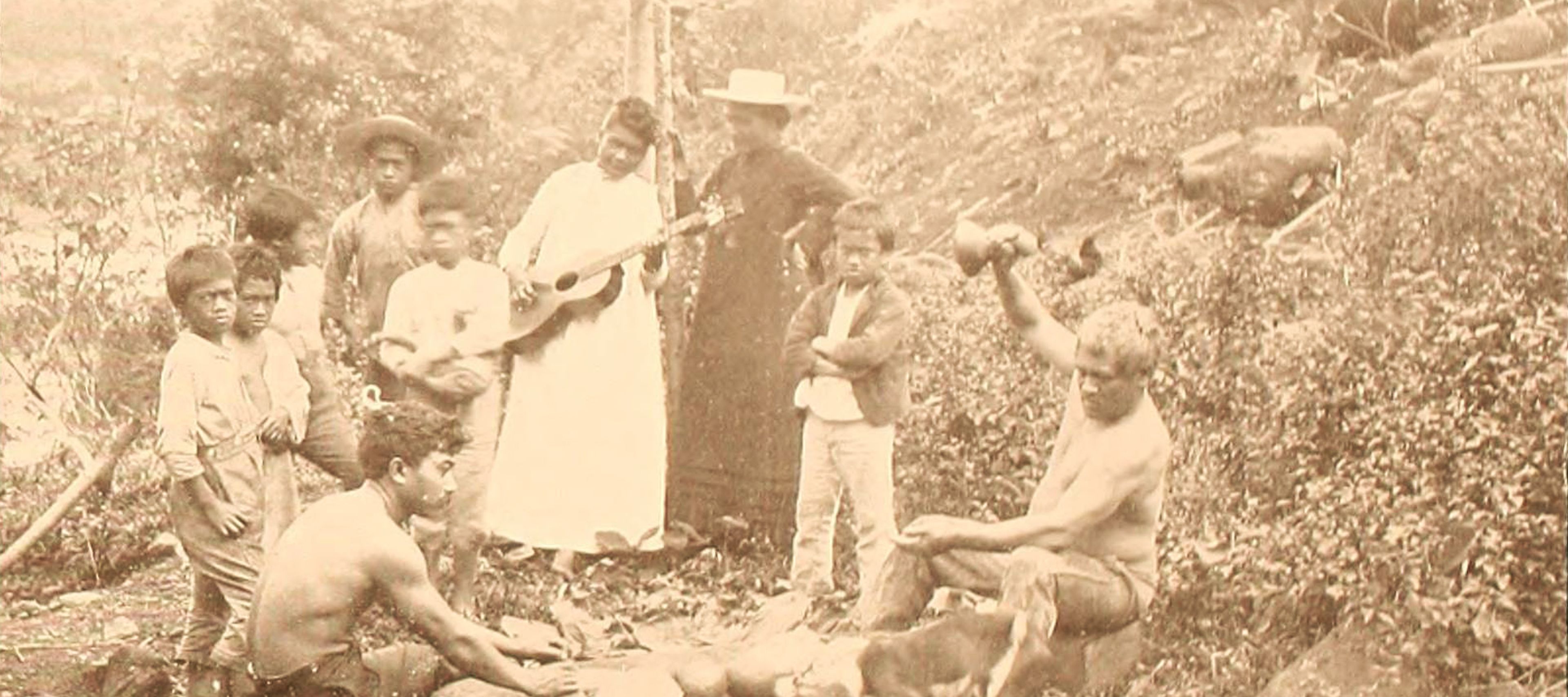
By the mid 1800s, Hawaii had become one of the most significant global crossroads on the planet. The strategic and inviting location of the islands welcomed whaling ships, trading vessels, passenger ships, missionaries, and military. Sailors from across the world shared their musical culture with one another through portable instruments such as guitar and violin, and this wondrous fusion of music and culture blended with native hymns and chants to become Hawaiian music. Hawaiian musicians termed this melting pot of musical influences as Hula-Ku’i, which means “to join old and new.” Through Hawaii's status as a cosmopolitan trade hub, Hawaiians became some of the most literate people in the world. By the turn of the 20th century, Hawaii had developed a cutting edge music scene - largely inspired by the steel bar guitar technique invented by high schooler, Joseph Kekuku. The young student Kekuku is said to have taken a nylon string guitar, changed the strings to metal, and fashioned a steel bar and finger picks to play his new variation that sat on his lap.
Around the same time Kekuku was experimenting with slide guitar, the United States government was fiercely debating the possible annexation of Hawaii. U.S. officials in favor of annexing Hawaii saw the islands as a strategic military location and a favorable place for trade and profit, while those opposed considered the idea immoral and a violation of American principles. For those opposed, Hawaiian annexation established a government without the consent of those being governed, and denied voice and vote to Hawaii's Indigenous peoples. Some in the Native Hawaiian population saw the possible annexation of Hawaii as an act of war and a subversion of democratic principles. At the time, the United States was struggling with the contradictory policies of Isolationism and Imperialism, and ultimately the lure of expansion prevailed - forever changing Hawaii.
The annexation of Hawaii was opposed in great numbers by Native Hawaiians, who felt the U.S. government was not serving their interests, but ultimately those of white settlers. This white settler community was largely comprised of the descendants of early missionaries who had grown up on the islands and sought more Hawaiian land for agriculture. White settlers also desired more foreign labor to work the land since between 1832 and 1890 the Native population dropped from 130,000 to 35,000 due to disease. This labor shortage created incentives to import workers from Japan and China, as well as cost saving benefits for settlers due to the imported cheap labor.
Joseph Kekuku was a young teenager in the years when fear of native resistance to the annexation of Hawaii resulted in a movement to strip the ruling Hawaiian Kingdom of its powers, limit native expression, and undermine Hawaiian self rule. The “Bayonet Constitution” imposed upon the Hawaiian Kingdom by U.S. business leaders and politicians set in motion the overthrow of the monarchy, and provided the pathway to annexation and statehood. Kekuku voiced his opposition to this takeover, and the music he created became a voice of resistance, pride, and originality.
Faced with the prospect of displacement and marginalization in his native Hawaii, Kekuku joined many other native Hawaiians and left his homeland to seek opportunities on the U.S. mainland. For Kekuku and his musician colleagues, this meant traveling the newly built transcontinental railroad to supply mainland Americans' growing infatuation with all things Hawaii, including the unique Hawaiian guitar sound. The lonesome, dreamy, and romantic sound of Joseph Kekuku’s instrument rose quickly from a novelty tone to an essential sound in American popular music. Kekuku's important contribution remains a gift that should be credited to that string of islands in the middle of the Pacific.
Connected Themes
Decade/Era