
The Banjo, Slavery, and the Abolition Debate
What is the relationship between the banjo and slavery, and how did music making by enslaved people influence the abolition debate during the 18th and early 19th century?
Essential Question
What is the relationship between the banjo and slavery, and how did music making by enslaved people influence the abolition debate during the 18th and early 19th century?
Objectives
Upon completion of this lesson, students will:
Know (knowledge):
The African origins of the banjo
The numbers of enslaved people sent to North America by region
First-hand accounts of slavery by former enslaved people
The functions music played for enslaved people according to the accounts of former enslaved people
How the banjo and slave music making informed debates over the morality of slavery in the 18th and 19th century
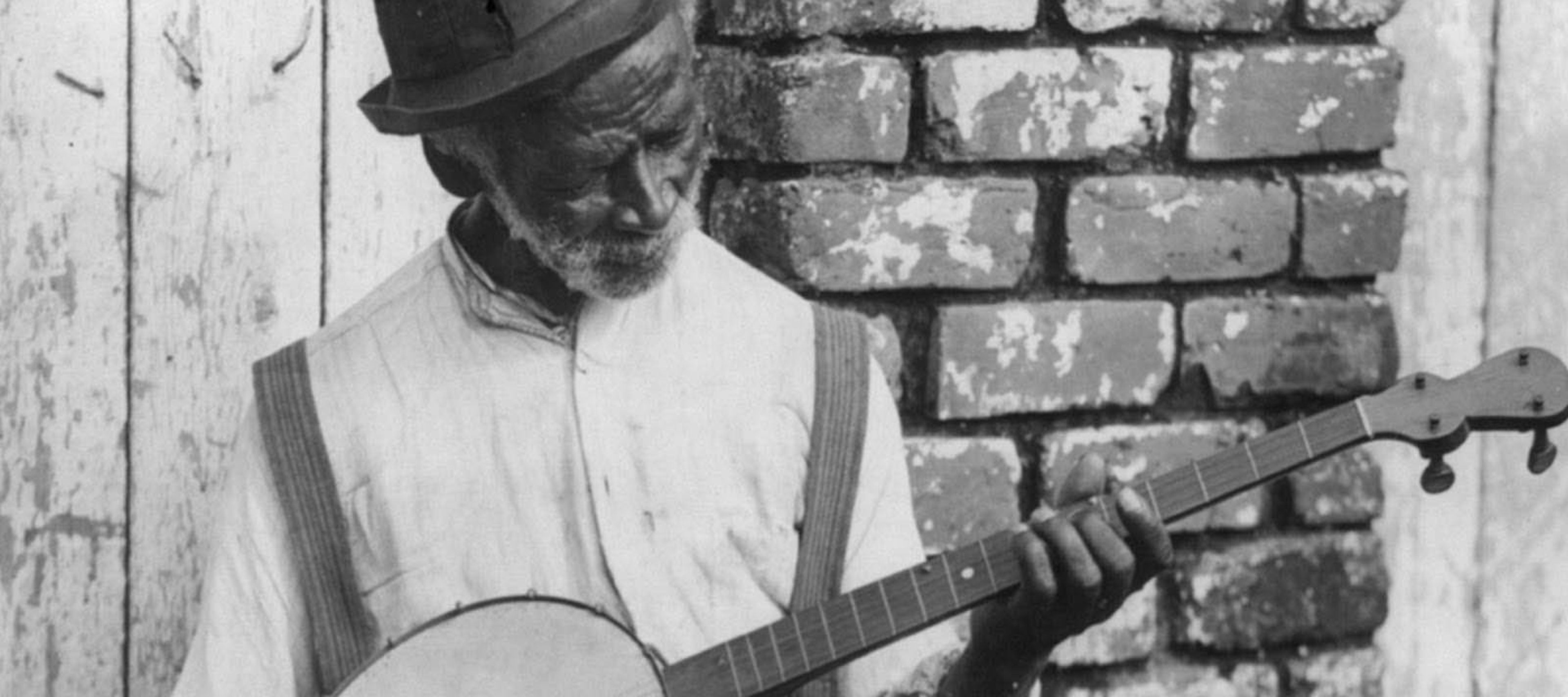
Banjo player Dink Roberts
Mastery Objective:
Students will be able to make connections between music, slavery, and the abolition debate by hearing slave narratives, analyzing statistical data, and discussing historical documents.
Background
In this lesson, created in partnership with the Association for Cultural Equity, students discover how the banjo and music making more generally among enslaved people contributed to debates on the ethics of slavery. They listen to slave narratives, examine statistics, and read primary sources to better understand how slavery was conceptualized and lived through in the 18th and 19th centuries. Throughout the lesson, students return to videos created by Alan Lomax of pre-blues banjo player Dink Roberts as a way to imagine what music among enslaved people in the United States may have sounded like.
The story of the banjo is in many ways the story of America. For two centuries, the plucking of banjo strings accompanied the evolution of American popular music, from Minstrelsy to Blues to Dixieland Jazz. Then, just as the banjo’s popularity waned before the electrified sounds of Rhythm and Blues and Rock and Roll, there was a revival. In the hands of Bluegrass virtuoso Earl Scruggs and Folk songster Pete Seeger, the banjo was reasserted as the instrument of the common man. Today, the banjo remains essential to the sound of groups from Mumford and Sons to the Band Perry, who, like musicians of the past, pay homage to the banjo’s history while also making the instrument their own.
The significance of the banjo to American culture, however, goes far deeper than its presence in popular music styles: it can be traced to the tragic foundations of the New World. For the banjo was not invented in America, nor did it come in the hands of colonists and settlers. The banjo arrived upon America’s eastern shores through enslaved Africans.
Between 1500 and 1900, an estimated 10.7 million enslaved people arrived to North America, South America, and the Caribbean. Taken from West Africa, the enslaved were delivered like livestock to the Americas. Packed into hulls of ships built to transport goods rather than people, many Africans reached the shores of America still shackled to the bodies of people who had succumbed to disease or starvation. Those that managed to escape from their bonds often jumped into the sea, preferring a watery grave over a life in servitude.
Upon reaching the shores, the enslaved Africans were sent to an auction block where, in the words of ex slave Fountain Hughs, “they would bid on you just the same as you bid on cattle.” Their lives were thereafter determined completely by the temperament of the slave master. But all lacked the rights engraved into the Declaration of Independence: life, liberty, and the pursuit of happiness.
Among the only comforts available to the enslaved people was memories of their homelands, embodied through song and dance. Many of the enslaved rebuilt the instruments of Africa using the materials available to them in the New World. Thus, the banjo was reborn in the Caribbean, likely from a similar Ghanaian instrument called the akonting. In addition to playing the banjo and other instruments, enslaved people also continued dancing traditional dances, and sung work songs and spirituals intimately connected with their physical bondage and spiritual endurance.
This music making led to considerable consternation among colonists and settlers. The justification for slavery was often predicated on the idea that Africans were subhuman, and therefore not entitled to the same rights of freedom endowed to Europeans. But how could such a claim be made in the face of evidence of so much ingenuity, creativity, and humanity in slave’s music making?
Connected Themes
Artist(s)
Genre(s)
Decade/Era