
90 mins
The Beatles Work Towards Success
How did The Beatles' rigorous work schedule during the years 1960-63 build their strengths as performers, as musicians, and as a band?
Essential Question
How did The Beatles' rigorous work schedule during the years 1960-63 build their strengths as performers, as musicians, and as a band?
Objectives
Know (knowledge):
- About the cultural phenomenon of “Beatlemania”
- About the work ethic of The Beatles in their early years
- About the effects of World War II on Liverpool, England
- How teenagers coped with post-war life in Liverpool
- About the social circumstances and musical environments that helped shape The Beatles
Be able to (skills):
- Analyze the idea of “popularity” and the factors that contribute to it
- Study a timeline and use basic math principles to extract statistical data
- Analyze statements from historical materials to arrive at a better understanding of the past
- Understand connections between popular culture and the time, place and social circumstances in which it was created
Background
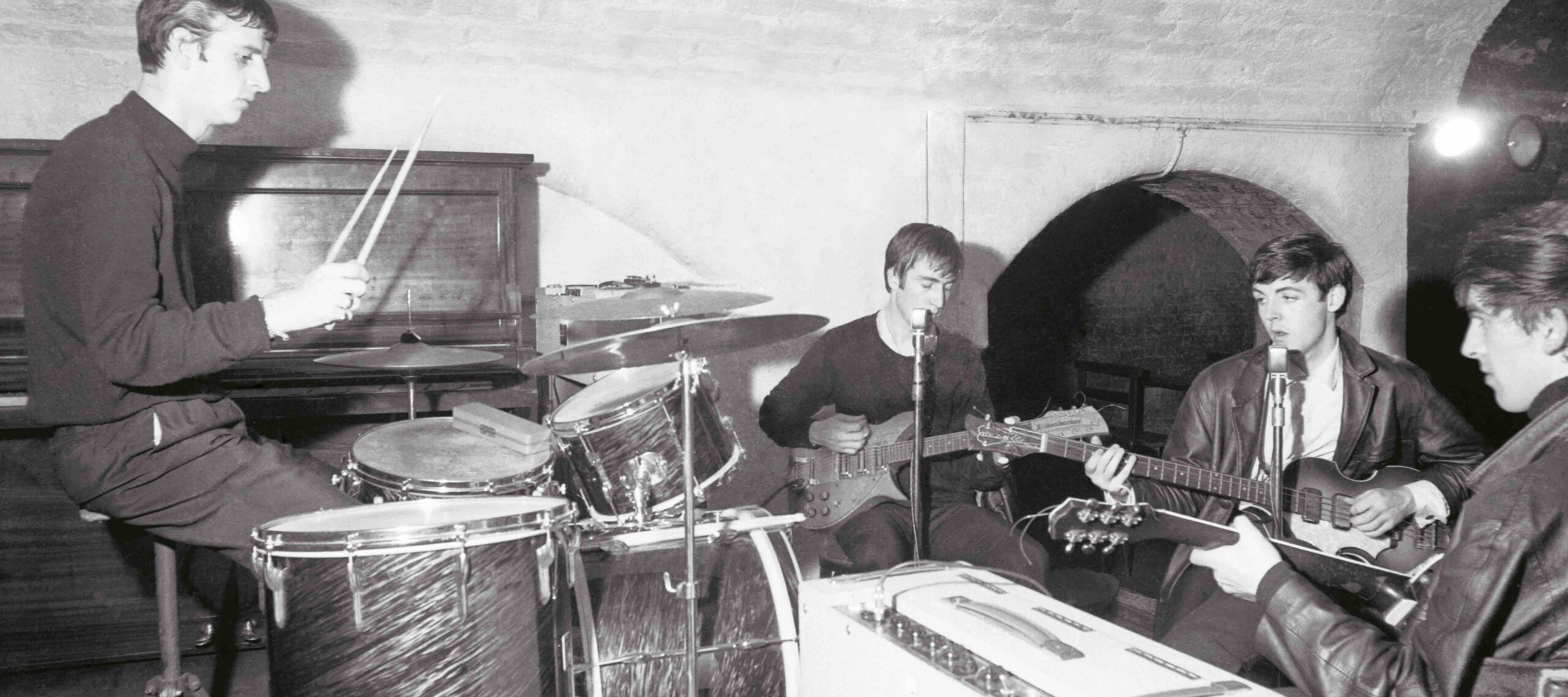
“A lot of people thought we were an overnight sensation,” says The Beatles’ Paul McCartney in The Beatles: Eight Days a Week - The Touring Years, “but they were wrong.” Indeed, though to many fans The Beatles seem to have been a big bang, bursting from Liverpudlian obscurity to international stardom with their 1963 debut album Please Please Me, quite the opposite is true. Between 1960-63, The Beatles worked. They were, after all, young men from the working classes of Liverpool, a city still recovering from World War II. They worked to earn money for basic necessities, playing pub sets both day and night and performing lengthy residencies in Hamburg, Germany, one of which included a stretch of 104 consecutive shows. They worked on repertoire, learning dozens of “cover” songs spanning several genres. They worked on their group sound, playing several sets a night and fine tuning the skills that helped them “hold” audiences at the dance floor, even those who may not have come specifically to see them.
When The Beatles began taping the BBC Radio series “Pop Go The Beatles” in May 1963, still nearly a year before their American debut on the Ed Sullivan Show, they recorded 56 songs. Within that songlist were the Lennon/McCartney originals, cabaret numbers, and numerous versions of American Rock and Roll and Rhythm and Blues songs. Though many listeners have noted the early Rock and Roll roots of The Beatles sound --in 1964 a Saturday Evening Post journalist said plainly, “It’s 1956 American Rock bouncing back at us”-- the group displayed a capacity to absorb music from very diverse influences. For instance, "A Taste of Honey," an American Broadway song popularized by Billy Dee Williams in 1961 and later rerecorded by Barbara Streisand, was a staple of The Beatles' early live sets. “Baby it’s You,” recorded for the “Pop Go the Beatles” series and featured in this lesson, was recorded first by The Shirelles, an African-American “Girl Group” that cracked the Billboard Top 10 with the track in late 1961. The Beatles, unphased by the gender of the original performers, heard something special in the song, and “Baby It’s You” was in their live show repertoire within months of its release.
The Beatles moved at a frenetic pace in 1961 and 1962, rarely taking a night off. It seems the young Beatles rarely took a moment's rest; amidst all this activity they collected records, learned songs, practiced vocal harmonies and began composing original music. Though the band had been working non-stop for several years already when they recorded their debut album Please Please Me in February 1963, guitarist George Harrison was not yet 20 years old.
To many, Please Please Me sounded radically new, and the “Beatlemania” that followed was unprecedented as a response to popular music. But when one looks at the years just before the world focused its cameras on The Beatles, a story of four young men with talent, passion, an unwavering drive to succeed and a remarkable work ethic is revealed.
Connected Themes
Artist(s)
Genre(s)
Decade/Era