
90 mins
The Blues: The Sound of the South
How did the lived experiences of Black Southerners help create the Blues?
Essential Question
How did the lived experiences of Black Southerners help create the Blues?
Objectives
Know (knowledge):
- Where the Blues genre was developed and originally emerged in the United States during the late 19th and early 20th centuries
- Blues originators Elizabeth Cotten, Memphis Minnie, Charley Patton, and Lead Belly
- How the lived experiences of Cotten, Memphis Minnie, Patton, and Lead Belly influenced the Blues songs and regional styles they created and performed
- The distinct Piedmont, Memphis, Delta, and Country blues styles and their associated musical characteristics
- Societal conditions for Black Americans in the early 1900s
- Blues artists influence on popular music in the U.S. and internationally
Mastery Objective:
- Students will be able to describe how the lived experiences of musicians influenced the development and performance of the Blues in the Southern United States through the analysis of musician biographies, documentaries, and songs.
Background
In this lesson, students will explore the emergence of the Blues in the first half of the 1900s by participating in a figurative road trip through the Southern United States. On their journey, they will examine the music of Blues originators Elizabeth Cotten, Memphis Minnie, Charley Patton, and Lead Belly. As they travel through the South, students discover how those musicians performed and influenced four distinct regional styles of the Blues and the musical characteristics associated with those styles: Piedmont Blues, Memphis Blues, Mississippi Delta Blues, and Country Blues. In a culminating activity, students will compare and contrast each Blues musician explored to develop a general understanding of what it meant to be a Black musician living in the South during the early 1900s.
“As I began to get into the history of the music,” writes Amiri Baraka (writing under the name LeRoi Jones) in his book Blues People, “I found that this was impossible without, at the same time, getting deeper into the history of the people. [The Blues] was the history of the Afro-American people as text, as tale, as story, as exposition, narrative… the music was the score, the actually expressed creative orchestration, reflection, of Afro-American life.”
Before music was widely recorded and distributed, the people of the United States experienced music in live settings. In the early 1900s, apart from hearing music performed in a formal concert venue, music was more often experienced live in family homes, at neighborhood gatherings, on street corners, and, in some regions, in juke joints. This is how the Blues emerged: performed live in Black communities in the South during the late 19th and early 20th centuries.
The roots of Blues music can be heard in many different musical genres and styles found within Black communities in the South. In creating the Blues, Black Americans, many formerly enslaved people or their descendants, harnessed the sounds of Spirituals, work songs, field hollers, shouts, chants, church music, minstrel show music, and other popular music of the time to create a uniquely new music. However, the Blues is also a musical expression of the various lived experiences of Black Americans in different regions of the Southern U.S. Those varied experiences are heard in the diverse regional Blues styles that developed during this time, including: Piedmont Blues, Memphis Blues, Delta Blues, and Country Blues.
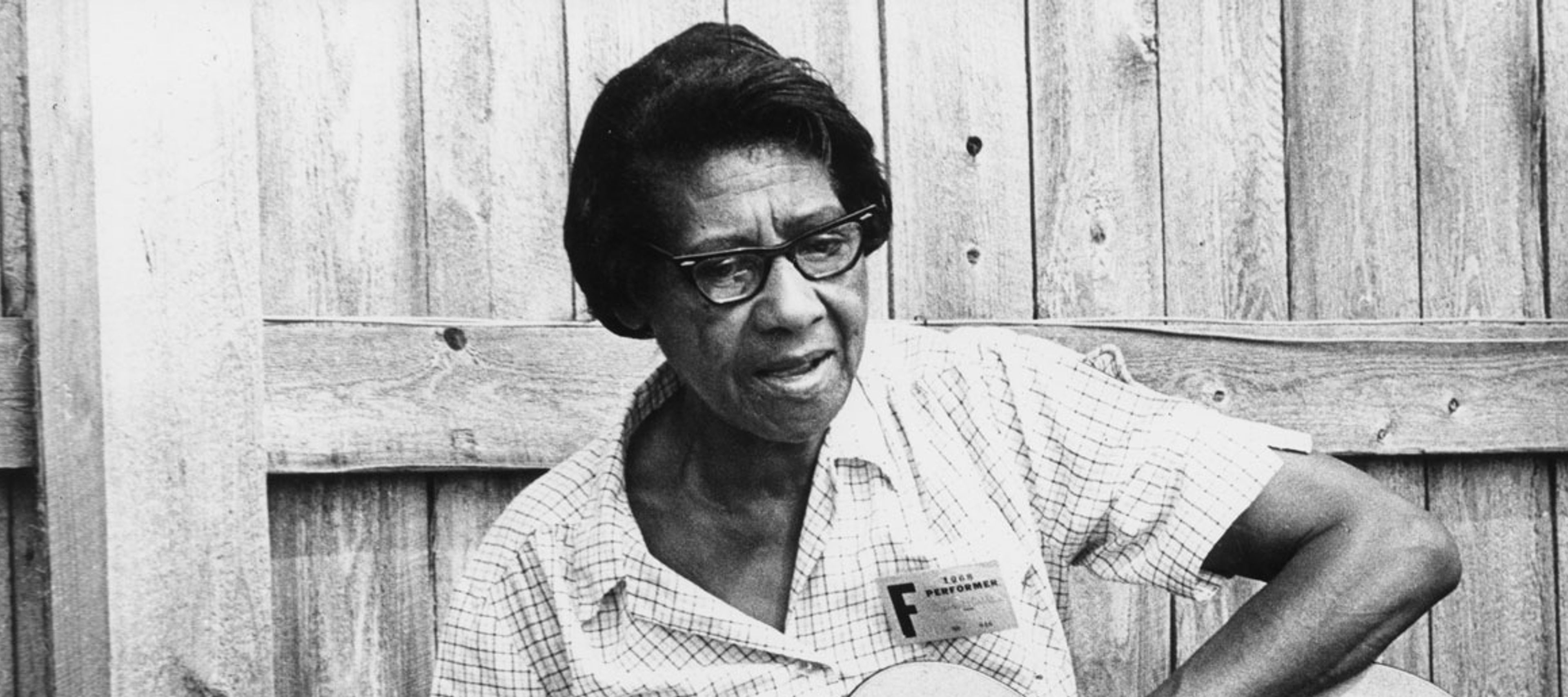
The Piedmont Blues style gets its name from the Piedmont plateau region of the Eastern United States - stretching from Central Virginia to Central Georgia. Musically speaking, this style of the Blues is characterized by a finger-picked technique borrowed from banjo playing and performed on an acoustic guitar. Piedmont Blues typically has a swing style of rhythm with a danceable beat. Hailing from North Carolina, Elizabeth Cotten is an acclaimed pioneer of the Piedmont Blues style and her popular Blues song, “Freight Train” demonstrates this by featuring an intricate finger-picking that she transferred to guitar after initially learning to play the banjo as a child.
The Memphis Blues style is often played on the electric guitar - representing the technological innovation and evolution heard within Blues music during the 20th century. As its name and the technology associated with it suggest, Memphis Blues highlights the migration of Blues music, like its progenitors, from primarily rural areas to urban centers. Memphis Blues is imbued with a driving rhythm, typically a call-and-response song structure, a strong backbeat, and lyrics frequently reflecting the experiences of city life for Black Americans. An excellent example of Memphis Blues is Memphis Minnie’s song, “Me and My Chauffeur Blues.” In the tune, Memphis Minnie (birth name Lizzie Douglas), picks bluesy melodies out of her electric guitar over a sturdy beat all while singing how best to handle her chauffeur as he drives her in a “brand new V8 Ford” downtown.
The Delta Blues style was developed in the Mississippi Delta region. It is considered one of the oldest Blues styles and it does have a musical characteristic from which the Blues genre gets its name - “blue notes”. Blue notes are musical tones that are sounded within but not associated with the music key a song is being played in. As a brilliant musical alteration, blue notes expand the tonality of a piece of music and demonstrate the expressiveness and improvisational nature of Blues music. Improvisation is a fundamental characteristic of Delta Blues, and while it also has a call-and-response song structure, it frequently uses vamps (repeated chord progressions) to allow the singer to shape the song’s performance as they wish. Mississippi native Charley Patton is considered an originator of the Delta Blues style and his legendary composition, “High Water Everywhere” features much of the style’s distinctive characteristics, especially the call-and-response structure of the song.
The Country Blues style is the antecedent style from which many other Blues styles developed. A forerunner of Piedmont, Memphis, and Delta blues, Country Blues is predominantly improvisational in both song structure and performance style. Originating in the rural South, Country Blues songs predominantly feature heartfelt lyrics expressed emotionally when sung and are an interplay between a singer and their self-accompaniment on an acoustic guitar during a performance. Virtuosic Blues pioneer Huddie “Lead Belly” Ledbetter recorded what many consider to be the definitive Country Blues version of the traditional African American folk song, “Midnight Special”. Lead Belly’s version touts classic Country Blues characteristics - an improvisational performance featuring twelve-string guitar accompaniment to longing lyrics sung in Lead Belly’s distinctive voice.
The stories heard in Blues songs from this early era reflect the varied daily experiences of its Black American songwriters and performers, including farming and sharecropping in rural regions, the trials and tribulations of urban living, and toiling within the forced labor prison system. For instance, Charley Patton recorded “Mississippi Boweavil Blues” in 1929 to describe the farmer’s relationship with the boll weevil. Memphis Minnie and her husband Kansas Joe wrote “When the Levee Breaks” in response to the devastation felt by communities after the Great Mississippi Flood of 1927. When incarcerated in a Louisiana prison and then chosen by its warden to perform for the state’s governor, Lead Belly seized the opportunity to compose the song, “Governor Pat Neff” with lyrics advocating for his own release - which Lead Belly eventually received from the governor.
Another topic in Blues songs of this time period was the prison system in the South under Jim Crow. After the abolishment of slavery but as a continuation of its legacy, Southern state governments would lease out prisoners to private companies for labor in often dangerous and inhumane conditions. This convict leasing system disproportionately impacted Black men who were targeted by the criminal justice system. Once out of prison, Lead Belly would travel with John and Alan Lomax on behalf of the Library of Congress to prison farms in the South in order to record the music being created and performed by inmates. These songs and experiences would be reflected in the repertoire of Lead Belly’s music.
Societal conditions of the early 1900s for women, and particularly women of color, also impacted their ability to sing and perform. Elizabeth Cotten taught herself how to play her brother's banjo when she was a child and later learned the guitar. By the age of 11, Cotten had to leave school and begin domestic work in the homes of white families. At 14, the church discouraged her from playing “worldly song” on her guitar, and at 16 she was married and had a child - pulling her even further from music. Cotten wouldn’t pick up the guitar for almost 50 years and she recorded her music for the first time at 64 years old. However, her late-career flourished and she eventually won the Grammy Award for Best Ethnic or Traditional Folk Recording in 1984 at the age of 90.
The Blues emerged in the Southern United States at the end of the 19th century during the Jim Crow era, not too long after emancipation and the dismantling of Reconstruction. It is a unique look into the lives of Black Americans as they navigated freedom from enslavement, oppression under Jim Crow, and life in general. It is a mixture of the music and traditions of Black Americans and their ancestors. It is the expression of those experiences and the human condition through music. In so doing, it paved the way for what American Popular Music is today.
Materials
- Teacher Note: The music for this lesson comes mainly from YouTube, if you need an alternative to listen to the music, you can also use Spotify or another music streaming service.
- A device with internet access for student use (Chromebook, etc.)
Connected Themes
Artist(s)
Genre(s)
Decade/Era