
180 mins
The Civil Rights Movement in the 1950s featuring Little Richard
What was Brown v. Board of Education, and what did it reveal about American society in the 1950s?
Essential Question
What was Brown v. Board of Education, and what did it reveal about American society in the 1950s?
Objectives
Know (knowledge):
- How the Plessy v. Ferguson decision in 1896, which mandated separate but equal, rarely delivered equality in practice
- The effects of segregation on Black entertainers in the 1950s
- How the act of separation itself can create inequality
- The Brown v. Board of Education decision in 1954, its impact, and the reactions to it
Mastery Objective:
- Students will be able to assess the societal conditions in the United States before and after the Brown v. Board of Education ruling in 1954 by viewing archival footage, listening to music, investigating primary source documents, and creating an original narrative based on a fictional character who witnessed the Brown decision.
Background
In this lesson, students will assess the inequality that permeated the United States in the 1950s by examining Rock and Roll pioneer Little Richard’s experiences with segregation. By analyzing primary sources and archival footage, they will then discover how young voices stood up for equality and inspired change, leading to the landmark Brown v. Board of Education ruling. As a concluding activity, students will produce an original narrative that chronicles the journey towards equality from the perspective of a teenager in 1954, considering how life might have changed before and after the Brown v. Board of Education ruling.
“We were breaking through the racial barrier. The white kids had to hide my records ’cause they didn't dare let their parents know they had them in the house.” - Little Richard
The year was 1954, and for our students today, it might be difficult to imagine what was commonplace for most young people attending school in the United States during that time. Prior to 1954–and for many years after–the notion of Black and white children going to school together was unheard of in many places throughout the country.
Such segregation was ensured through the 1896 U.S. Supreme Court decision of Plessy v. Ferguson, which codified the “Separate but Equal” doctrine into federal law. In that case, the Court ruled that as long as racially-segregated public facilities accessed separately were equal in quality, they did not violate the 14th Amendment to the U.S. Constitution. The 14th Amendment guarantees citizenship to all persons born or naturalized in the United States, including formerly enslaved people, and promises them due process and equal protection under the law.
While the Plessy v. Ferguson decision promised “equality,” the reality was quite different. Separate rarely meant equal. For example, education funding in South Carolina in the early 1950s was $179 per white student, but just $43 per Black student. This funding disparity meant schools for white children had access to more resources than those for Black children. In addition, the highest paid Black teacher still earned less than the lowest paid white teacher. While white schools were provided basic necessities like heat, maintenance, and repairs, these all had to be provided by teachers, students, parents, and any local community members connected to particular Black schools. Separate? Yes. Equal? No.
Broadcast airwaves in the U.S. were segregated as well, and the pioneering Black artists that were producing the earliest sounds of Rock and Roll were often misrepresented and mistreated. Segregated radio markets meant Black artists were largely relegated to "Race Music" stations which had a smaller audience and less financial power. Mainstream radio stations, which were critical for reaching large white audiences, often played songs written, recorded, and initially popularized by Black artists, however the versions performed by white artists were what mainstream audiences heard over these segregated airwaves. Without access to mainstream radio, Black artists and songwriters were systematically denied royalties and fair compensation. Many were denied compensation and success despite their creative contributions, while white musicians who covered their songs enjoyed notoriety and success.
Richard Wayne Penniman, better known by his stage name, Little Richard, was born in 1932, the third child of twelve to a poor family in Macon, Georgia. One of Rock and Roll’s flashiest performers, Little Richard has often proclaimed, “I am the innovator! I am the originator! I am the architect of Rock & Roll!” Such grandiose statements aren’t too far off the mark. The flamboyant piano-pounder’s wild, uninhibited mid to late-’50s singles are landmarks of the early Rock and Roll era. However, in the segregated world of the 1950s U.S. music industry, Little Richard, like many Black pioneers, signed substandard contracts where they were denied royalties for their work. Separate? Yes. Equal? No.
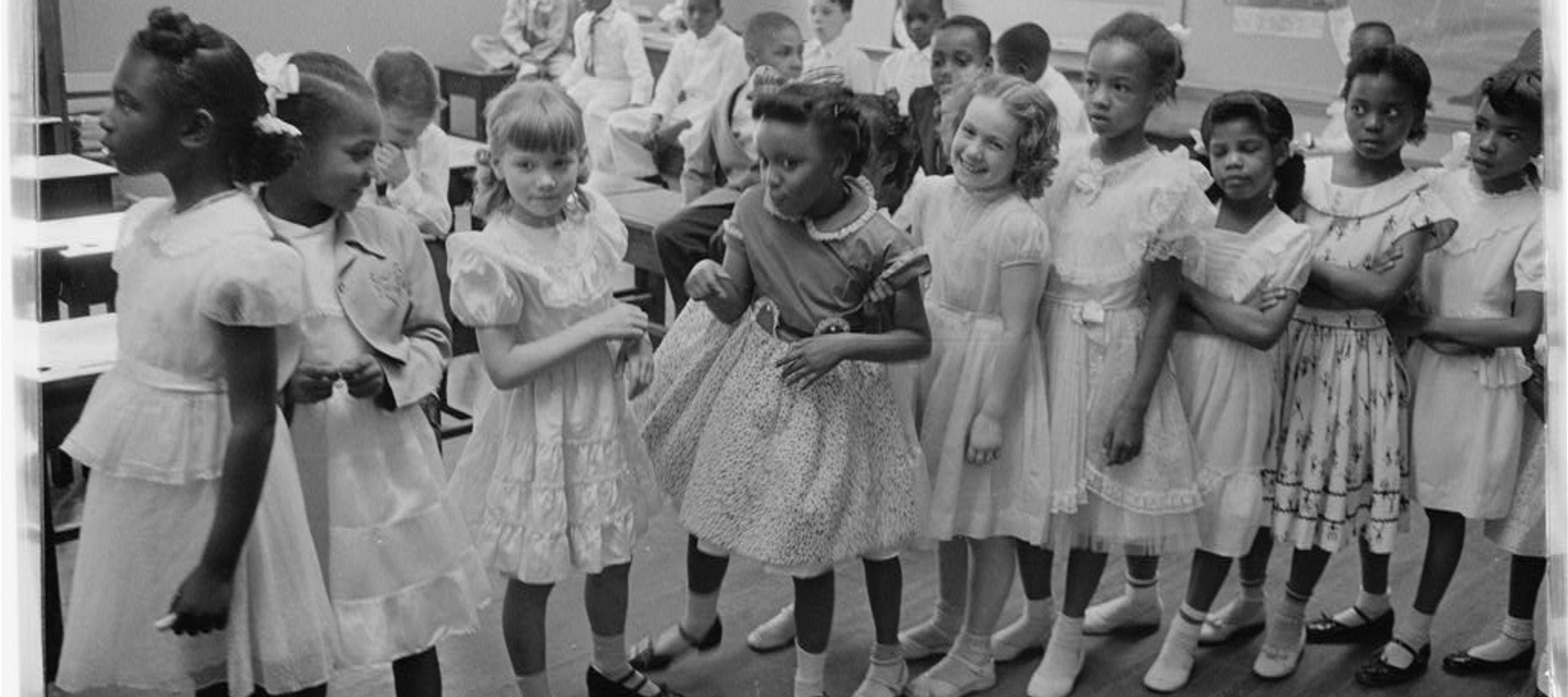
In 1950, the National Association for the Advancement of Colored People (NAACP) shifted its long-term strategy from pursuing “equal” funding for segregated Black schools to challenging the constitutionality of the “separate but equal” doctrine established by the Plessy decision in 1896. As part of this new strategy, the NAACP pursued individual cases by plaintiffs in South Carolina, Virginia, Kansas, Delaware, and Washington, D.C. However, as these cases made their way to the U.S. Supreme Court, the Court consolidated the five challenges into one case, Brown v. Board of Education. This was due to the same constitutional issue being raised by each - that racially segregated public schools violated the 14th Amendment. In its unanimous ruling in 1954, the Court declared that state-sponsored segregation in public schools was unconstitutional. This decision overturned the "separate but equal” doctrine by ruling that the very act of separation creates unequal opportunities and self images of inferiority for Black children.
Further arguments were heard in a later Supreme Court case to determine just how the 1954 Brown ruling would be initiated, imposed, and integrated nationally. Just over one year later, on May 31, 1955, Chief Justice Earl Warren read the Court's unanimous decision, now referred to as Brown II, instructing the states to begin desegregation plans "with all deliberate speed." While the Brown cases are often studied for their historic legal implications, their origins reside in the courage and relentless dedication of ordinary Black Americans, many who were the age of our students today. Students, their parents, and their local communities experienced a separate, yet unequal world that relegated and restricted their lives and they wanted better. To quote Thurgood Marshall, the NAACP Legal Defense Fund lawyer who guided the civil rights organization’s legal strategy toward desegregation: “Sometimes history takes things into its own hands”. Thurgood Marshall would become the first African American to serve on the United States Supreme Court when he was nominated by President Lyndon Johnson and confirmed by the U.S. Senate in 1967.
While change was slow after 1954, and resistance was fierce, the landmark Brown ruling was foundational for the Civil Rights movement. It inspired hope and established the precedent for future legal challenges as the country moved towards the ideal of liberty and justice for all.
Disclaimers
This lesson contains primary source documents and other materials that may include terms and images reflecting the attitudes, perspectives, and beliefs of different times that today are considered offensive and demeaning. TeachRock does not endorse the views expressed in these documents, but recognizes the value such materials provide for historical inquiry. For guidance on introducing controversial historical materials into the classroom, we suggest reviewing this document from the Library of Congress.
Materials
- A device with internet access per student
Preparation
- Print out the following materials and prepare 4 stations, one for each set of materials: