
90 mins
The Dust Bowl Featuring the Songs of Woody Guthrie
What was the Dust Bowl and how did Woody Guthrie’s songs describe Americans’ experience of the disaster?
Essential Question
What was the Dust Bowl and how did Woody Guthrie’s songs describe Americans’ experience of the disaster?
Objectives
Know (knowledge):
- What the Dust Bowl disaster was and its origins
- Who Woody Guthrie was and how his songs describe experiencing the Dust Bowl disaster as an American
- The difference between natural and environmental disasters
- The various types of refugees and the reasons why people become refugees
Mastery Objective
- Students will be able to explain what the Dust Bowl disaster was and identify how Woody Guthrie’s songs describe experiencing the event as an American by analyzing images and documents, identifying terms, and critically listening to music.
Background
In this lesson, students will investigate the American Dust Bowl disaster of the 1930s. During their investigation, they will analyze contemporaneous songs by the singer-songwriter Woody Guthrie that describe Americans’ experience of the disaster. Throughout the lesson, students will analyze images and newspaper articles, examine song lyrics, identify terms, and critically listen to music.
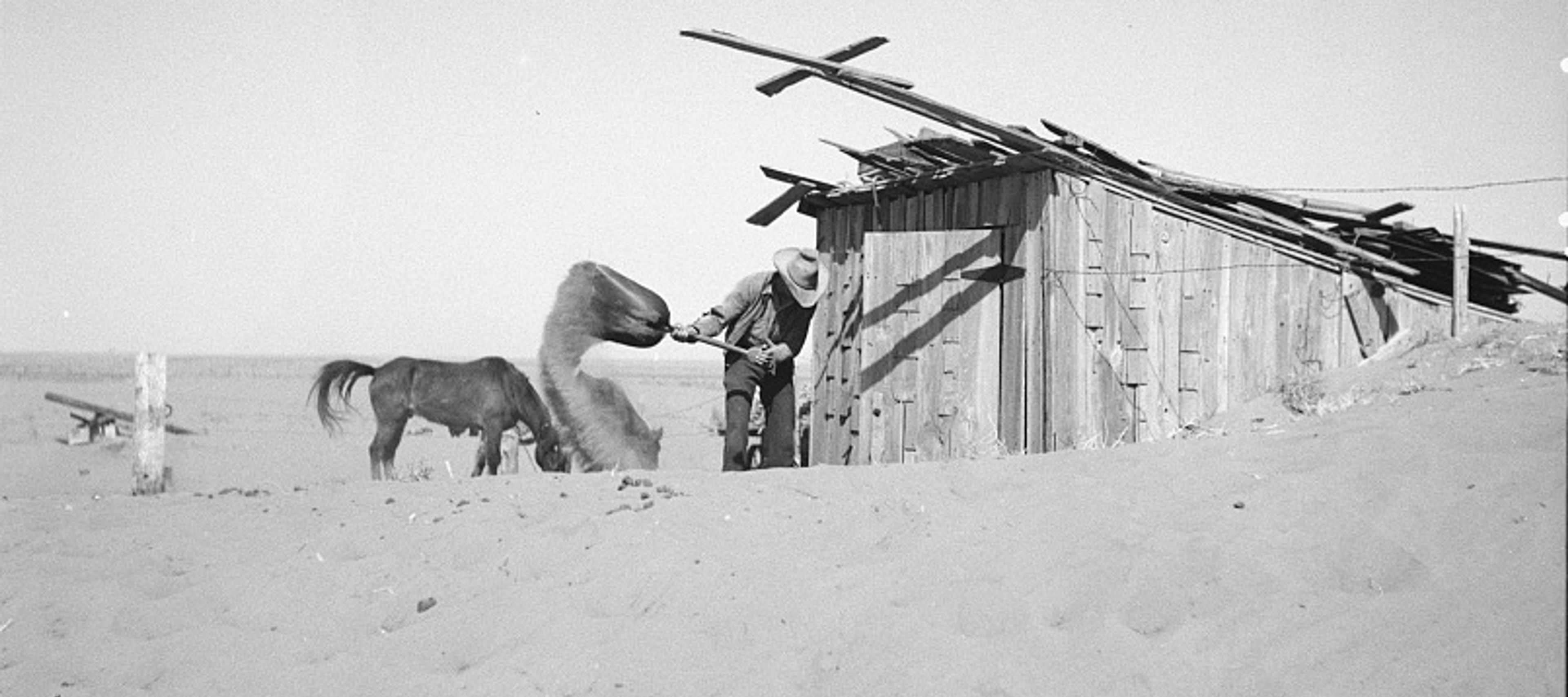
Throughout the 1930s the Great Plains region of the United States experienced a record drought. That weather pattern unfortunately coincided with years of unsustainable farming practices in the area. This combination of natural weather patterns and irresponsible human activity produced catastrophic soil erosion which resulted in one of the greatest environmental disasters in U.S. history: the Dust Bowl.
One of the areas that experienced the most severe effects of the Dust Bowl was the southern region of the Great Plains where the borders of Colorado, Kansas, New Mexico, Oklahoma, and Texas meet. In time, local residents began to experience the adverse health effects of being exposed to so much dust over such a prolonged period of time. One of the resulting health conditions became known as Dust Pneumonia, a respiratory ailment that led to chronic disability, and in some cases, death.
At the same time, the power and size of the dust storms in the southern Great Plains region grew. This culminated in the largest storm of the Dust Bowl era which occurred on Sunday, April 14th 1935. This event came to be known as Black Sunday since the amount of dust in the storm, and similar daytime storms like it, obscured daylight and sent the affected area into total darkness. As the effects of the Dust Bowl took an economic toll on the area throughout the 1930s, residents began to migrate westward in search of better opportunities. The people traveling in this mass migration, one of the largest in American history, came to be known as Dust Bowl Refugees, and disparagingly as “Okies” regardless of whether or not they were from Oklahoma.
Chronicling the experience of the Dust Bowl with his songs was the singer-songwriter Woody Guthrie. Guthrie was a native Oklahoman who had been residing in north Texas during the drought. With titles like, “Talking Dust Bowl Blues,” “The Great Dust Storm,” “Dust Bowl Pneumonia,” and “Dust Bowl Refugee,” Guthrie wrote songs that documented the severity of the disaster and described the experience of being an American living through it. Guthrie wrote more songs about the Dust Bowl as he joined his fellow refugees by moving to California during the 1930s. In 1940, he released an album about the disaster titled, Dust Bowl Ballads.
As the 1930s drew to a close, the drought finally subsided. While the entire Great Plains had been ravaged environmentally and economically throughout the decade, programs implemented by President Franklin D. Roosevelt’s administration during the coinciding Great Depression addressed the ill-advised farming practices that had led to the Dust Bowl disaster. The area eventually rebounded to become an agricultural powerhouse. However, the legacy of the Dust Bowl can still be felt in the region’s cultural history, and the enticement of profit over sustainable practice remains an issue that the agricultural industry still struggles with to this day.
Disclaimers
This lesson contains primary source documents and other materials that may include terms and images reflecting the attitudes, perspectives, and beliefs of different times that today are considered offensive and demeaning. Teachrock.org does not endorse the views expressed in these documents, but recognizes the value such materials provide for historical inquiry. For guidance on introducing controversial historical materials into the classroom, we suggest reviewing this document from The Library of Congress.
Materials
- An internet accessible device for each student
Connected Themes
Artist(s)
Genre(s)
Decade/Era
Monthly Theme