
90 mins
The Guitar: A Musical Transducer
How can the guitar help us understand the scientific principle of transduction?
Essential Question
How can the guitar help us understand the scientific principle of transduction?
Objectives
Know (knowledge):
- The concept of transduction, and what a transducer does
- Differing types of signals, including sound waves, electrical signals, and digital signals
- How acoustic and electric guitars differ in construction and operation
- How to create a “digital guitar” circuit that produces sound
- How to perform a simple melody with the handmade “digital” guitar
- The definition of a “riff”
Mastery Objective:
- Students will be able to make a musical transducer by building their own playable guitar.
Background
We are surrounded every day by a myriad of signals moving around us, unseen. Our brains constantly receive electromagnetic signals and sound waves, allowing us to make sense of our surroundings. Electrical signals hum around us, powering our lives. Digital signals floating in the air connect us to the rest of the world.
But we are not receiving, interpreting, and using this barrage of signals on our own. We are aided by thousands of different types of transducers--devices that translate one type of signal into another. For example, an antenna is a type of transducer that converts invisible electromagnetic or digital signals into images and sounds. Light bulbs transduce electricity into light, and electroacoustic transducers such as microphones, speakers, and pickups make the music we love possible.
In this lesson, students understand the principles of transduction and the role of transducers by looking at the history of the guitar. They begin by examining how an acoustic and electric guitar function, and then construct their own “digital” guitar from cardboard, conductive tape, and a Makey Makey circuit board. After performing their own “riffs” on their digital guitars, they discuss how each type of guitar transduces sound waves, electrical currents, and/or digital signals.
Materials
- Cardboard
- Box cutter/exacto knife
- Art supplies (markers, colored pencils, etc.)
- Copper Tape
- Makey Makey kits
- Laptops, computers, or chromebooks
- Acrobat Flash Software
Preparation
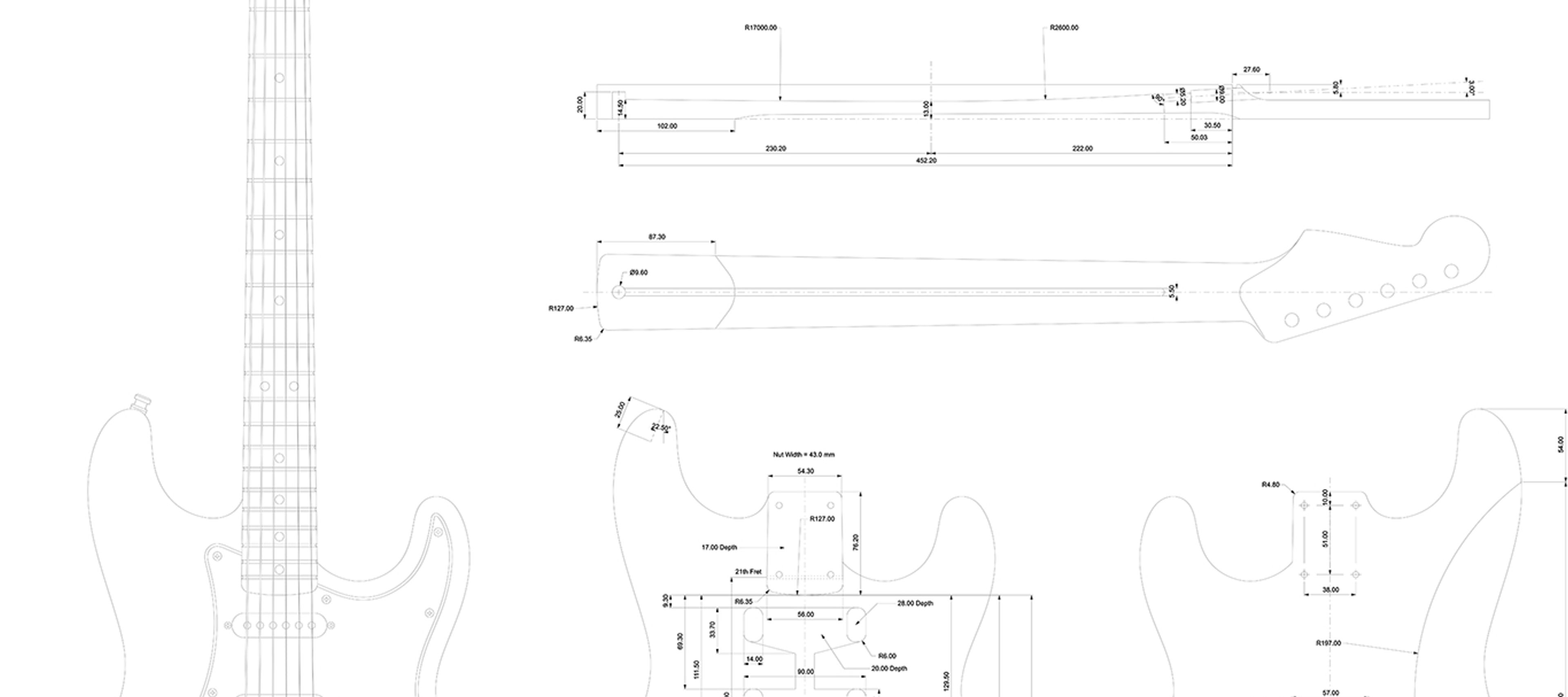
- Cut out a variety of cardboard guitar shapes using Handout – Electric Guitar Templates as a model.
- Ensure each computer that will be used for the lesson has Adobe Flash installed.
- (Optional) Have students first complete the Designing an Electric Guitar with Shapes lesson.
- (Optional) To create a “digital” guitar with six operational “strings,” it is necessary to go to https://makeymakey.com/pages/remap and remap the “click” area on the Makey Makey circuit board to the letter “a.”
Connected Themes
Genre(s)
Topics