
90 mins
The Harlem Renaissance featuring Mamie Smith, Ma Rainey, and Bessie Smith
How did the Harlem Renaissance represent the New Negro Movement, and what role did music play in this context?
Essential Question
How did the Harlem Renaissance represent the New Negro Movement, and what role did music play in this context?
Objectives
Know (knowledge):
- The impact of the Great Migration in transforming cities in the North and Midwest, and how that migration impacted the lives of Black citizens who had left the Jim Crow South
- How Alain Locke’s New Negro Movement challenged stereotypes and negative portrayals of Black individuals in media and popular culture
- How the Harlem Renaissance provided the platform for how Black artists represented themselves
- How Blues musicians Ma Rainey, Bessie Smith, and Mamie Smith exemplified the "New Negro" ideal
Mastery Objective
- Students will be able to assess the significance of the Harlem Renaissance and the New Negro Movement by analyzing texts, examining media, and interpreting primary source documents.
Background
“Art must discover and reveal the beauty which prejudice and caricature have overlaid.”
- Alain Locke
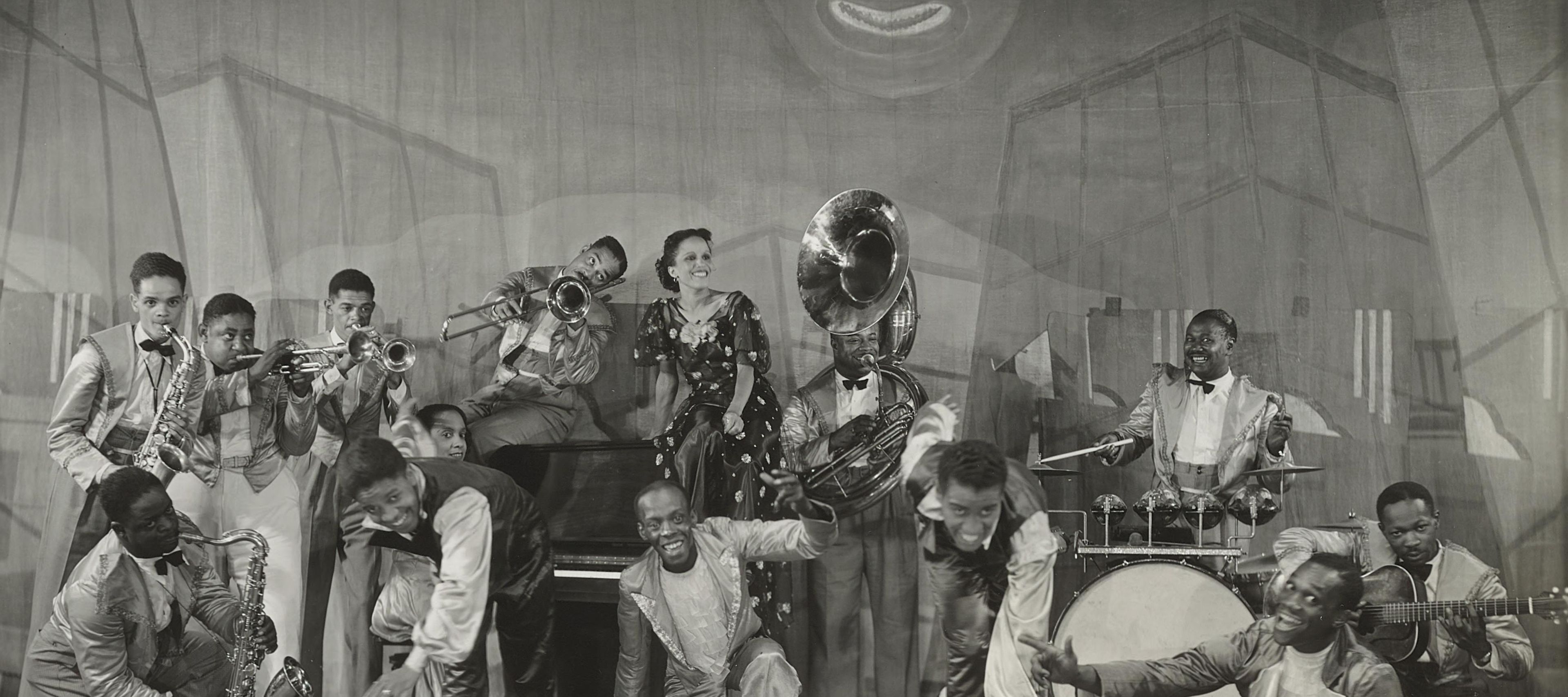
In this lesson students will investigate the influence of the Great Migration on the Harlem Renaissance. As part of their investigation, they will identify how the New Negro Movement challenged racial stereotypes by showcasing the talent, pride, and creativity of Black Americans, which has impacted music and culture for generations. During this investigation students will examine primary and secondary source documents, analyze maps, and interpret photographs.
The Great Migration was and still remains one of the largest movements of people in United States history. It is estimated that between 1910-1970, 6 million Black Americans left the U.S. South in search of greater social and economic opportunity, and to escape ever escalating racial violence and oppressive Jim Crow laws. Occuring in two waves, the first wave of migration was between 1910 and 1940, and the cities of Chicago, Detroit, Pittsburgh, and New York were the main target destinations.
These recently “freed” American citizens sought their share of the American dream that had been promised, then systematically denied to them. They longed for the freedom to be safe, the freedom to create, the freedom to embrace their own cultural identity, and the freedom to love whomever they love. After World War I, when Black American soldiers fought for their country only to return home to face racist attitudes and policies, the “New Negro Movement" emerged. This convergence of ideas rooted in self-determination emphasized a new sense of pride and identity, creativity and self-expression, economic opportunity, independence, and progressively inclusive politics. Nowhere was this more evident, alive, loud, and proud than in Harlem, New York.
In many ways, the neighborhood of Harlem was the crown jewel of the Great Migration - a wonderful crossroads of culture, artistry, and individual expression. The artists who migrated, created, and performed there were fundamental in the development of what would become known as the Harlem Renaissance. They are the ancestors of our modern Soul and Hip Hop artists, who are still defining how their community is represented, how their art is presented, and how their message is interpreted. Three brilliant, talented, and provocative artists emerged from this renaissance: Mamie Smith, often-considered the first Black American singer to record a Blues song; Ma Rainey, the Mother of the Blues; and Bessie Smith, the Empress of the Blues, who brought Black music into the mainstream and possessed a defiant spirit that is essential to Blues, Rock, and Soul music even after 100 years. The legacies of these musicians inspired and continue to inspire artists today, both with their foundational music recordings as well as challenging the boundaries of sexual identity that place them among the earliest allies of the LGBTQ+ movement.
Mamie Smith, born in Cincinnati in 1891, began her career at a young age by initially performing in Vaudeville shows. However, in 1920, after a white singer backed out of a contract, a fledgling record label executive gave Smith a chance to record, eventhough the prevailing racist attitude in the music industry was that Black people wouldn’t buy records. From that session, her recording of the song “Crazy Blues” sold 75,000 copies in one month in Harlem alone. It was a popular song that spoke of racial violence and terrorism against Smith's community. It has been said that if you walked through Harlem in 1921, "Crazy Blues" was the soundtrack of the community, blaring out of windows in a unifying chorus of solidarity akin to when the Beatles hit America.
Gertrude “Ma” Rainey was born to an impoverished family in Georgia in 1886 - just about 20 years after the Emancipation Proclamation. Her humble beginnings gave rise to a brash spirit that gained her a reputation as the Mother of the Blues, the artform that eventually gave rise to Jazz, Rhythm and Blues, and of course, Rock and Roll. When Rainey sang: “Went out last night with a crowd of my friends…They must’ve been women, ‘cause I don’t like no men,” and when she continuously referenced her own lesbian and bisexual tendencies in her songs, the boundaries of sexual orientation and freedom were forever expanded.
Bessie Smith from Chattanooga, Tennessee, was born in 1894. She was the most popular female Blues singer of the 1930s and she is regarded as one of the greatest singers of her era. Smith was a major influence on Blues singers such as Billie Holiday, Etta James, and Janis Joplin, and she was inducted into the Rock & Roll Hall of Fame in 1989. Although she died at age 43, Smith recorded over 150 songs. John Hammond, the influential music producer and civil rights activist, once said of Bessie Smith: “To my way of thinking, Bessie Smith was the greatest artist American jazz ever produced; in fact, I’m not sure that her art did not reach beyond the limits of ‘jazz.’ She was one of those rare beings, a completely integrated artist capable of projecting her whole personality into her music.”
Disclaimers
This lesson contains primary source documents and other materials that may include terms and images reflecting the attitudes, perspectives, and beliefs of different times that today are considered offensive and demeaning. Teachrock.org does not endorse the views expressed in these documents, but recognizes the value such materials provide for historical inquiry. For guidance on introducing controversial historical materials into the classroom, we suggest reviewing this document from The Library of Congress: https://blogs.loc.gov/teachers/2011/11/dealing-with-difficult-subjects-in-primary-sources.
Connected Themes
Artist(s)
Genre(s)
Decade/Era
Monthly Theme