
90 mins
The Homestead Act featuring Cowboy Songs collected by John Lomax
How did the Homestead Act of 1862 impact growth and development in the American West, and what is meant by the term “crossroads of culture” in the context of the American West?
Essential Question
How did the Homestead Act of 1862 impact growth and development in the American West, and what is meant by the term “crossroads of culture” in the context of the American West?
Objectives
Know (knowledge):
- The impact of the Homestead Act on the development of the American West
- The meaning of the term “Crossroads of Culture” in the context of the American West
- The myth and reality of the American Cowboy as portrayed in popular culture
- The Cowboy song as a representation of the American West in the late 1800s
Mastery Objective
- Students will be able to describe how the interaction between different cultures shaped the development of the American West by examining media, analyzing texts, and interpreting primary sources.
Background
"A farm free to any man who wanted to put a plow into unbroken sod."
-Carl Sandberg
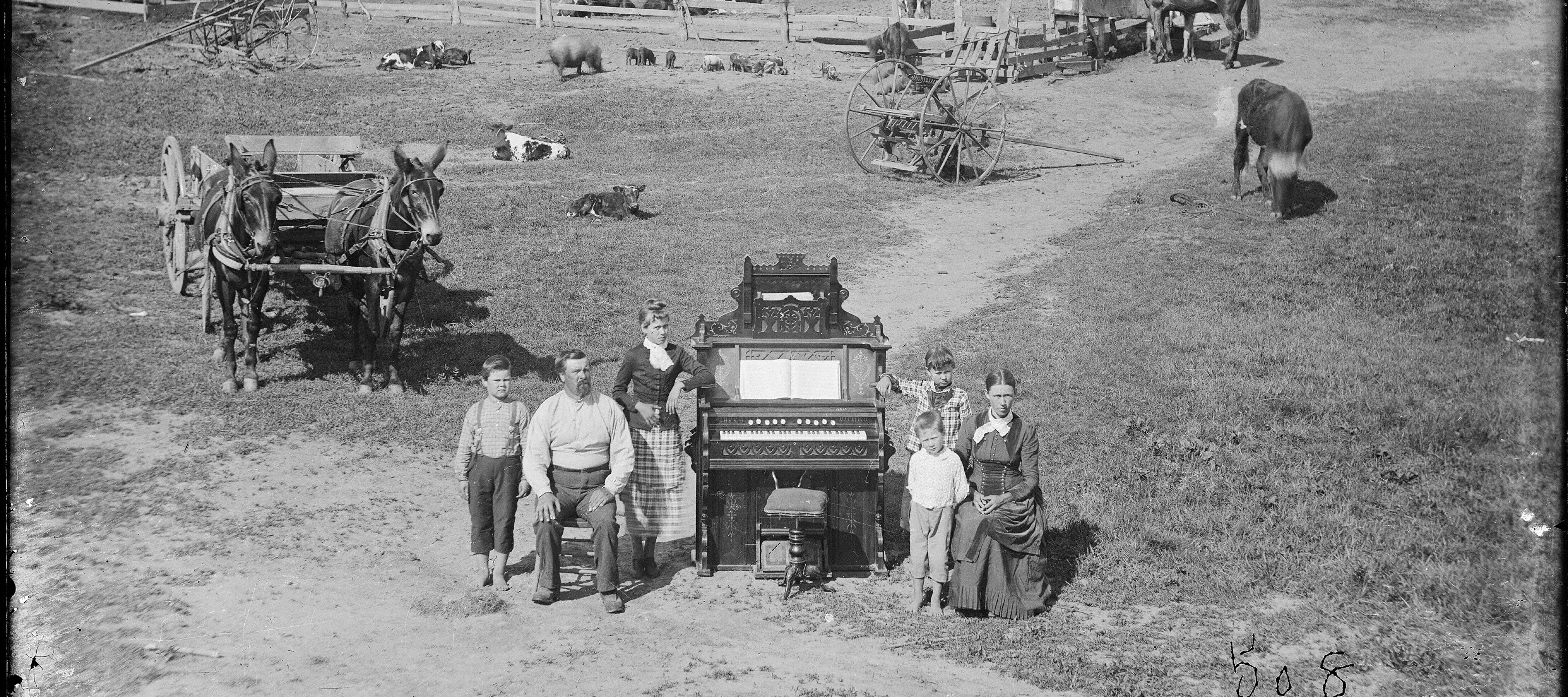
In this lesson, students will consider the impact of the Homestead Act on the development of the American West and examine the evidence that settlers and cowboys came from diverse backgrounds.
The development of the First Transcontinental Railroad in the late 1800s opened up millions of acres in the American West for settlement and economic development. To help spur migration west, the Homestead Act was passed in 1862 and signed by President Abraham Lincoln. It allowed adventurous settlers to claim 160 acres of land for free, so long as they were at least 21 years of age, promised to build a house, and work the land for five years. By 1900, over 80 million acres were settled.
The image, attractiveness, and lure of the west brought white settlers from the east across the Mississippi River, newly freed enslaved people from the South in search of land and opportunity, Chinese railroad workers, Spanish settlers from Mexico, and a mosaic of immigrants from Europe and Asia with hopes and dreams of a better life in the American West. Many of these immigrants were thrilled, energized, and motivated by the image of the West as portrayed in the Wild West Shows that played to huge crowds in Europe, Asia, Africa, and Australia. These shows created and perpetuated a myth of the cowboy who was all white, lived rugged solitary lives, and engaged in constant gunfights and battles with Native Americans.
In contrast to the often whitewashed Hollywood image of the “Wild West,” the American West in the 1800s was truly a “crossroads of culture,” where diverse groups intersected, interacted, and inspired. Music in the late 19th Century American West reflected the diversity of the region and contributed to the lives of these settlers by bringing people together for dances, celebrations, and gatherings.
Materials
- A device with internet access