
90 mins
The Journey to Marriage Equality in the United States
How did same-sex marriage become legal in the United States?
Essential Question
How did same-sex marriage become legal in the United States?
Objectives
Know (knowledge):
- The court cases involved in the marriage equality debate
- The legislation that was passed at the state and federal level both in favor of and against marriage equality
- The terminology and format of legal documents and legislation
- Lady Gaga's "Born This Way" as a musical anthem that represented the LGBTQ+ community’s experience and celebrated their mission
Mastery Objective:
- Students will be able to identify and explain the civic process that led to marriage equality in the United States by analyzing court documents, congressional legislation, press articles, and music.
Background
The journey to marriage equality in the United States was a decades-long process that spanned multiple levels of government across the political spectrum. It moved from the jurisdiction of local governments to state courts and legislatures, from the United States Congress to the President of the United States, all the way to the nation’s Supreme Court. While the broad movement for LGBTQ+ liberation began in the 1960s, the first steps toward legally achieving marriage equality only started in the 1990s.
In 1991, over twenty years before same-sex marriage became a constitutional right in the United States, three Hawaiin couples filed a civil lawsuit against the director of the Hawaii Department of Health, the state agency that governed marriages. As plaintiffs, they argued that the department’s denial of marriage licenses to same-sex couples violated the state constitution. Initially known as Baehr v. Lewin, the case would take nearly ten years to resolve. By 1993, the Hawaii Supreme Court ruled that the state’s exclusive denial of marriage licenses to same-sex couples was discriminatory and required justification by the state. A trial would take place but eventually the state legislature intervened. In 1998, voters approved an amendment to the state constitution that allowed the legislature to exclude same-sex couples from being granted marriage licenses, thus defining marriage in the state as between men and women only. The lawsuit was recognized as a landmark case in the debate over marriage equality and advocates against same-sex marriage had begun pursuing legislative means to blunt any progress nationwide.
Opponents to marriage equality began lobbying for legislation around the country that would narrowly define marriage and exclude same-sex couples. At the federal level, a bipartisan United States Congress passed the Defense of Marriage Act (D.O.M.A.) in 1996, as a direct reaction to the legal proceedings in Hawaii. Later signed into law by President Bill Clinton, D.O.M.A. strictly defined marriage as a union between one man and one woman, removing any federal recognition of marriages between same-sex couples.
While those legislative victories codified marriage at the federal level and in some states, the LGBTQ+ community continued to advocate for marriage equality and found allies in Mayor Gavin Newsom of San Francisco and in the state legislature in Massachusetts. By 2004, Mayor Newsom was officiating the first same-sex marriage in the United States, and his office was providing California state marriage licenses to everyone that applied. In Massachusetts, the state legislature passed a bill that provided civil union status to same-sex couples, providing state recognition of those unions on par with opposite sex couples’ marriages. However, both actions received considerable resistance; Mayor Newsom was rebuked by the California governor and the state courts, while Massachusetts’ legislation was challenged as well.
Although progress toward marriage equality had made great strides since Baehr v. Lewin, unencumbered access to same-sex marriage had remained elusive. However, lawsuits challenging D.O.M.A. had been moving through the federal court system while public opinion toward marriage equality was becoming much more favorable. Cultural contributions from a variety of artists, like Lady Gaga and her song “Born This Way” featured in this lesson, had been playing a substantial role in informing and influencing the public debate and perception of the LGBTQ+ community for many years. By 2013, the United States Supreme Court ruled in favor of a same-sex couple in United States v. Windsor, dealing a fatal blow to D.O.M.A. With the legislation invalidated by the high court the issue of marriage equality moved into a status of legal ambiguity.
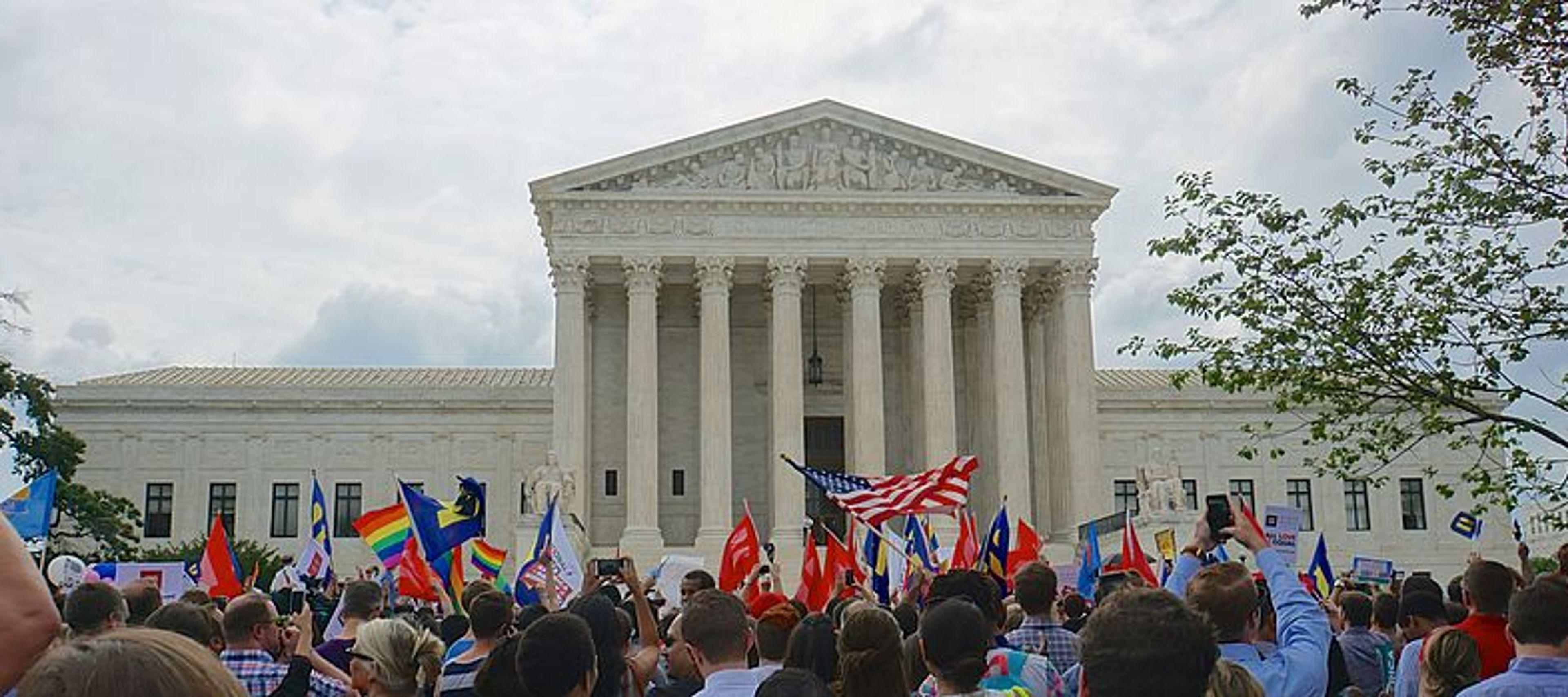
In 2015, the Supreme Court’s decision in Obergefell v. Hodges would provide legal clarity. The court ruled in a 5-4 decision that marriage is guaranteed to same-sex couples by the Due Process Clause and the Equal Protection Clause of the Fourteenth Amendment to the United States Constitution. Although Obergefell had clearly addressed and resolved the legality of same-sex marriage, opponents of marriage equality continued to resist both in government institutions and in the public forum.
In this lesson, students will explore the civic process and history that led to marriage equality by identifying the court cases and legislation surrounding the debate, examining legal and legislative documents that affected the debate, and identifying how Lady Gaga's "Born This Way" represented the LGBTQ+ community’s experience and celebrated their mission.
Connected Themes
Artist(s)
Genre(s)
Topics
Decade/Era
Monthly Theme