
90 mins
The Juke Joint: Where Oral Literature Comes Alive
What role do Blues lyrics and juke joints play in Black American literature and life?
Essential Question
What role do Blues lyrics and juke joints play in Black American literature and life?
Objectives
Know (knowledge):
- About lyrical forms of the Blues
- That the Blues are equally literature, music, and aesthetics
- How to identify the Blues as a throughline in literature
- About the physical space and atmosphere of a juke joint
- The works of Zora Neale Hurston, Alana Brown-Davis, Howlin’ Wolf, Toni Morrison, James Baldwin, and Thomas A. Dorsey
Mastery Objective:
- Students will will be able to write Blues lyrics in A-A-B form, know the meaning and function of oral literature in and identify the influence of the Blues on American literature.
Background
In this lesson students will consider song lyrics as a literary form and discover a traditional poetic structure of the Blues. They will then create a “classroom juke joint” and experiment with expressing themselves by writing a Blues.
The Blues is more than a musical genre – it is also a kind of literature. In the quote below, writer and activist James Baldwin identifies the Blues as the songs that bear witness to a people’s unlikely survival. In the face of difficult circumstances, the Blues name the hardships of Black Americans who have lived through the specific experience of a people that have withstood systemic oppression and exclusions as well as the general experience of humanity.
“I want to suggest that the acceptance of this anguish one finds in the blues, and the expression of it, creates also, however odd this may sound, a kind of joy. Now joy is a true state, it is a reality; it has nothing to do with what most people have in mind when they talk of happiness, which is not a real state and does not really exist. Consider some of the things the blues are about. They’re about work, love, death, floods, lynchings; in fact, a series of disasters which can be summed up under the arbitrary heading “Facts of Life.” - “The Uses of the Blues” by James Baldwin (1964)
“I wanted to anchor Black music and the Blues in joy, which I believe is a kind of radical reading of a kind of music mistakenly understood as being rooted in unbearable misery. Baldwin says, we've made this music based on these experiences designed to break us, which means that the blues and its uses or its function as a cultural product is kind of… a stylized way of expressing survival. He also uses the blues to think about Black music as a lived experience and not simply a musicological topic…Blues as a form of social explanation or Blues as an analytical tool through which we can begin to understand the Black experience.” - DJ Lynnée Denise on James Baldwin’s “The Uses of the Blues”
The Blues are often seen through a lens of assumptions. We might assume that they are a relic of the past; that they are sorrow songs; that they are mostly sung by men who also play guitars. But the Blues are musically richer and deeper than any of these simple explanations.
While each listener might interpret the music of the Blues in their own way, the Blues singer and composer uses the lyrics to convey a specific meaning. For this reason, the Blues have inspired writers including Zora Neale Hurston and August Wilson, as well as visual artists like Romare Bearden. We can read the lyrics as literature. This lesson invites students to read song lyrics alongside Hurston’s Their Eyes Were Watching God and a poem by a new young poet from Mississippi, Alana Brown-Davis, to find the common threads that connect all three.
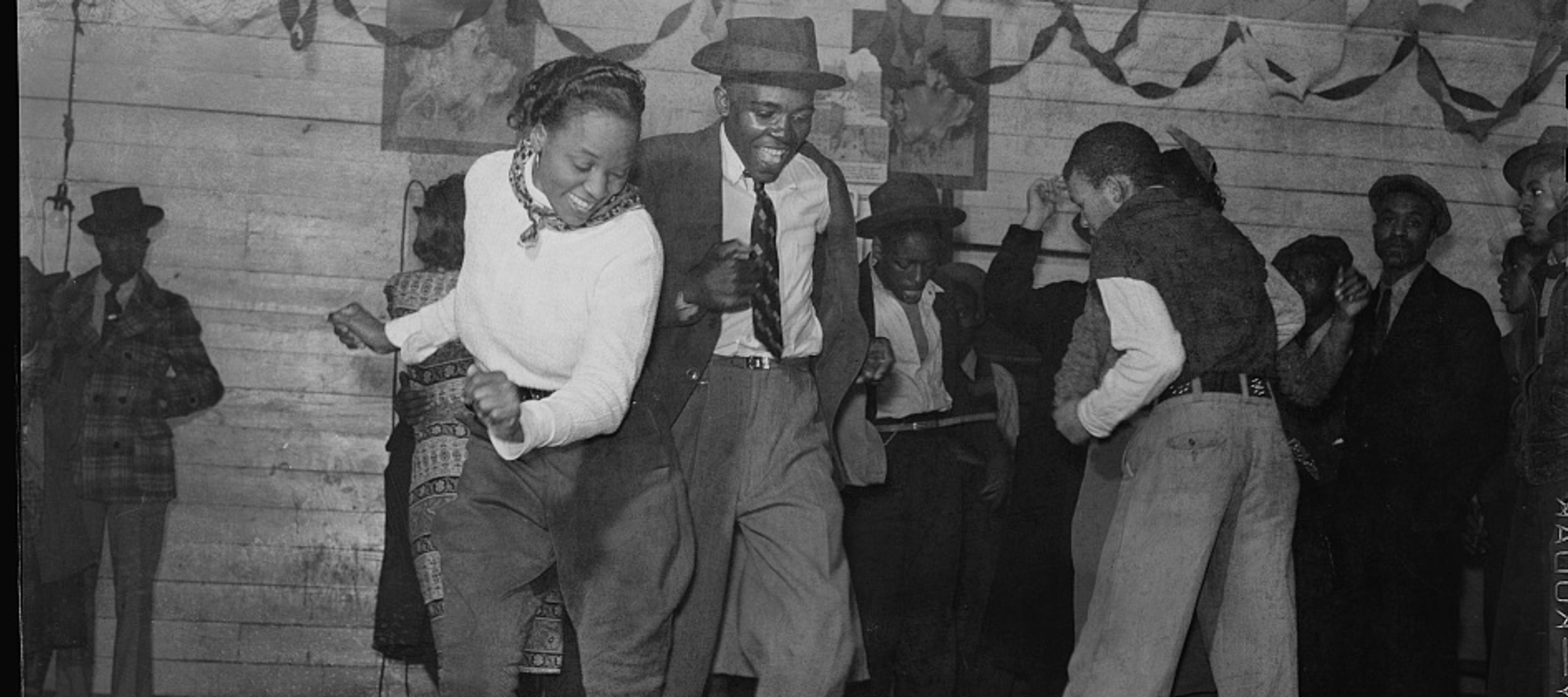
In Hurston’s Their Eyes Were Watching God and the poem by Alana Brown-Davis, students will read about juke joints: informal establishments, like small nightclubs, in the rural South where Black Americans gather to play and hear live music, dance and spend their free time. Students learn about A-A-B form and write and recite or spontaneously perform original Blues in the juke joint that they create in their classroom. The lesson incorporates reflections on the Blues by Black artists including playwright August Wilson, Blues musician Howlin’ Wolf, writers James Baldwin and Toni Morrison, and Thomas A. Dorsey, the Bluesman who was Ma Rainey’s pianist and arranger before becoming known as the “Father of Gospel Music.”
Connected Themes
Genre(s)
Topics
Monthly Theme