
90 mins
The Leadership Skills of a Music Producer
How do successful music producers practice positive leadership skills?
Essential Question
How do successful music producers practice positive leadership skills?
Objectives
Know (knowledge):
- Positive leadership skills
- How a producer contributes to recorded music
- The relationship between a producer and an artist
- The ways a producer can influence an artist’s sound
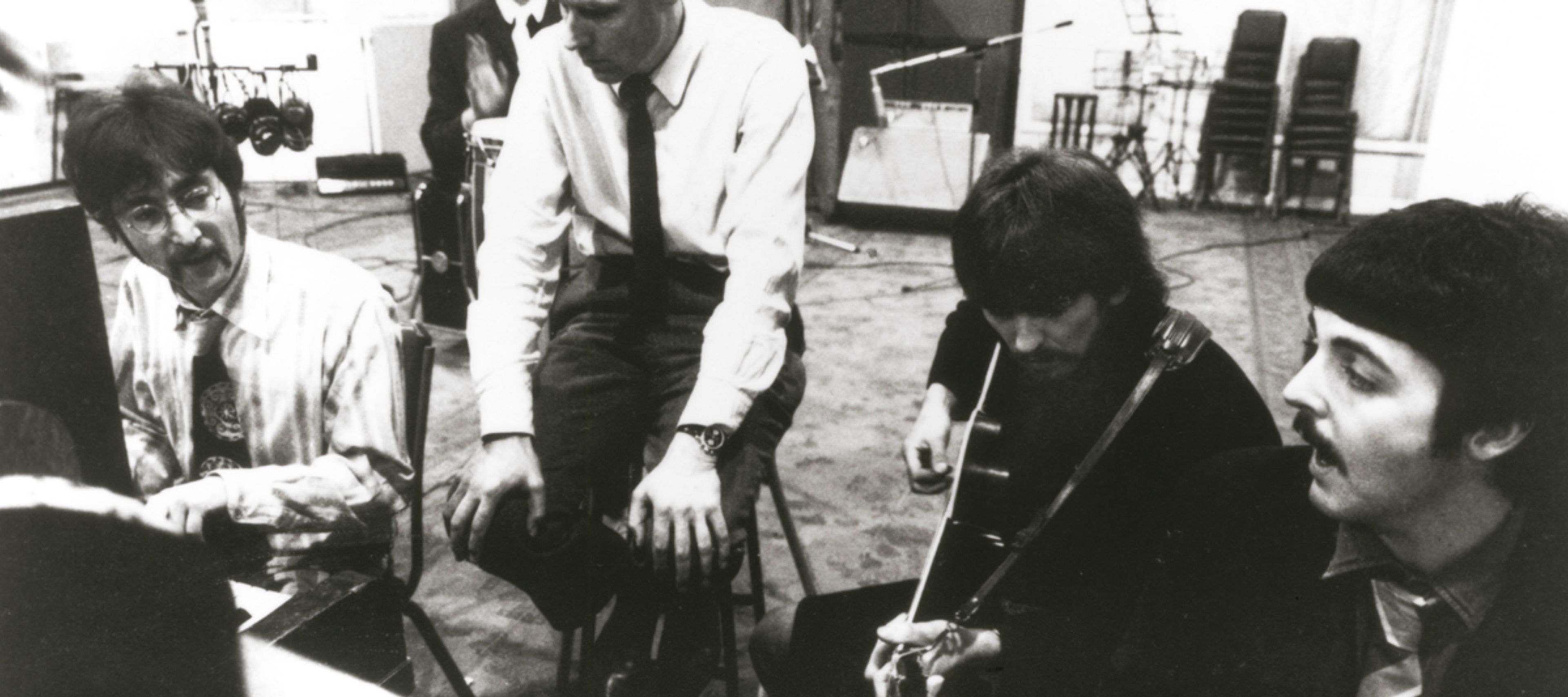
- About music producer Quincy Jones’ work with Michael Jackson and producer George Martin’s work with The Beatles
Mastery Objective:
- Students will be able to contrast and compare positive and negative leadership skills by learning what a music producer does.
Background
Have you ever wondered what goes into creating a successful album? Or, how an artist writes a song on acoustic guitar that somehow becomes a fully orchestrated pop hit? Almost always, a successful recording is the result of a team effort.
There are dozens of ways a songwriter can funnel a song from her brain to the airwaves. She might work with other composers, lyricists, and arrangers to craft and finely tune the song. Then, when recording, she may employ any number of extra musicians to add instruments or vocals. Engineers are required to record all those instruments, and later to “mix” them into a final product. Artists, photographers and designers must create a “look” for the recording package that complements the artist and music. And, perhaps most importantly, someone will need to manage the entire process, guiding all team members toward a unified aesthetic and timely completion. That someone, most often, is the “producer.”
A successful music producer will see the potential of the artists with whom they work, have a vision for how to best reach the public with the artists’ music, and, more importantly, a plan regarding the steps required to do it. The producer may take on many roles, such as choosing a recording studio, gathering ideas, helping to compose and arrange the music, selecting musicians to play on a track, coaching the artist, and leading the recording session. The producer can function as a boss, a coach, a teacher, a colleague, or any combination of the above. But being a music producer rarely just means telling people what to do. A successful producer is aware of each team member’s strengths and weaknesses, and works with each to inspire their best work. In other words, a successful music producer is a successful leader.
In this lesson, students are introduced to two of the most well-known producers in music history: Quincy Jones and George Martin. By examining Jone’s relationship with Michael Jackson, and Martin’s relationship with The Beatles, students discover how interpersonal leadership skills are essential for a music producer who aspires to help artists achieve their full potential. By watching clips from the PBS Soundbreaking series and conducting a class brainstorming activity, students then further define what types of particular leadership skills are necessary to be a music producer, and how developing such skills are useful in other avenues of life.
Connected Themes
Topics
Monthly Theme