
90 mins
The Mathematics Behind Sound
What are the mathematical variables that give a sound its particular quality, and how can these variables be measured, visualized, and calculated?
Essential Question
What are the mathematical variables that give a sound its particular quality, and how can these variables be measured, visualized, and calculated?
Objectives
Know (knowledge):
- The mathematics behind sound
- Sound as the perceived result of the compression and rarefaction of air molecules
- Amplitude as a measurement of a sound’s volume
- Envelope as a measurement of a sound’s amplitude over time
- Frequency as a measurement of a sound’s “highness” or “lowness”
- Spectrum as a measurement of a sound’s frequency spectrum
- Decibels and hertz as a unit of measuring sound’s qualities
- Wavelength and wave speed as attributes of a sound wave determining its frequency
- The crest, trough, and period of a sound wave
Mastery Objective:
- Students will be able to identify, calculate, and visually represent the amplitude, envelope, frequency, and spectrum of a sound by closely analyzing the performance of four musical instruments.
Background
In this lesson, students examine the mathematics behind sound by identifying four mathematical variables that define the particular quality of a sound by closely analyzing the sound of four different musical instruments. Students use mathematics to compare and contrast the amplitude, envelope, frequency, and spectrum of each of the four sounds, thereby coming to a better understanding of what physical phenomena contribute to an instrument’s unique sound.
Scientifically speaking, sound is nothing more than the vibratory movement of air molecules. But the variations in how such vibrations occur are nearly limitless, creating every sound imaginable, and all the world’s musical traditions. Determining and calculating these variables allow someone to understand the mathematics behind sound.
Many of the variables which contribute to a sound’s particular quality are measurable thanks to the work of scientists and mathematicians who have created systems that allow us to calculate sound in various ways. These variables include:
Amplitude measures the volume of a sound. In musical terms, it is often known as dynamics. Amplitude is calculated in decibels, a logarithmic scale, and measured over time with a level meter.
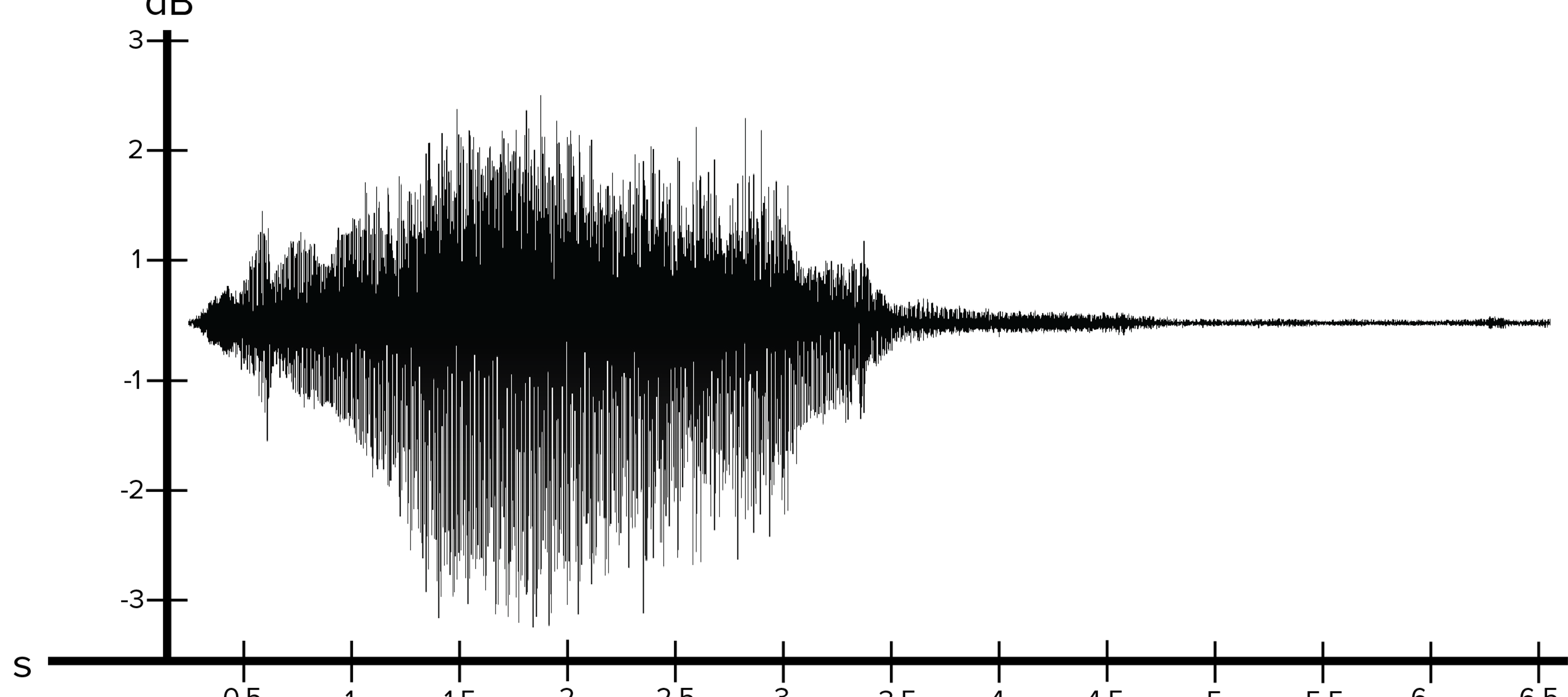
Envelope defines how the amplitude of a sound changes over time. In musical terms, envelope is often described as articulation. It is measured in decibels in time (usually milliseconds), and is often visually represented and analyzed as a waveform.
Frequency defines how high or low a sound is. It is called pitch in musical terminology, and is measured in hertz. The frequency of a sound can be calculated by dividing the rate of the compressions and rarefactions by the length of a soundwave. An oscilloscope is an electronic device that is often used to measure and visualize a sound’s frequency.
Spectrum represents how many different frequencies a sound produces. Most of the instruments and objects that create sound vibrate in multiple ways, creating not a single frequency, but a spectrum of frequencies. The various frequencies a sound produces can be measured in decibels, creating a spectrogram of the sound. A spectrometer is often used to measure the frequency spectrum of a sound over time.
Comprehending and being able to calculate the mathematics behind sound - including amplitude, envelope, frequency, and spectrum - not only leads to a deeper understanding into the physical nature of sound, but is also essential knowledge for musicians and audio engineers who seek to express themselves through sound.
Disclaimers
Devices that allow students to access the internet.
Preparation
- Before starting the Mathematics Behind Sound lesson, it may be helpful to work through (or review) The Science of Sound lesson as a class before beginning this lesson, as it introduces some of the terminology and basic concepts used in this lesson.
Connected Themes
Artist(s)