
90 mins
The Memphis Sound and Racial Integration
How has Memphis music culture provided one example of art’s capacity to challenge the racial boundaries that have so often structured American life?
Essential Question
How has Memphis music culture provided one example of art’s capacity to challenge the racial boundaries that have so often structured American life?
Objectives
Know (knowledge):
- The power of music to transcend race and challenge social norms in Memphis, and in cities across the United States, in the years before the Civil Rights Act
- The history of race relations in Tennessee and national systems of racial discrimination, including Jim Crow laws
- How high schools in Memphis remained segregated despite the 1954 Brown v. Board of Education decision, and how musicians questioned and challenged these racial barriers
- How Memphis music was shaped by the city’s diversity
Be able to (skills):
- Use a map of Memphis to integrate technical analysis with qualitative analysis in print materials.
Background
In the early 1950s, Elvis Presley, the future “King of Rock and Roll,” would wander down to the Beale Street area of Memphis on breaks from his job as an usher at Loew’s Theater. Beale Street was a predominantly black part of Memphis. As a white teenager in a segregated city, Elvis was crossing a line. But he was enthralled by African-American life. Window-shopping for clothes at establishments like Lansky Bros. and expressing his love for the music he heard coming from black Memphis, Elvis was resisting racial norms. Beale Street had an energy he couldn’t ignore. With its rich musical history and bustling shops, many of them owned by African-Americans, that part of town had a vibrancy that appealed to many, both black and white. At the level of culture, it was impossible to segregate Memphis.
Memphis is just one example within a larger, national story about music and culture providing an alternative to the systems of segregation, official and unofficial, that defined American life during the 1950s and 60s. In large cities such as Los Angeles, Chicago, Detroit, and New York City, as well as smaller communities like Muscle Shoals, Alabama, music played a powerful role in breaking down racial boundaries. Segregation had been written into American law through legislation such as the 1896 Supreme Court decision Plessy vs. Ferguson, which established the mandate of “separate but equal” as a basis for the oppressive Jim Crow laws. And segregationist policies did not only affect the South. Prior to the 1954 landmark decision of Brown vs. Board of Education, states as far West as Wyoming and Arizona had school segregation codes. And blacks in northern cities like Boston, New York, and Philadelphia were denied certain job, housing, and loan opportunities.
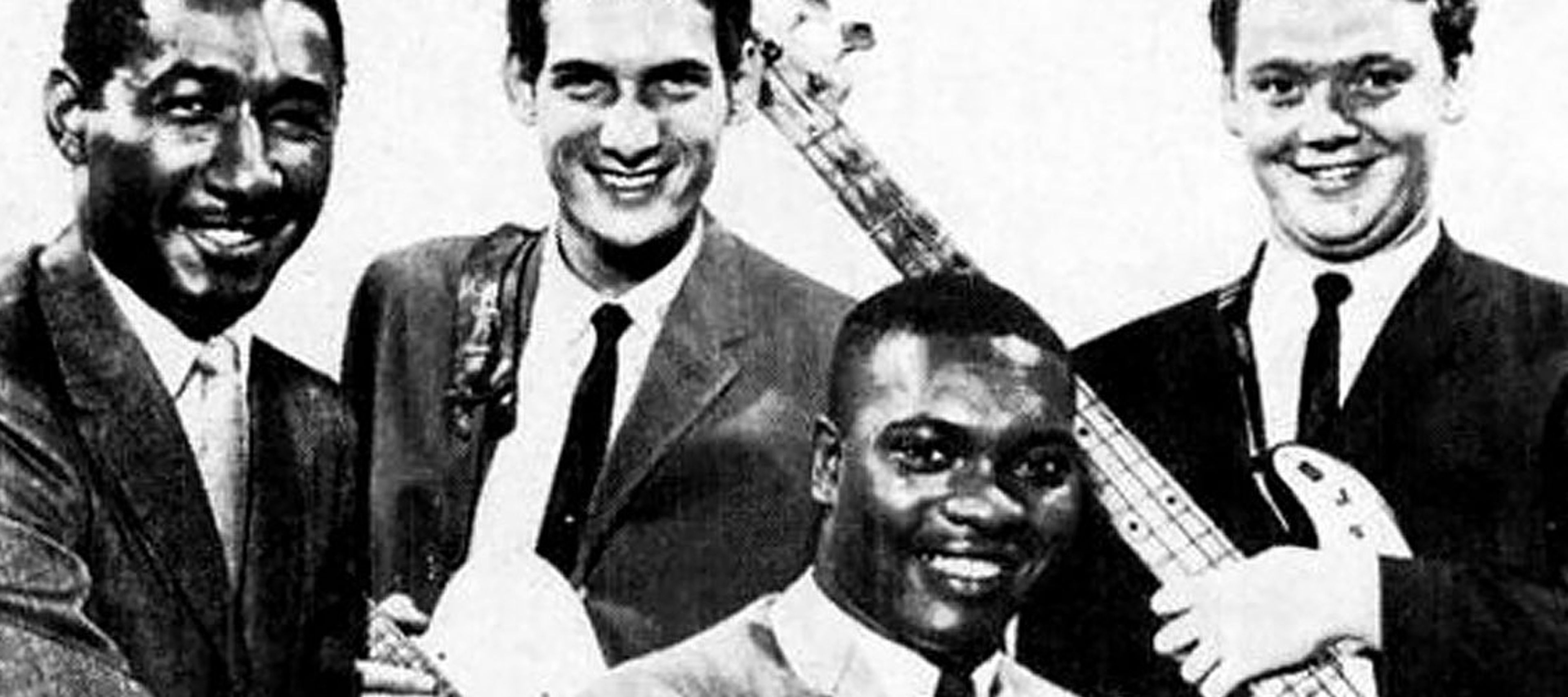
This lesson will explore how Memphis, set against this backdrop, was one musical city that would change how America viewed race relations. The 1960s Soul music recorded in Memphis was a blend of black and white styles, combining elements of Country, R&B, Gospel, and Pop. And Memphis musicians like Elvis Presley, and later the Mar-Keys and Booker T. and the MGs, became powerful examples of a national trend wherein art and culture challenged racial norms. One turning point occurred in 1957, when siblings Jim Stewart and Estelle Axton founded Satellite Records and soon changed their company’s name to “Stax.” Stewart and Axton, both white, established their headquarters on McLemore Avenue in a predominantly black Memphis neighborhood. They made a decision to open their studio and offices to any person with talent, regardless of skin color; like Presley’s refusal to hide his love for African-American culture, these were bold moves in a city that was still widely segregated.
The musicians who performed and played on Stax recordings were no strangers to the effects of a city divided by skin color. In the mixed-race ensemble Booker T. and the MGs, all of the musicians had graduated from segregated Memphis schools. But music brought them together across institutionalized color lines. When Booker T. and the MGs released their breakthrough hit “Green Onions” in 1962, there were still many restaurants in the South where the band could not sit down together for a hamburger – even with a hit song at No. 3 on the Billboard Pop singles chart.
In this lesson, students embark on a “walking tour” of Memphis, using the city as a case study through which to view complex race relations and integration issues that affected communities across the U.S. While plotting points of historical interest on a map, students consider how artists such as Elvis, the Mar-Keys, and Booker T. and the MGs resisted social norms through their music and performances. Listening to oral history from Stax owner Jim Stewart, students explore how an integrated record label operated in the middle of a segregated community and was able to create a unique and powerful Soul sound that signaled a shift in race relations in America.
Preparation
Set up the room with eight sites using Handout – Walking Tour Locations. Sites 1-3 can be placed close together at the front of the classroom. These three locations will be visited as a class before breaking up into groups to visit Sites 4-8.