
90 mins
Doo Wop
How did Doo Wop develop as a musical genre, and how is its influence still felt today?
Essential Question
How did Doo Wop develop as a musical genre, and how is its influence still felt today?
Objectives
Upon completion of this lesson, students will:
Know (knowledge):
- The characteristics of Doo Wop music as it emerged in the 1950s
- The history of group harmony singing as a form of entertainment in the United States during the twentieth century
- How earlier styles of vocal harmony (Barbershop, Pop, and Gospel) contributed to the development of Doo Wop
Mastery Objective:
- Students will be able to list the defining characteristics of Doo Wop and identify those characteristics musically by analyzing secondary sources and critical listening.
Background
In this lesson, students will do critical listening and read articles to identify the history and primary musical characteristics of Doo Wop. They will then use the skills they developed to analyze how Doo Wop continues to influence music today.
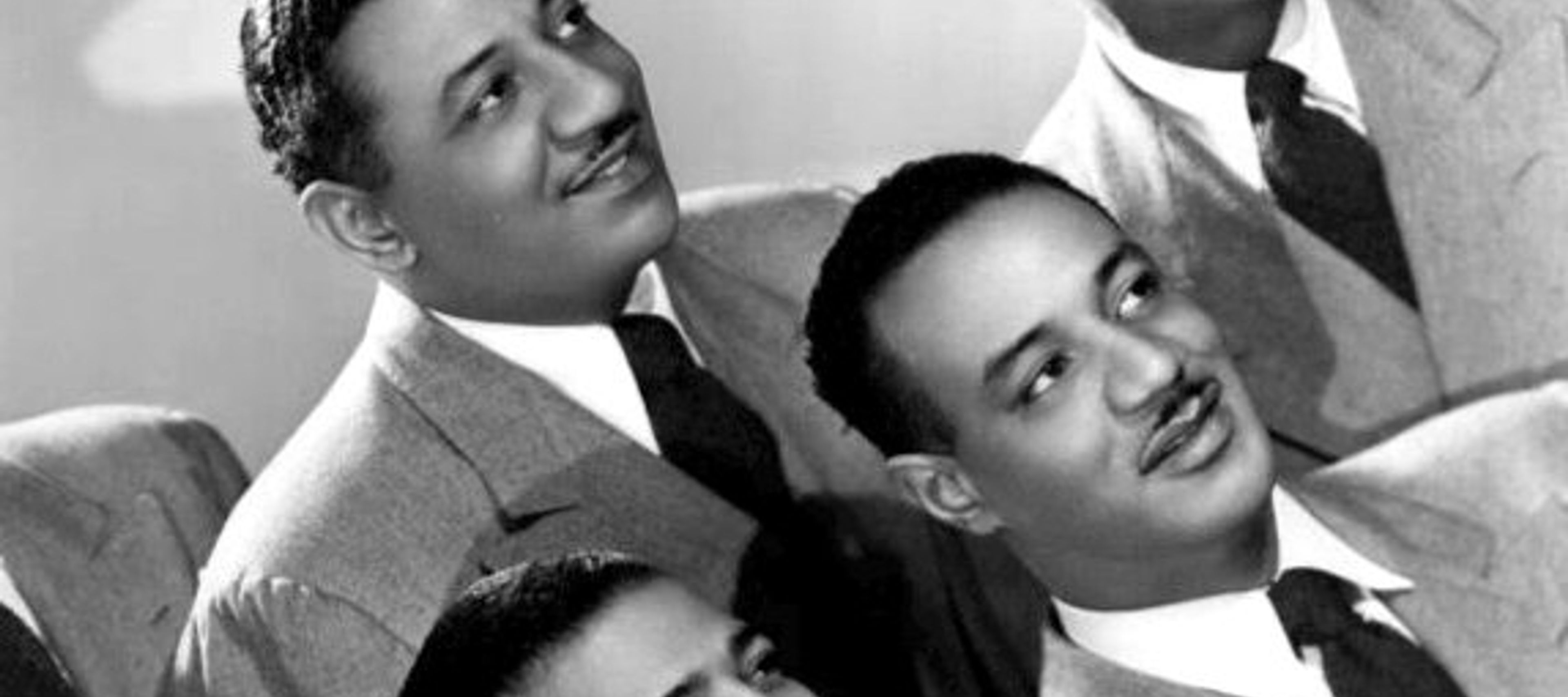
From the beginning, Doo Wop music had what today might be called a DIY or “Do It Yourself” character: it could be performed nearly anywhere — without the need for expensive equipment or special technology — at almost any time by anyone with some singing ability. Years before gaming consoles and cable TV, harmonizing on the street corner or front stoop was an enjoyable way to pass the time, particularly for residents of poorer neighborhoods for whom other forms of entertainment may have been prohibitively expensive. Musical instruments, after all, cost money. Singers replaced backing bands with their voices, supplying full harmonies and even mimicking the sounds of instruments. When Doo Wop emerged as a musical phenomenon in the 1950s, this kind of group singing became part of American popular culture on a bigger scale. Amateur or semi-professional groups were taken off the streets in neighborhoods like Harlem in New York City and put into recording studios. White groups began imitating black groups, and the sounds of Doo Wop were everywhere by the middle of the decade.
Doo Wop’s musical and social roots point to a long history of vocal harmony in American culture, particularly in African-American communities. Social singing provided entertainment in barbershops, bars, schools, churches, theaters, and other communal spaces. Some of the musical precedents students will consider in this lesson include the barbershop quartets that flourished from the 1890s through World War I; the Pop vocal groups such as the Mills Brothers that topped the charts in the 1920s, 30s, and 40s; and the Gospel singers who made harmonizing a spiritual practice throughout the early twentieth century.
As a genre, Doo Wop’s moment has perhaps past, but it’s influence continues, seen from artists such as Billy Joel, Raphael Saadiq, and Megan Trainor. In the trajectory of American music history, Doo Wop is perhaps best considered a foundational pillar of what would develop as Soul and Pop music.
Preparation
Set up three different stations (a large class might benefit from having more than one of each type). Each station includes one video (to be played on a device accessing the internet). The stations are as follows:
- Station 1: “Barbershop Quartets”
- Station 2: The Mills Brothers
- Station 3: Gospel Influence
Connected Themes
Artist(s)
Genre(s)
Topics
Decade/Era
Monthly Theme