
180 mins
The Progressive Era featuring Music from the Labor and Women’s Suffrage Movements
When was the Progressive Era, how did the Labor and Women’s Suffrage movements achieve many of the goals of Progressivism, and how did music express the experience of the people in those movements?
Essential Question
When was the Progressive Era, how did the Labor and Women’s Suffrage movements achieve many of the goals of Progressivism, and how did music express the experience of the people in those movements?
Objectives
Know (knowledge):
- The time period and goals of the Progressive Era
- The Triangle Shirtwaist Factory Fire and its aftermath
- How the Labor and Women’s Suffrage movements achieved certain goals of Progressivism
- The political, social, and economic reforms during this time period
- Music from the time that expressed the experiences of the movements
Mastery Objective
- Students will be able to describe the history of the Progressive Era, explain the role of the Labor and Women’s Suffrage movements in achieving Progressive goals, and articulate how music expressed the experiences of those movements during this time by analyzing primary sources, viewing images and video, and critically listening to music.
Background
In this lesson, students will identify the Progressive Era and Progressivism, examine the Triangle Shirtwaist Factory Fire and its aftermath, discover how the Labor and Women’s Suffrage movements achieved certain goals of Progressivism, and analyze music from the time that expressed the experiences of those movements.
The first two decades of the 20th century brought about fundamental changes to U.S. society. These changes were shaped by two competing forces: rapid business growth and powerful social reforms. As business growth accelerated in the late 19th century, grassroots groups and organizations, often located in the nation’s cities and industrial areas, pursued reforms to make America a more equitable nation. By the end of the 20th century’s first two decades, numerous reforms had been achieved. Those reforms included women gaining the right to vote, labor unions securing an 8-hour work week, and new laws enacted to keep Americans safe both at home and on the job. Collectively, the individuals, groups, and organizations achieving those reforms were known as Progressives. This time in history, roughly the 1890s - 1920s, has come to be known as the Progressive Era.
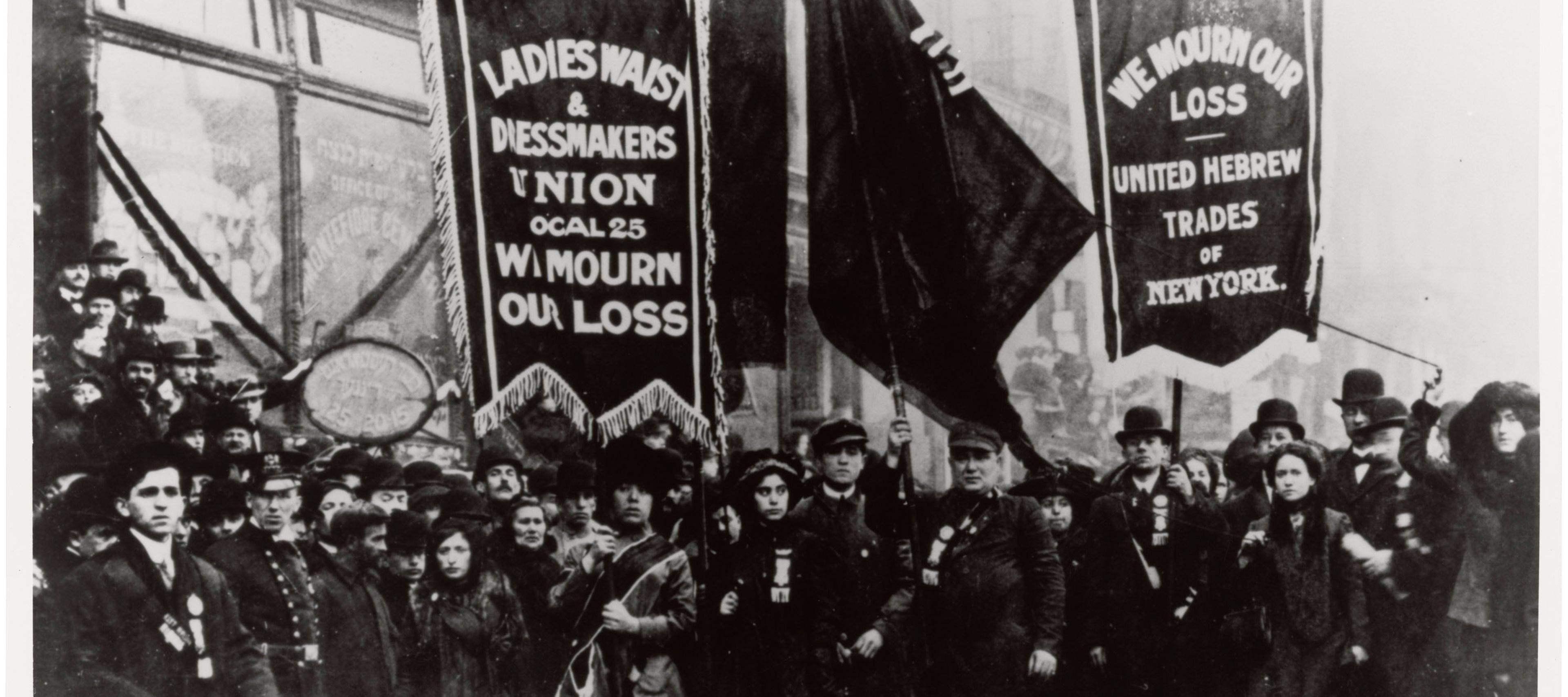
A fire at a New York City sweatshop on the afternoon of March 25, 1911 is considered a landmark event highlighting two powerful elements of the Progressive Era: the Labor Movement and the pursuit of women’s liberation. The tragic circumstances surrounding the fire at the Triangle Shirtwaist Factory resulted in 146 garment workers perishing. Those workers were almost exclusively women and girls that had immigrated to the U.S. from Eastern and Southern Europe. The tragic loss of life from the fire was compounded by the factory’s owners locking exit doors and stairways, in part to keep employees from meeting with union organizers during their shifts. This negligent action led victims to leap to their deaths from the factory’s windows in order to escape the fire.
In the aftermath of the Triangle Shirtwaist Factory Fire, a groundswell of women and girls (many of them from immigrant communities) campaigned for new labor protections. They also cited the tragedy as an example of their limited employment opportunities, which often led to exploitation and dangerous work environments. Their tireless advocacy resulted in new labor laws. Furthermore, it demonstrated the power of organized women pursuing and achieving political, social, and economic reform - a hallmark of the Progressive Era most-notably found in the Women’s Suffrage Movement.
The Women’s Suffrage Movement had begun nearly a 100 years earlier during the 19th century. The movement achieved important victories by the end of that century, including securing the right to vote in several states. However, the ultimate goal of the movement was to gain the right to vote nationwide and this would require a constitutional amendment. Led by numerous suffragettes, including Lucy Burns and Alice Paul, a vigorous campaign was waged and included picketing the White House and state legislatures around the country. Finally, a women’s suffrage amendment to the U.S. Constitution was approved by Congress on June 4, 1919, nearly 41 years after it had first been introduced. The resulting 19th Amendment to the U.S. Constitution was ratified by the required three-fourths of U.S. states on August 18, 1920.
In both the Labor and Women’s Suffrage movements, music played an important role. Occasionally, popular songs of the day were co-opted and had their lyrics modified to fit the message of a movement. But oftentimes, new music was composed specifically for the movement, with lyrics articulating themes and goals, or expressing the personal experiences of those in the movement.
Dozens of songs were written about the journey to suffrage for women. Many, like the popular song, “Suffragette March-Song” contained inspirational lyrics and were crafted with the intention of being sung by activists at gatherings or events. However, songs also expressed the hardship and grief of a movement. In chronicling the Triangle Shirtwaist Factory Fire, “Die Fire Korbunes” is a kind of musical elegy that expresses the profound loss grieved by the families of those who died in the fire. However, the song’s lyrics also offer a moral rebuke of the economic system that cultivated the tragic circumstances. Featuring Yiddish lyrics and Klezmer music, the song tells the story of the tragic fire and is composed in a traditional Jewish style of music that represents the community and culture of many of the victims.
Disclaimers
This lesson contains primary source documents and other materials that may include terms and images reflecting the attitudes, perspectives, and beliefs of different times that today are considered offensive and demeaning. Teachrock.org does not endorse the views expressed in these documents, but recognizes the value such materials provide for historical inquiry. For guidance on introducing controversial historical materials into the classroom, we suggest reviewing this document from The Library of Congress.
Preparation
- For the Knowledge Café activity, setup four “café tables” by placing four large sheets of paper (“café table cloths”) on each table and by providing writing utensils (preferably markers or other colorful pens/pencils) on each table. For Part 1 of the lesson, place one copy of Handout - “Die Fire Korbunes” Knowledge Café Activity on each table. For Part 2 of the lesson, place one copy of Handout - “Suffrage March-Song” Knowledge Café Activity on each table.
Connected Themes
Decade/Era
Monthly Theme