
90 mins
The Reclamation of the American Cowboy
How has the image and history of the American cowboy been reclaimed in the 21st Century?
Essential Question
How has the image and history of the American cowboy been reclaimed in the 21st Century?
Objectives
Know (knowledge):
- The evolution of the cowboy from a working class ranch hand to a symbol of American masculinity
- The roles of President Theodore Roosevelt and “Buffalo Bill” Cody in developing the romantic image of the American West
- The music that often accompanied Buffalo Bill’s Wild West Show
- The reclamation of the cowboy and cowboy culture through, actual cowboys such as the Compton Cowboys, fashion brands such as Telfar and Pyer Moss, and artists of color such as Mitski, Solange, Lil Nas X, Los Tigres del Norte, Joan Sebastian, and Christian Nodal
Mastery Objective:
- Students will analyze how the American cowboy became a glorified myth that celebrated white masculinity, and how communities of color have reclaimed the cowboy and its history separate from the myth.
Background
In this lesson, students will explore how the myth of the American cowboy developed by analyzing historic images, music, and film posters. Students will consider how the white American cowboy and the romanticization of the West excluded people of color, despite the historical existence of Black and brown cowboys. Finally, they will participate in a station activity where they will analyze sources that provide different perspectives and interpretations of the cowboy.
When the word “cowboy” is mentioned, images of western film stars like John Wayne and Gary Cooper may be the first thing to come to mind. This Hollywood version of the cowboy is usually portrayed as a hero who leaves a trail of destruction in their wake, and is regularly juxtaposed by harmful stereotypes of Native Americans. For over a century, this version of the cowboy has been an emblem of Americana--but it is one that oversimplifies and ignores the true origin of the figure.
The profession of the cowboy most likely originated in 17th century Mexico, when Native American and Hispanic vaqueros practiced the livestock herding traditions first developed in Spain. Centuries later, the vaquero lifestyle moved to the Western United States. Following the Civil War, Black freedpeople migrated to the West to escape the discrimination of the South, joining Native American and Mexican Americans in this profession.
Soon, the notion of the cowboy working in the untamed “frontier” of the American West reached the Eastern United States, and the cowboy became a romanticized figure in the American imagination. One of the most prolific people to advance this romanticized image was none other than Theodore Roosevelt, the 26th President of the United States who is often referred to as the “Cowboy President.” Growing up a sickly child New York, Roosevelt developed an obsession with the cowboy which he maintained throughout his life. As an adult, he took up big game hunting and ventured West in 1883 to hunt bison, at a time when the animal was nearing extinction due to over-hunting by settlers. He would regularly take photographs in a Manhattan studio outfitted in cowboy attire, made frequent trips to the Dakotas, and bought two ranches in the West.
During the Spanish American War, Roosevelt led the First U.S. Volunteer Cavalry, which he called the “Rough Riders.” The term was borrowed from Williams Frederick Cody, otherwise known as “Buffalo Bill” Cody. A soldier and professional bison hunter, Buffalo Bill likewise played an enormous role in developing the romanticized notion of the cowboy. In the 1870s, his “adventures” began being published in print, and their market success inspired a traveling show that featured horses, shooters, and dramatic reenactments of battles between cowboys and Native Americans, who were usually depicted negatively as aggressors and the enemy. These performances were accompanied by Buffalo Bill’s Cowboy Band, a brass band led by cornet player William Sweeney which played heroic and lilting music to fit the spectacle’s adventurous spirit. The show was immensely popular and traveled around the globe.
The popularity of live Wild West shows caught the attention of the burgeoning film industry in the early 1900s. Starting with the 1903 silent short film The Great Train Robbery, “Westerns” became their own immensely popular film genre. White men such as John Wayne, Gary Cooper, and Clint Eastwood became synonymous with the cowboy figures they played in movies. In their celebration of the romanticized cowboy lifestyle, such films usually neglected to acknowledge the destruction to Indigenous land and violence towards Native Americans caused by white settlers, and all but erased the presence of Black and brown cowboys who worked in the American West.
In spite of the whitewashing of the cowboy and the romanticization of the West, in the 21st century people of color have begun reclaiming the cowboy image, and remind audiences of a more accurate history of the American west. The vaquero origins of the U.S. cowboy is still seen in Regional Mexican music. Legends like Joan Sebastian and Los Tigres del Norte don cowboy hats for performances. Sebastian was known for performing on horseback and Los Tigres del Norte’s catalogue is composed primarily of "corridos," which originally were narratives of cattle drivers living near the border. Today, 20 year old Norteño artist Christian Nodal is rarely seen without a cowboy hat. The vaquero lives on in Regional Mexican music.
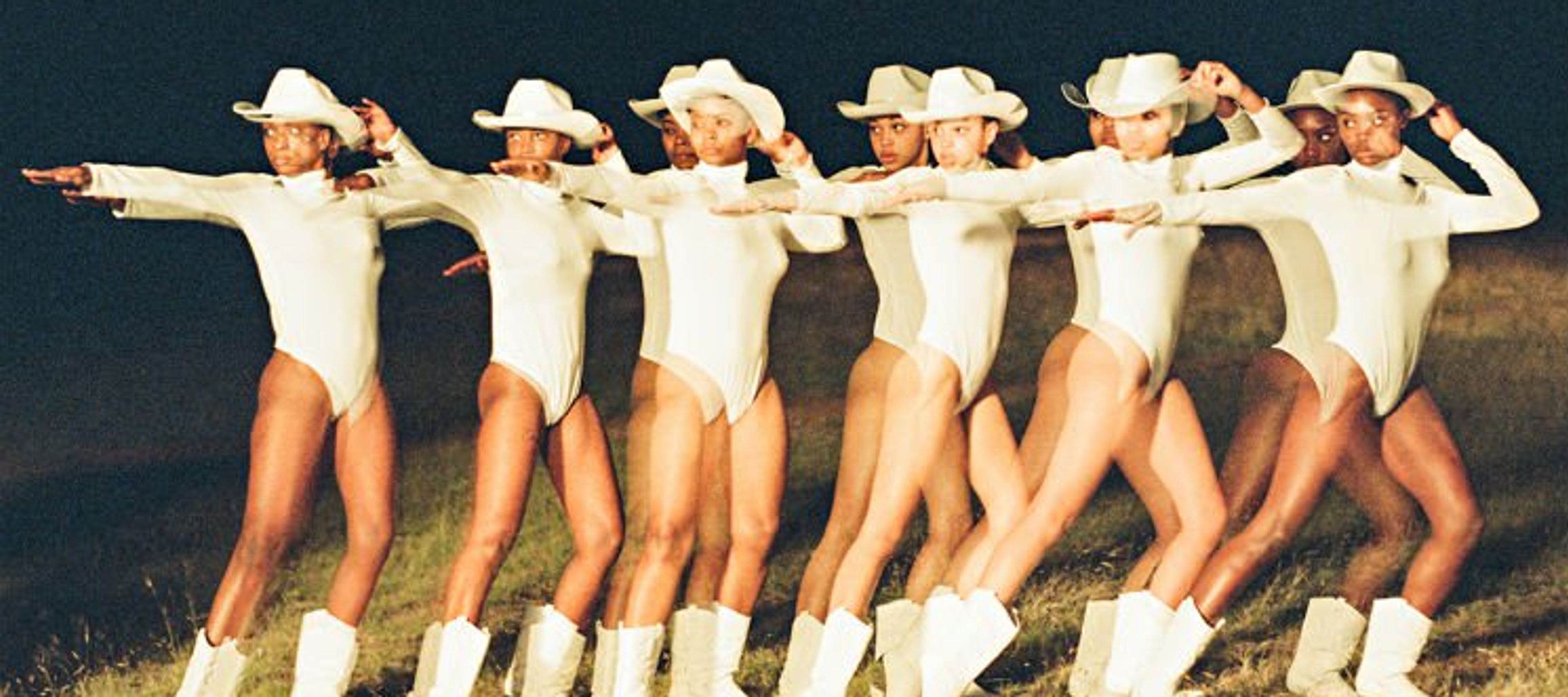
Other artists and creatives of color have used their medium to reclaim or re-imagine the cowboy as an American figure. Indie rockstar Mitski named her fifth album “Be the Cowboy,” as a response to the stereotypical white cowboy “being able to do whatever they wanted.” Numerous Black artists have reinserted themselves into the cowboy narrative, reminding people that there were Black cowboys in the American West. Singer-songwriter Solange dedicated her fourth album to her hometown of Houston, TX and the Black cowboys she grew up seeing. The imagery of Black cowboys is found throughout the album’s accompanying film. Rapper Lil Nas X caused controversy with his trap-country hit “Old Town Road,” which wasn’t seen as a country enough by gatekeepers and was accused of appropriating country.
Outside of music, Black fashion designers Telfar Clemmons (Telfar) and Kerby Jean-Raymond (Pyer Moss) have used the cowboy and Western imagery in their collections. Jean-Raymond’s first collection included actual Black cowboys in its campaign: the Compton Cowboys. Even before their collaboration with Jean-Raymond, the Compton Cowboys had a strong social media presence, spreading their mission of keeping Compton kids off the streets with horseback riding.
While Roosevelt and the popularity of the Buffalo Bill Wild West shows helped make the cowboy the representation of the Western American hero and the epitome of white American masculinity, these artists have reclaimed both the spirit and historical realities of the cowboy.