
90 mins
The Transcontinental Railroad featuring Work Songs Collected by John Lomax
In what ways did the Transcontinental Railroad contribute to the physical, cultural, and musical growth of the American West in the late 19th Century?
Essential Question
In what ways did the Transcontinental Railroad contribute to the physical, cultural, and musical growth of the American West in the late 19th Century?
Objectives
Know (knowledge):
- How the Railroad Act of 1862 provided the framework for the partnership between government and private business in the effort to build the First Transcontinental railroad
- The economic and social impacts of the railroad on life in the American West
- The experiences of different groups of people working on the railroads and the role music played for the workers
- How the Sears catalog, made possible by the Transcontinental railroad, provided the instruments to entertain and preserve cultural traditions
Mastery Objective
- Students will be able to assess the significance of the Transcontinental Railroad on the development of the United States by analyzing texts, examining media, and interpreting primary source documents.
Background
“Done”
-Telegraph message announcing the completion of the Transcontinental Railroad, May 10, 1869
In this lesson, students will examine the role the railroads played in the growth of cities and towns in the American West through the analysis of songs, images, and artifacts. Students will also explore the impact of the railroads on the cultural diffusion of art, literature, and music of the diverse populations settling in the west.
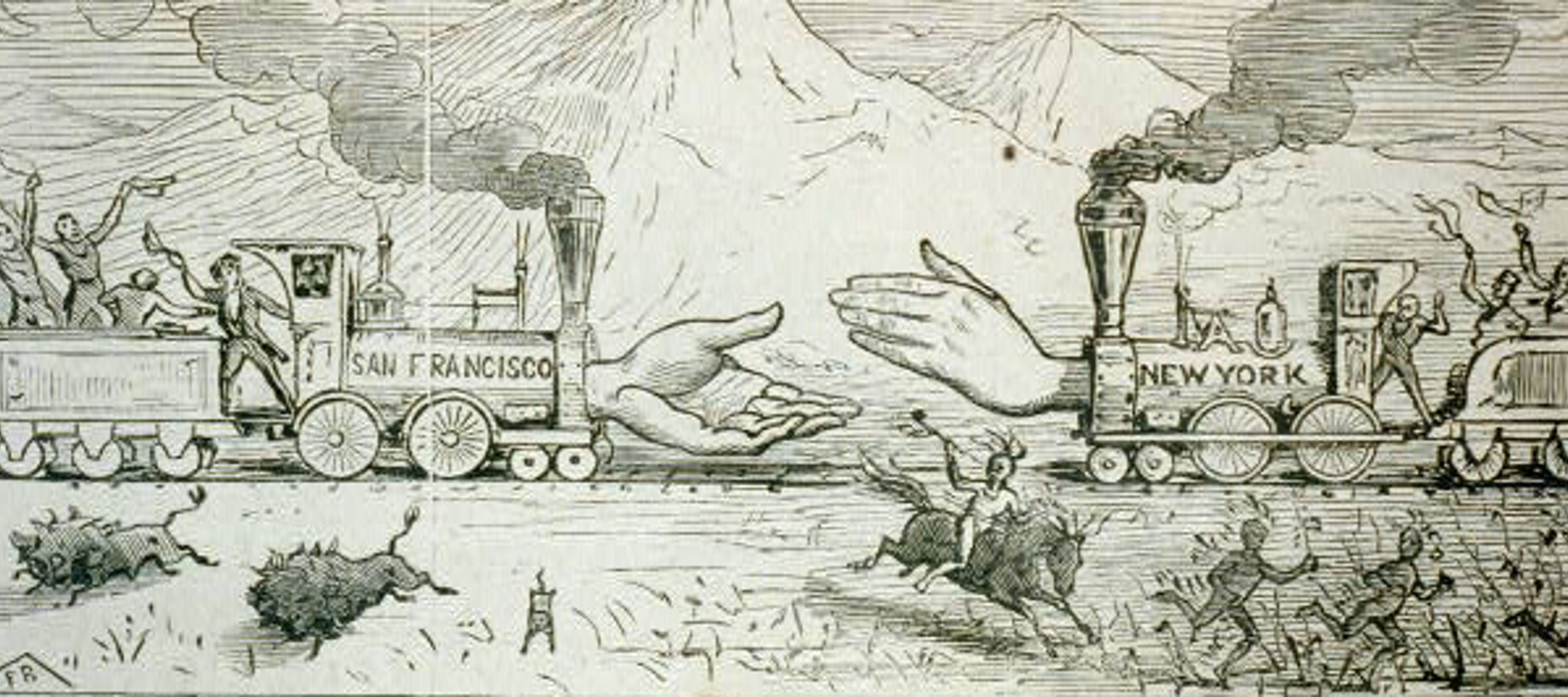
“Done.” One word that forever changed the country. The Transcontinental Railroad was a home on the range game changer. With the federal government fully on board, land was the reward. Work was plenty, workers were many, and the end result was extraordinary. The railroad adjusted time and space, and the result was a whole new pace. By connecting the existing eastern U.S. rail networks to the west coast, the Transcontinental Railroad (known originally as the "Pacific Railroad") became the first continuous railroad line across the United States.
Constructed between 1863 and 1869, this enormously challenging and unprecedented project was a profitable partnership between corporations and the federal government. And while financed by the federal government and organized by private enterprise, this feat of engineering was built by workers, laboring in life-threatening conditions for little pay. These railroad workers, many of whom were immigrants from countries such as Ireland and China, often sang songs to accompany their work and to make their days labor more tolerable. The lyrics to these songs often detailed the work itself, with titles such as "Take This Hammer," "Steel-driving Song," and, of course "I've Been Working on the Railroad." Thanks to song collectors such as John Lomax, these Railroad songs were recorded, becoming both a historical record and an indelible contribution to American music and culture.
Once finished, the Transcontinental Railroad supported and transported rapid western migration and facilitated a remarkable expansion of economic development, economic opportunity, and prosperity. One outcome of this rail-based retail revolution and a residual benefit to consumers of this rail-based economy was the birth of mail order shopping. For that we have the Sears catalog to thank.
The Sears catalog changed everything, and it rode on the rails to build, supply, and entertain this country. It began in 1886 by railroad agent Richard Sears, who was trying to sell watches. This blossomed into a remarkable general mail order business where suddenly settlers, rural folks, city dwellers, and anyone could order by phone or mail and have their goods delivered by rail to their town, no matter where it was. This great grandparent of Amazon could sell you just about anything, and it was all there in the Sears catalog. Among the many items available were houses that arrived in a kit on rail cars, and musical instruments to entertain and delight the diverse population of Americans making their way in the American West. This cross pollination of music and culture now had instruments to amplify and contribute to what it meant to be an American. Settlers could share their songs from the “old country” in the “new country.” The availability of musical instruments played a role by providing entertainment and preserving cultural traditions. This fostered and allowed for the creation of new musical styles and reflected the multiculturalism of the region by providing a shared experience.
One perhaps unintended result, is that this new mail order opportunity brought marginalized communities into the world of consumerism. The anonymity afforded by mail order buying removed the struggles and blatant racism often associated with in-store shopping during the Jim Crow era. The iconic and influential blues artist, Muddy Waters purchased a used Sears guitar as a young boy. It is often said that there would be no Delta Blues without the availability of cheap, steel string guitars that Sears began to sell in 1894. In many ways, this colorful catalog of consumerism provided freedom and a small measure of equality in the face of white supremacy and systemic inequality.
Materials
- A device with internet access