
90 mins
The Vietnam War featuring Edwin Starr
What were the roles of U.S. popular music and television news during the Vietnam War, and what connection did they have to Americans’ public opinion of the war?
Essential Question
What were the roles of U.S. popular music and television news during the Vietnam War, and what connection did they have to Americans’ public opinion of the war?
Objectives
KNOW (KNOWLEDGE):
- Popular music in the U.S. that commented on the Vietnam War experience from varying American perspectives
- Polling data and its conclusions about American public support for U.S. involvement in the Vietnam War during the war years
- The importance of U.S. television news coverage of the Vietnam War
- Important events during the Vietnam War
MASTERY OBJECTIVE:
- Students will be able to explain the roles of American popular music and U.S. television news during the Vietnam War by scrutinizing polling data, analyzing images and text, examining song lyrics, and critically listening to music.
Background
In this lesson, students identify American public opinion of U.S. involvement in the Vietnam War by examining polling data from 1965 to 1973. Students then investigate the important role of U.S. television news coverage of the war to determine its effect on American public opinion and they analyze a variety of contemporaneous American popular songs that express varying American perspectives about the war. Utilizing this knowledge, students collaborate to create a music news report where they conduct song lyric analysis, scrutinize data, and practice journalism role playing. The lesson concludes with students participating in a classroom poll where they express their own opinion about music’s role in American public opinion of the Vietnam War. They support their opinion for the poll by writing a short response based on the knowledge they acquired throughout the lesson.
Starting in 1965 and lasting into 1973, a national poll was conducted during the Vietnam War that asked Americans, “In view of the developments since we entered the fighting in Vietnam, do you think the U.S. made a mistake sending troops to fight in Vietnam?”. The “No” and “Yes” responses would trade nearly exact places in representing an American majority public opinion about the war over those several years. In fact, the polling trend lines began shifting in opposite directions shortly after U.S. ground forces fought their first battle with the People’s Army of North Vietnam in November 1965 at the Battle of Ia Drang.
The U.S.’s direct combat role in Vietnam was precipitated by an event that has remained historically controversial: the Gulf of Tonkin Incident. In early August 1964, two U.S. Navy vessels sailing in the Gulf of Tonkin communicated that they had been fired upon by North Vietnamese forces. While the circumstances have been disputed, the naval communication triggered President Lyndon B. Johnson to request permission from the U.S. Congress to increase the size of U.S. forces in Vietnam in order to “promote the maintenance of international peace and security in southeast Asia.” The Gulf of Tonkin Resolution was passed by the Congress within days of the incident and it became the rationale used by both the Johnson and Nixon presidential administrations to conduct the Vietnam War.
By the time of the Gulf of Tonkin Resolution in 1964, the U.S. had already been militarily involved within Vietnam and the surrounding region since 1950. Starting in that year and on the orders of President Harry S. Truman, a few hundred military advisers were sent to Vietnam to aid the French as they fought the communist-led and nationalist Viet Minh forces in the First Indochina War (known as the French War in Vietnam). These U.S. military advisers did not participate in the fighting but rather offered combat strategy training and technical guidance on U.S. supplied weapons.
France had colonized the Southeast Asia territory containing the current states of Cambodia, Laos, and Vietnam during the 19th century, and the colony was referred to as French Indochina, or simply, Indochina. The Viet Minh organization had been created by the Vietnamese revolutionary leader Ho Chi Minh in China in 1941. In 1943, the Viet Minh began combat operations to fight the forces of Imperial Japan, which had taken control of the country during World War II. In 1945, at the end of World War II and with the defeat of Japanese forces in the region, France sought to reassert its colonial control of Vietnam. Furthermore, with the advent of the Cold War in 1947, U.S. foreign policy sought to limit the Soviet Union’s influence in the region, especially after neighboring China became a communist state in 1949. However, the Viet Minh tactically defeated French forces in 1954 and controlled much of the top half, or northern part, of the country. Vietnam was divided into what was supposed to be temporary north and south territories as part of an end to the conflict, and ahead of future democratic elections. With the French defeated and abandoning their colonial aspirations, the U.S. assumed the primary role of countering North Vietnam’s quest to unify the nation as a communist state.
The principal ally of the newly established South Vietnam government was the United States. During subsequent U.S. presidential administrations, the number of military advisers and military aid being sent to aid the South Vietnam government grew exponentially. By the time Lyndon Johnson was sworn in as President of the United States after President John F. Kennedy’s assassination in November 1963, the number of military advisers was around 16,000. Furthermore, during the Kennedy administration, U.S. involvement in Vietnam rapidly escalated and the President began providing limited numbers of U.S. Army Special Forces to the area. With the Gulf of Tonkin Incident in 1964 and then U.S. ground forces fighting at the Battle of Ia Drang in 1965, the Second Indochina War began, referred to as the Vietnam War in the U.S. and the American War in Vietnam.
With the Gulf of Tonkin Incident and its accompanying congressional resolution that paved the way for a dramatic increase in U.S. involvement, musicians expressed their opinions about the U.S. role in Vietnam. In July 1965 before the first battles that directly involved U.S. ground forces, the song “The Eve of Destruction” sung by Barry McGuire was released. While a varied commentary on numerous social topics plaguing American society, the song begins with the lyric, “The Eastern world, it is explodin’ / Violence flarin’, bullets loadin’ / You’re old enough to kill but not for votin’ / You don’t believe in war, but what’s that gun you’re totin’?” The song was a hit and reached No. 1 on the Billboard Hot 100 chart. However, at the time, public opinion polling collected later that summer indicated that about sixty percent of Americans did not feel the U.S. was making a mistake committing troops to fight in Vietnam.
Perhaps reflecting that majority opinion with what could be considered a response to “The Eve of Destruction” was “The Dawn of Correction” by the Spokesmen. Responding to the first lyrics of “Eve”, the Spokesmen countered, “The western world has a common dedication / To keep free people from Red domination / And maybe you can’t vote, boy, but man your battle stations / Or there’ll be no need for votin’ in future generations.” While the song wasn’t a No. 1 hit, it did chart in the top 40 of songs on Billboard’s Hot 100 chart. In fact, majority public opinion supporting U.S. troops being sent to fight in Vietnam remained for the next two years. During those next years, songs were released that provided commentary on the war, and not all were necessarily protesting involvement, but rather reflecting the American experience of the war. For example, “Dear Uncle Sam” by Loretta Lynn and “I Say a Little Prayer” by Dionne Warwick were from the perspectives of women whose loved ones were fighting and dying in the war.
However, by early 1968, public opinion permanently shifted to “Yes,” that the U.S. had “made a mistake sending troops to fight in Vietnam.” That year marked the height of military deployment during the Vietnam War at 536,100 and the largest number of casualties during a single year of the war, 16,899. In January 1968, the Tet Offensive demonstrated North Vietnam’s willingness to pay any price to win the war, suffering thousands of casualties as it launched an extensive assault on U.S. military bases and urban regions throughout South Vietnam.
As President Richard M. Nixon entered the White House in January 1969 on a campaign promise to bring an “honorable end” to the war, public opinion against the war continued to grow. By late 1969, the American public began to learn via news reports about the killing of hundreds of unarmed Vietnamese men, women, and children by U.S Army soldiers in the village of My Lai during March 1968. The My Lai Massacre had been covered up by the U.S. military and the reporting in the U.S. led to a surge in anti-war sentiment amongst the public.
Songs began reflecting that public opinion, including “Fortunate Son” by Creedence Clearwater Revival, a Top 20 Billboard hit song in 1969. This enduring anthem criticized the class disparity in the ranks of those who were fighting and dying in the Vietnam War - young men who did not come from wealthy families. In May 1970, the killing and wounding of anti-war student protestors on the campus of Kent State University immediately inspired the Folk Rock group Crosby, Stills, Nash & Young to record their anti-war song, “Ohio,” and it also charted in the Billboard Top 20. More songs reflecting the American public’s opinion of the war would follow, with song lyrics referring to the increasingly popular position to end American involvement in the Vietnam War, including 1971’s “Bring the Boys Home” by Freda Payne (No. 12 on the Billboard Hot 100 chart).
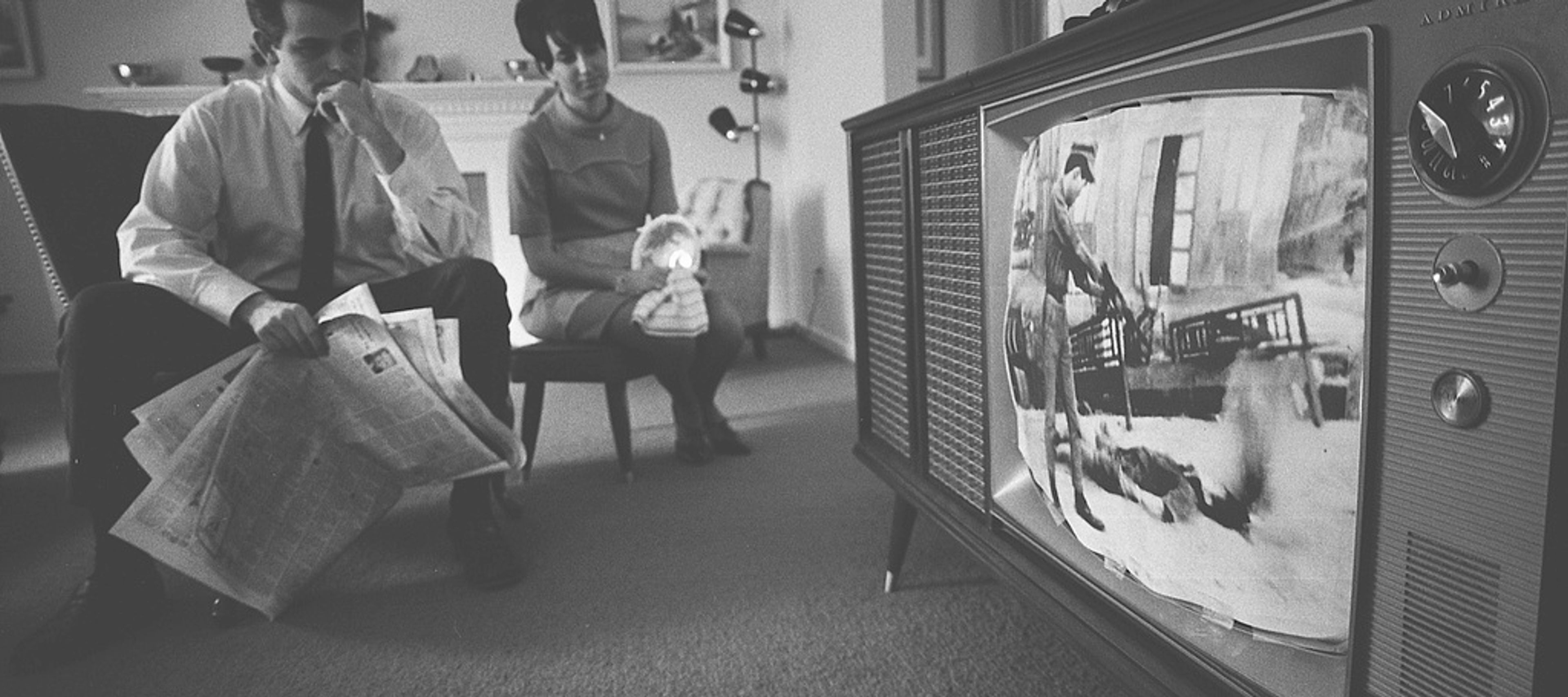
The Vietnam War wasn’t just featured in the music of the era, it was also considered “the first television war”. With news organizations broadcasting reports from the front lines of the war and the vast majority of American homes now having a television, the violence and chaos of the conflict could be viewed at home every day. This direct access to news reporting about the war was a first for American society and it proved consequential in American opinions about the war.
In 1973, the U.S. formally declared its end to involvement in the Vietnam War by signing the Paris Peace Accords, which included that all U.S. military forces would withdraw from the region by 1975. However, combat forces had ceased operations by late 1972 and troop deployments had been decreasing since 1969. As had happened since direct U.S. combat operations began in 1965, American popular music reflected this shift as military personnel began permanently returning home in large numbers, perhaps most-notably with Curtis Mayfield’s 1973 album, Back to the World (No. 1 Billboard Top R&B Albums).
In January 1973, the national poll that asked Americans, “Do you think the U.S. made a mistake sending troops to fight in Vietnam?” was conducted for the last time and sixty percent of Americans responded, “Yes.” This was nearly the same percentage as the sixty-one percent that had responded “No” to the question nearly eight years earlier in the summer of 1965. By the end of U.S. involvement in the Vietnam War, approximately 58,000 U.S. military men and women had been killed or were missing in action. Estimates range at about 250,000 South Vietnamese forces killed, and perhaps as many as 1.1 million North Vietnamese forces and Viet Cong soldiers killed during the conflict. The Vietnam government estimates that approximately 2 million civilians throughout the country died as a result of the war.
Disclaimers
This lesson contains primary source documents and other materials that may include terms and images reflecting the attitudes, perspectives, and beliefs of different times that today are considered offensive and demeaning. TeachRock does not endorse the views expressed in these documents, but recognizes the value such materials provide for historical inquiry. For guidance on introducing controversial historical materials into the classroom, we suggest reviewing this document from the Library of Congress.
Materials
- An internet accessible device for every student
- Classroom access to Google Slides (Optional)
Preparation
- Review Handout - “Vietnam: The First Television War” as there is violence depicted in the image students analyze.
- For the optional activity: access the Google Slides presentation (Vietnam War Timeline Slideshow). Make a copy of the presentation to distribute to students.