
180 mins
The Zoot Suit: Style and Swing in the Wartime Economy
What was the cultural, social, and historical significance of the zoot suit during the period of World War II?
Essential Question
What was the cultural, social, and historical significance of the zoot suit during the period of World War II?
Objectives
Know (knowledge):
- How Swing music defined the first half of the 20th century
- The elements of a zoot suit and its association with Swing music
- The state of the U.S. economy and society during World War II
- The Zoot Suit Riots, and their impact on U.S. history
- The Sleepy Lagoon murder and trial (extension activity)
Mastery Objective
- Students will be able to articulate the way fashion represents and contributes to social relations by investigating the zoot suit and the Zoot Suit Riots in Los Angeles through primary sources.
Background
In this lesson, students consider the role fashion plays in reflecting and contributing to social relations by examining the popularity of the zoot suit. Students will investigate primary sources including interviews, newspaper articles, and radio shows to consider the meaning behind the zoot suit, its association with swing music, and the reason the zoot suit provoked backlash. In the process, they are introduced to the Sleepy Lagoon Murder Trial and subsequent “Zoot Suit Riots” that occurred in Los Angeles between 1942 and 1943.
The origin of the zoot suit is more legend than history. Sociologist Emory Bogardus contends that the zoot suit was an American adaption of a native costume from Pachuca, Mexico (hence zoot suiters often being referred to as “Pachucos” in Los Angeles.) The New York Times traces the origin to Clyde Duncan, a Black busboy who ordered a customized suit from a department store in Gainesville, Florida. Some trace it to part of the “Killer Diller” style that began in Georgia and spread throughout the South. Others argued the zoot suit’s first inspiration was the clothing worn by Clark Gable in the 1940 film Gone with the Wind.
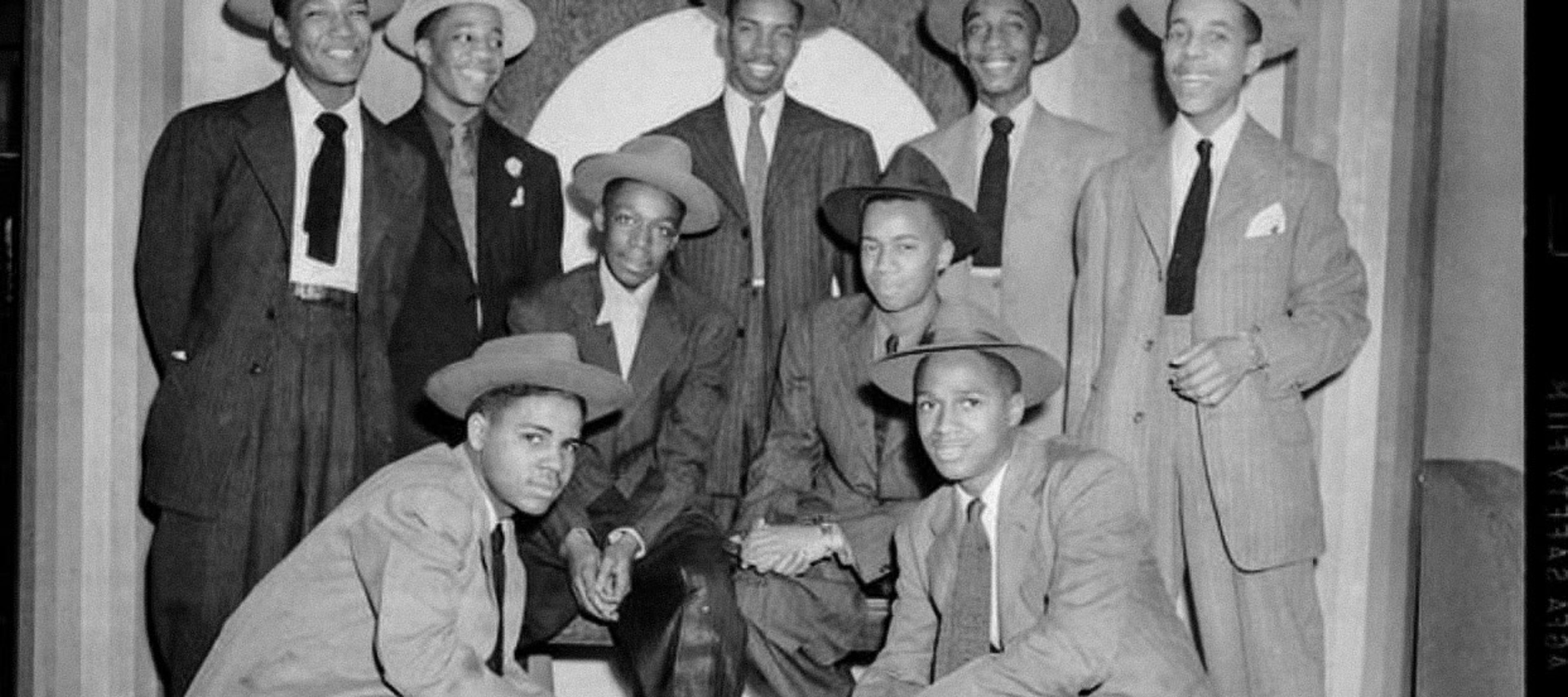
Regardless of its origins, the zoot suit grew to be a cultural phenomenon in the World War II era, and became practically synonymous with Swing Music, a dance music performed by large Jazz Big Bands in clubs and ballrooms. Popularized by Swing musician Cab Calloway, young people across the country adopted the suit, characterized by ballooning pants, long coats which accentuated shoulder pads, a pork pie or large-brimmed hat (often sporting a large feather), and a hanging chain that almost touched the floor. For many working class Americans, attaining a zoot suit became a sign of status, and an opportunity to shed working clothes to go dancing in style.
Like many popular trends, the zoot suit was also met with backlash. Fabric rationing related to the war effort led to claims that the excesses of the zoot suit were unpatriotic. In 1942, the War Productions Board issued Order L-85, regulating the maximum measurements of men’s suits and pants in a clear strike against the production and sale of the zoot suit. The zoot suit also threatened gender norms at the time. It’s ballooning pants and jacket gave the men wearing them what critics claimed was a “girlish waist.” At the same time, female zoot suiters (who often complemented the suit with a skirt, hosiery, and huarache sandals) were accused of not presenting themselves as feminine enough.
Arguably the greatest backlash against the zoot suit was less to do with the style of the outfit, but rather the people that wore it. While young people across the country danced in zoot suits, the outfit became especially associated with working people of color – most directly Black Americans in Harlem and Mexican Americans in Los Angeles. As such, the zoot suit became a symbol of racial resentment among a group of Anglo-Americans – its luxury a testament to the social mobility of America’s Black and Mexican communities. Such racial resentment came to a head in Los Angeles in the summer of 1943, when a group of sailors rioted throughout the city, beating Mexican-Americans, stripping them of their zoot suits, and burning them in public.
Connected Themes
Artist(s)
Genre(s)
Decade/Era
Monthly Theme